

 EN

 CN
 ES

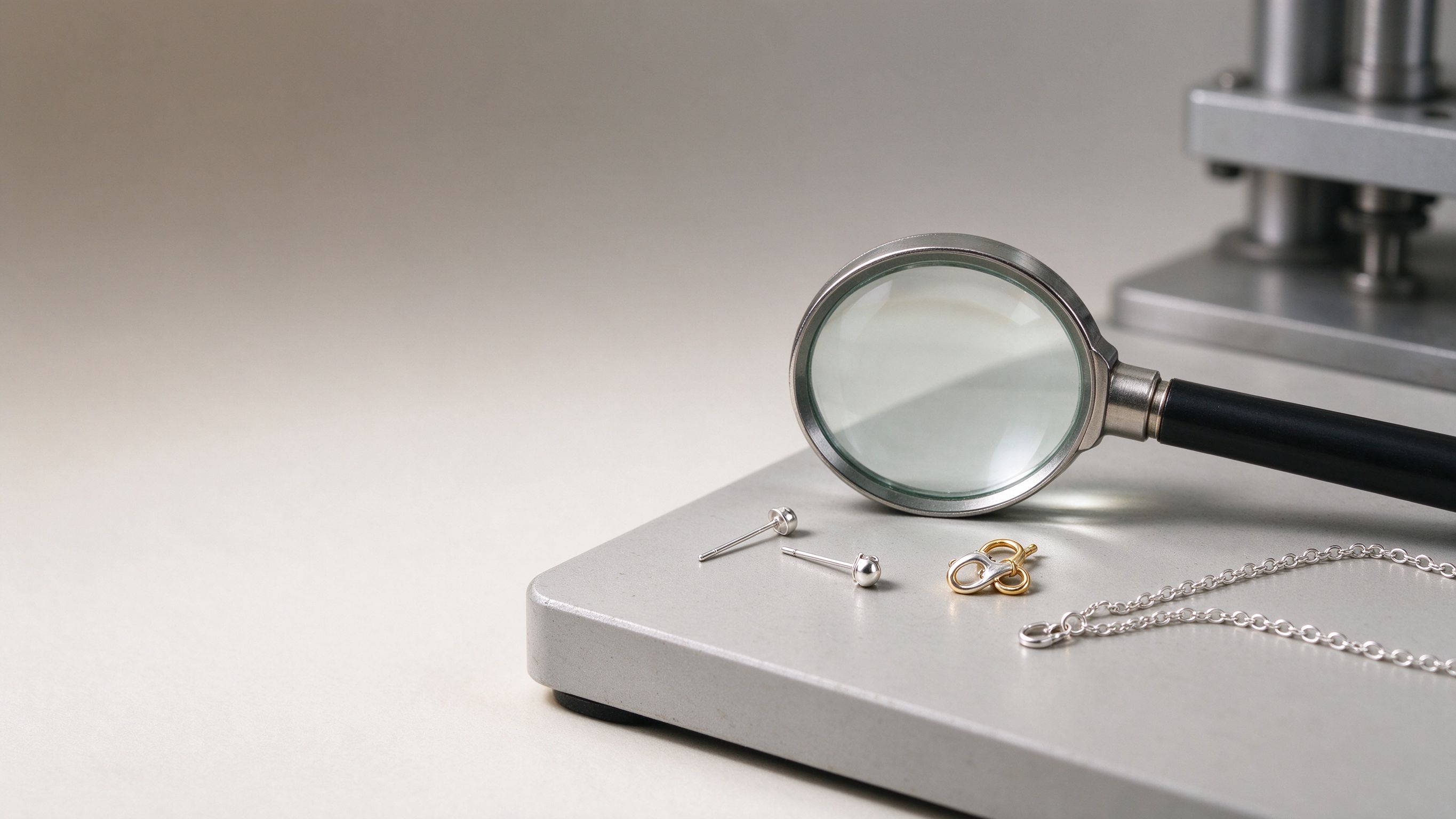
EU regulations restrict nickel released from metal items in prolonged skin contact. EN1811 is a common nickel-release test method, while EN12472 prepares samples after simulated wear and corrosion. Posts, clasps, chain links and stone settings are the key contact points. Current limits and standard versions should be confirmed against the latest official EU requirements before export.
Pieces with large skin contact, friction, sweat or moisture exposure carry more risk: ear posts and backs, clasps and chain links, ring inner bands and prong settings, bangle interiors and pendant loops. Even when the main body is 925 silver, fittings, springs and plating may introduce nickel.
We select base alloys and fittings to suit the target market, manage plating and seal layers to slow nickel migration, and keep batch material records alongside outgoing sampling. The factory can supply samples and material statements; formal test reports are issued by an accredited third-party laboratory.
1) Base and fitting material; 2) Plating type and coverage; 3) Available test samples; 4) Batch-to-batch consistency; 5) Required labeling for the destination market. Browse the product catalog or contact us for samples and a quote.
Sterling silver itself is low in nickel, but posts, clasps, fittings and plating can add nickel; request material confirmation and test samples for EU-bound orders.
Confirm base and fitting material, plating method, available test samples, batch consistency and labeling; our factory supports OEM/ODM and sample requests.
We provide material statements and test samples; accredited third-party labs issue formal reports. Confirm the applicable standard version before ordering.


