

 EN

 CN
 ES

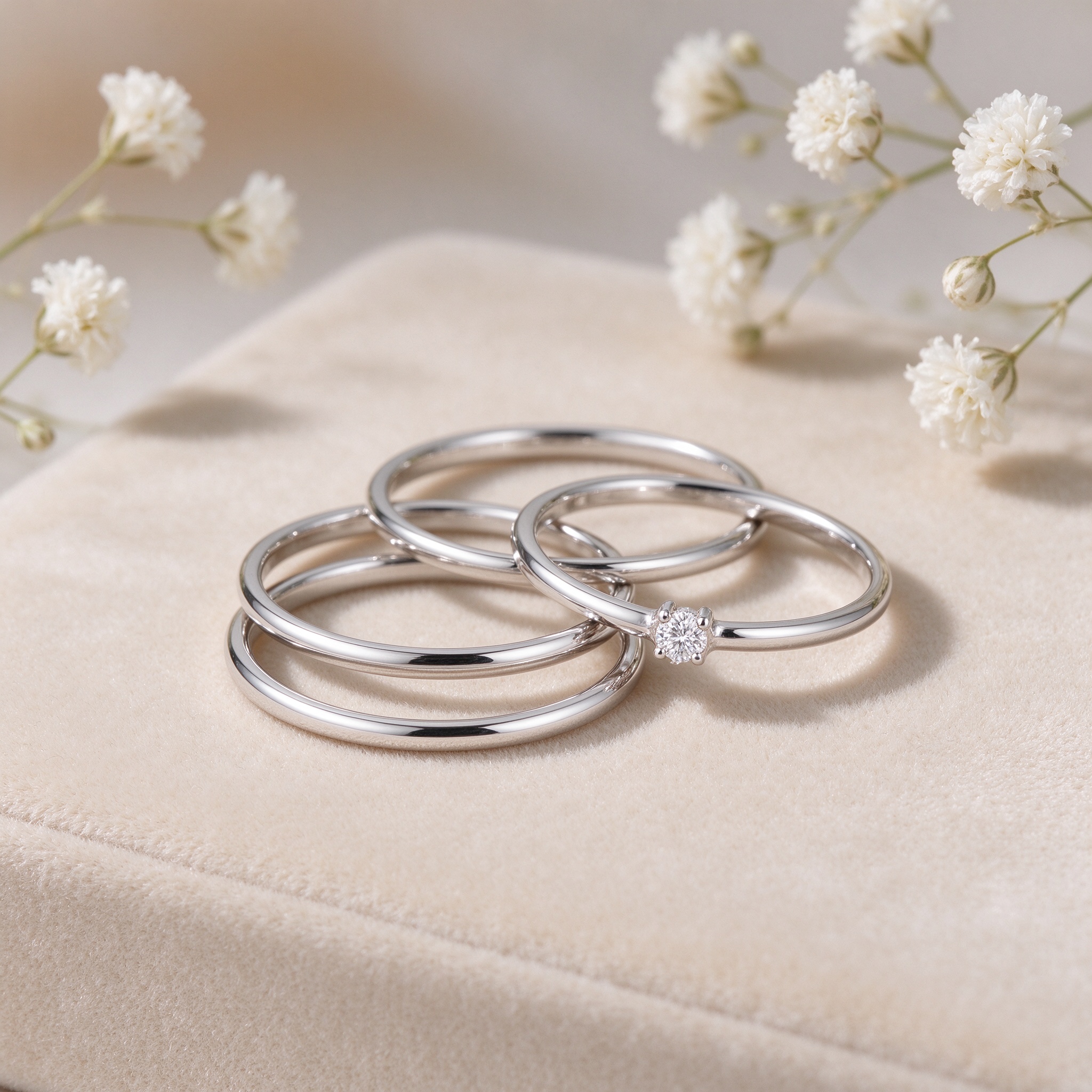
Midi or knuckle rings sit between the knuckle and the base of the finger, higher than a regular ring. Wear two to four per hand, choosing one to two sizes smaller than a standard ring to prevent slipping. Most are thin bands, open wraps or adjustable styles that fit different finger widths.
Common styles include plain thin bands, twisted bands, polished small rings, stone-accented pieces (CZ, amethyst, turquoise, ruby) and bohemian carved designs. Minimal plain bands suit daily office wear, while stone and carved pieces work for parties and statement looks. Vary band thickness when stacking.
Stack across index, middle and ring fingers with an offset layout. For a minimalist look, layer two or three plain bands; for bohemian style, use one carved stone ring as the focal point. Leave space on the opposite hand when pairing with bracelets or watches so the look does not feel crowded.
Most midi rings use 925 sterling silver, durable for daily wear. Sensitive customers can choose nickel-free pieces or rhodium and white gold plated finishes to reduce contact irritation. For stone styles, bezel setting holds the stone more securely.
Steady sellers are plain thin band sets, adjustable open rings and CZ small rings. Stock plain band sets as core, stone and carved pieces as supplement, and offer multi-ring sets. Our Shenzhen factory supports OEM private label, ODM custom design and small-batch midi ring set orders.
Midi rings sit higher on the finger between the knuckles, with a smaller band and thin or open adjustable structure; regular rings sit at the finger base in a standard size.
Stack two to four per hand for a layered look; a single statement ring also works, and too many rings on one hand can look crowded.
Most people tolerate 925 sterling silver; sensitive customers should choose nickel-free pieces or rhodium plated finishes to reduce irritation.
Yes, we support OEM private label and ODM custom design for multi-ring sets based on your artwork or samples; MOQ is confirmed per style.


