

 EN

 CN
 ES

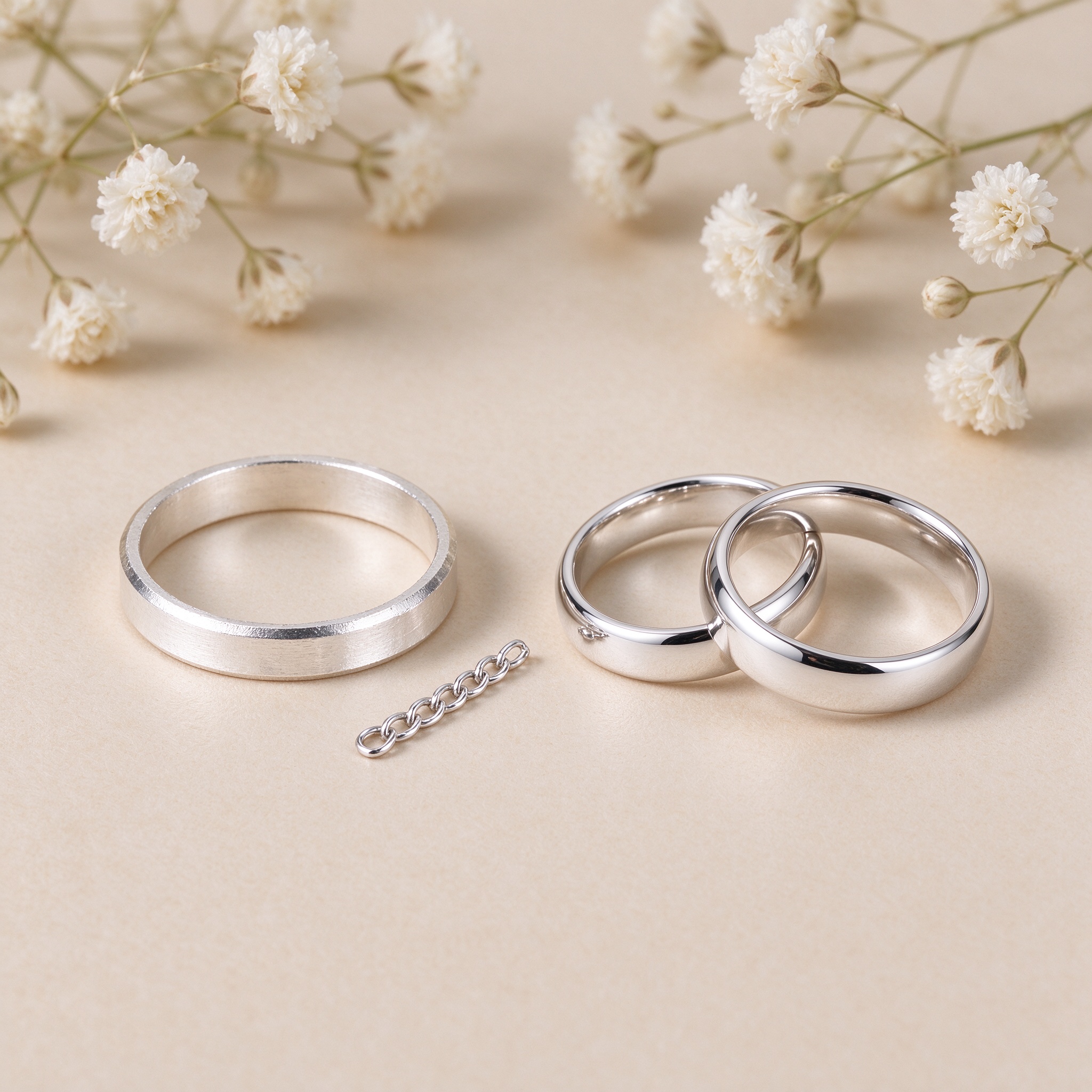
925 sterling silver contains 92.5% silver, with the remaining 7.5% mostly copper, zinc or other alloy elements. Fine silver is soft; copper raises hardness and resistance to bending, making it suitable for stones, links and daily wear. Alloy ratio, polishing and welding together determine durability and feel.
Rhodium plating offers high shine and better tarnish and wear resistance, used on bright pieces; white gold plating gives a near-silver look; gold plating creates gold or rose gold surfaces. Plating is a thin layer over the silver base, mainly to boost shine, resist oxidation and change color, without changing the base alloy.
With long wear, high-friction areas (clasps, pendant backs, ring interiors) thin first and reveal the base. Signs are local darkening, color difference or slight yellowing. When wear spreads and affects appearance, return the piece for cleaning and replating; daily reduction of hard-object and chemical friction extends plating life.
Solid silver uses 925 silver as the uniform body; plated pieces have a silver or alloy base covered by a thin metal layer. Check stamps, color changes at wear points, and the stated price and workmanship. A reputable supplier should clearly state material and plating type in the product description.
Avoid perfume, sweat and chemicals; wipe with a soft cloth after wear and store separately. When buying, confirm base material, plating type, nickel-free status and setting workmanship. Our Shenzhen factory supports 925 silver OEM private label, ODM design and surface plating, with rhodium, gold or plain silver options by target market.
Fine silver is soft; about 7.5% copper or zinc raises hardness and bend resistance, suiting stones, links and daily wear.
Both look silver; rhodium offers better shine, wear and tarnish resistance, while white gold is near-silver with different cost and luster; choose by style and budget.
Friction areas thin first and show the base; when wear spreads and affects looks, clean and replate at the factory. Avoid hard objects and chemicals to extend life.
Check stamps, color changes at wear points and workmanship; reputable suppliers state base material and plating clearly, so confirm each item before buying.


