Products

Blog

Crystal, Agate and Other Semiprecious Jewelry Characteristics

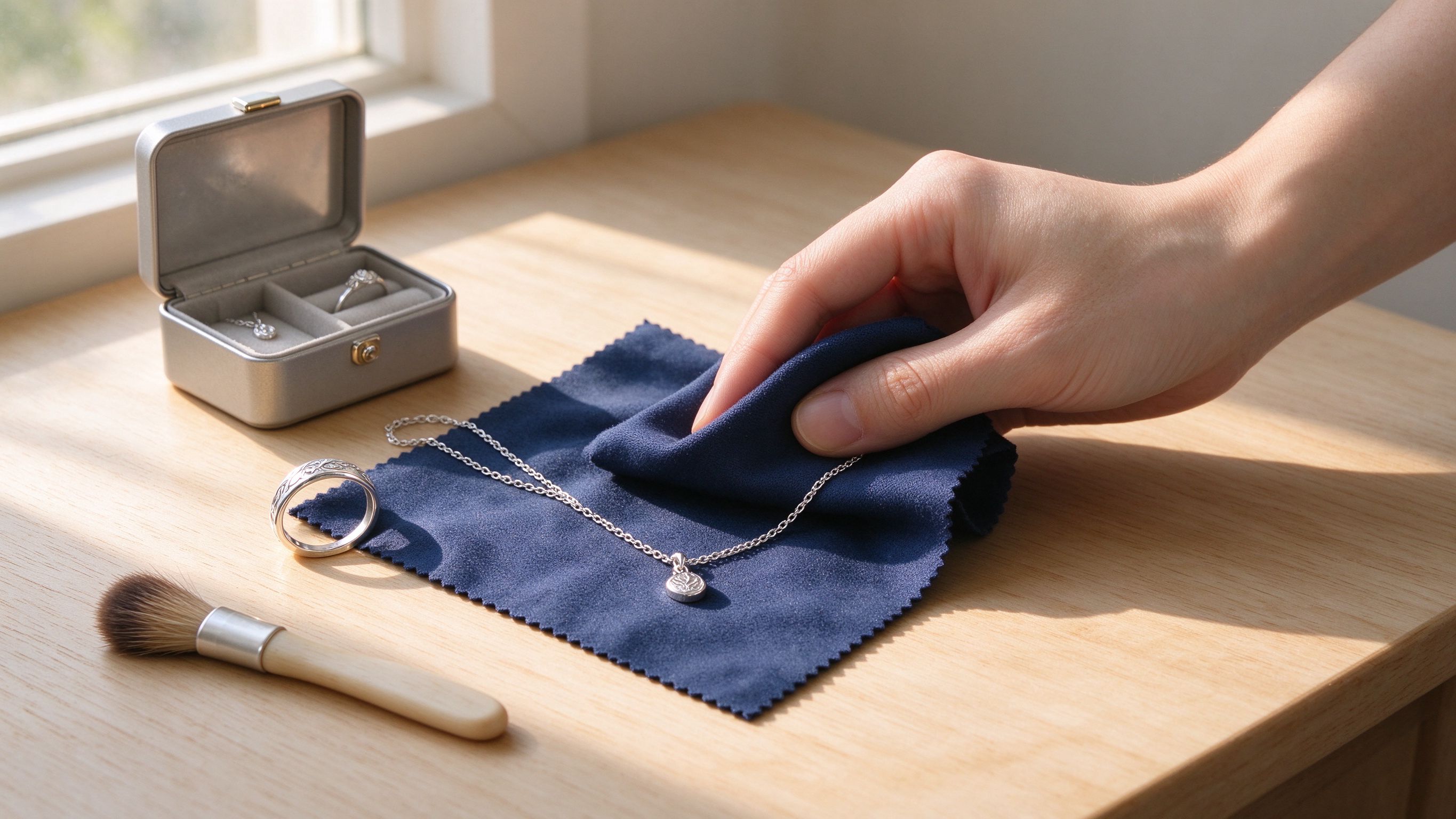
Crystal and agate are common semiprecious stones used in fashion jewelry. Both are hard, colorful, and well suited to pendants, earrings, and bracelets. Crystal is clear and brilliant, while agate shows warm layered banding. Some stones on the market are treated or dyed, so buyers should separate natural, treated, and synthetic categories before ordering.Main Stone CharacteristicsClear quartz: A single crystal of silica with glass-like luster and a Mohs hardness of 7. Tiny internal inclusions or cotton-like veils are normal natural features, and the stone is often cut into faceted pendants. Completely flawless clear quartz commands a higher price.Rose quartz: Soft pink caused by trace titanium and iron, popular for feminine pendants and beaded strands. Unusually deep or vivid pink rose quartz is often heat-treated or dyed.Agate: A microcrystalline quartz with typical banded patterns. Red, black, and green agate are common; most green agate is dyed, since natural green agate is rare. Blue and purple agate are also usually dyed.Amethyst: Purple from iron content; deeper colors command higher value, and long sun exposure can fade the color, so it should be kept away from direct sunlight.Choosing and CaringWhen buying, check whether the color looks even and natural, whether the banding flows smoothly, and whether the surface polish is smooth with no visible cracks. Natural stones may contain slight veils and ice lines. A supposedly natural stone with zero imperfections at a low price is likely glass or plastic. Under magnification, natural stones show irregular gas-liquid inclusions, while glass imitations show round bubbles or swirl patterns.Although crystal and agate rate high on the Mohs scale, they are brittle. Avoid knocks and sudden temperature changes, which can chip the edges. Store each piece separately in a soft cloth, keep away from perfume and hairspray, and wipe gently with a soft cloth and water. Avoid ultrasonic cleaning, which can loosen stones. Reputable suppliers disclose any dyeing or heat treatment on the packing list, so ask about treatment status before ordering.MASCOT Jewelry pairs natural crystal and agate with 925 sterling silver, and all incoming stones are inspected before production, for OEM and ODM pieces shipped to over 50 countries. Contact us for a sample catalog on semiprecious stone jewelry.

Why Silver Jewelry Causes Allergies and How to Prevent It

If skin turns red and itchy after wearing silver jewelry, the cause is almost never 925 silver itself. 925 sterling silver is stable and low-allergenic, but nickel in cheap alloys and thin plating can release nickel ions onto the skin and trigger contact dermatitis. You can often tell a nickel reaction by the location and timing of the rash.The Real Cause of the ReactionNickel is one of the most common contact allergens, and roughly one in ten people is sensitive to it. EU REACH rules limit nickel release from long-term skin-contact metal items to 0.5 microgram per square centimeter per week. Low-cost silver-look pieces are often made of brass or zinc alloy plated with a thin silver layer. Once the plating wears, the underlying nickel touches the skin. White rhodium or rose gold plating baths may also contain nickel. Sweat, especially in summer, accelerates ion release and worsens the rash. Typical symptoms are red patches, bumps, and itching exactly where the metal touches the skin, fading within days once the piece is removed. If a reaction has already happened, stop wearing the piece and see a dermatologist rather than applying more cosmetics over the rash.Prevention StepsChoose real material: Look for the S925 or 925 stamp. Sterling silver itself does not contain nickel as an allergenic component, so long-term wear rarely causes reaction.Request nickel-free plating: For bulk orders, require a nickel-free plating process and ask for a third-party nickel-release test report following the EN 1811 method.Keep it dry: Take off jewelry during exercise, showering, and swimming. Wipe sweat off promptly with a soft cloth to reduce contact time.Test first: Wear a new piece for a short period. Test behind the ear or on the inner wrist for 24 hours before daily wear; pregnant people and children have more sensitive skin.Stop when plating wears: Once plating chips and base metal shows, stop wearing the piece next to skin, and re-plate before use.MASCOT Jewelry produces 925 silver jewelry with nickel-free plating that meets REACH nickel-release standards, and supports OEM and ODM customization. Contact us for test reports and samples of hypoallergenic silver jewelry.

Prong, Bezel and Pavé Settings Compared

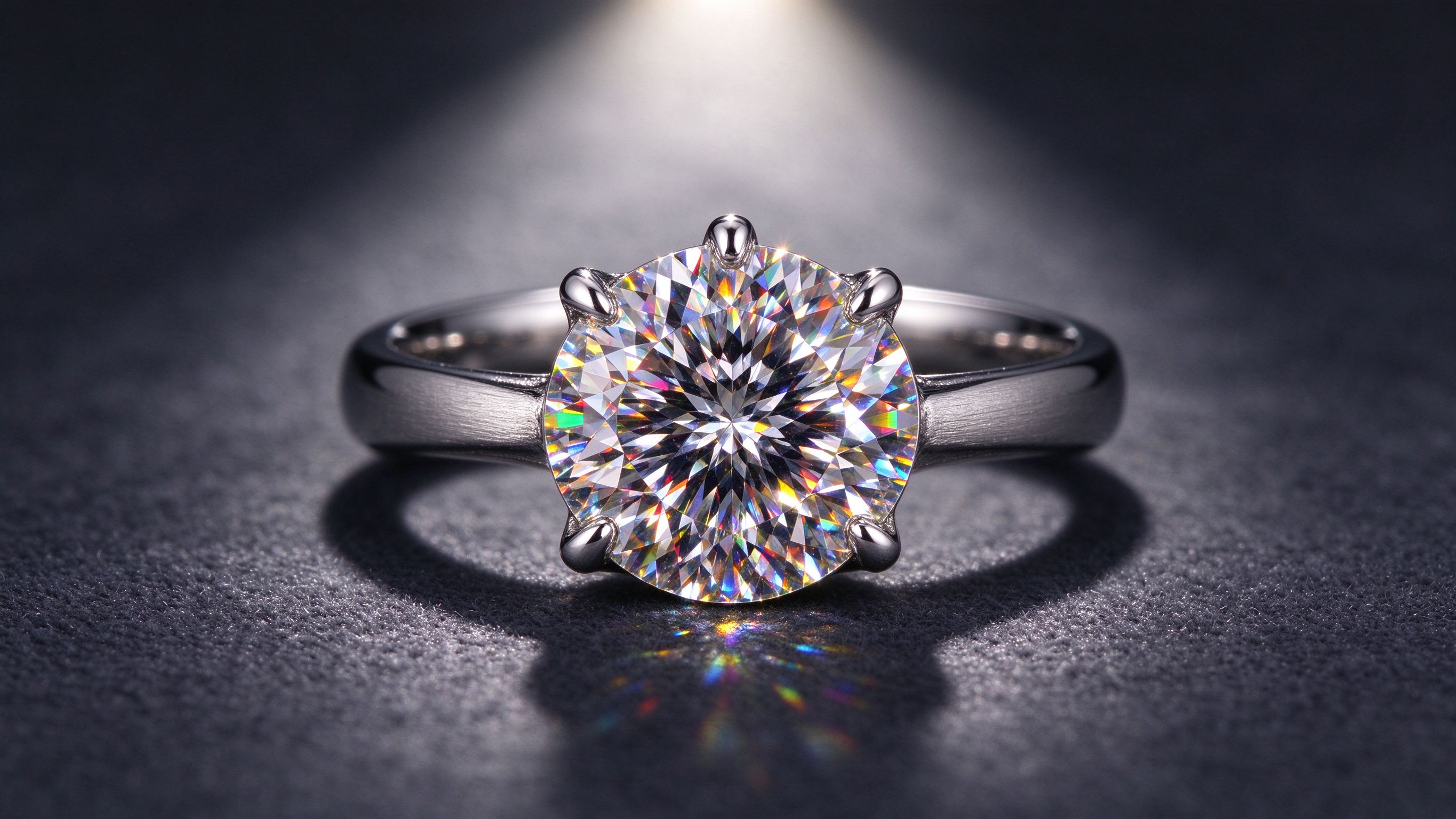
Prong, bezel, and pavé are the three most common jewelry settings. Prong setting maximizes light for a center stone, bezel offers a secure and retro look, and pavé uses small stones densely packed for sparkle. The right choice depends on the stone shape, design style, and how the piece will be worn, and it also affects long-term security and repair cost.Prong SettingMetal prongs, typically four or six, grip the girdle of the stone, leaving most of it exposed. Light enters from every angle, showing off fire and clarity. Prong setting suits round or oval center stones in rings and pendants. It makes stones look larger and brighter, but prongs can catch on clothing and hair and need periodic checks for looseness. Six prongs are more secure than four, and rounded prong tips reduce snagging. Larger center stones may use eight prongs or a double-row prong head.Bezel SettingA thin rim of metal wraps fully around the stone girdle, holding it flush. Bezel setting protects the stone edge, resists knocks, and feels comfortable to wear, making it ideal for everyday rings and vintage styles, and it also suits square or trapezoid step-cut stones. The trade-off is that metal blocks some light, so the stone looks a little smaller. Precision machining is required: the rim must be even, thin enough to avoid looking bulky, and thick enough not to loosen the stone.Pavé SettingTiny metal beads secure small stones, usually under 2 millimeters, tightly across a metal surface, leaving almost no visible metal base. The result reads like a paved road of stones. Pavé works well on rings, bracelets, and earrings for a luxe, sparkling look. Small stones can fall out more easily, cleaning is harder, and cost is higher. Pavé needs harder metal, so sterling silver pavé pieces are reinforced to prevent bending that would loosen stones.How to ChooseHighlight a center stone and fire: choose prong, for engagement rings and pendants.Everyday wear and security: choose bezel, for commuter bands and mens rings.Luxe all-over sparkle: choose pavé, for evening pieces and bracelets.In practice the methods are often combined, such as a prong-set center stone with pavé along the shank. MASCOT Jewelry masters all three setting methods and can produce from your CAD or hand sketches for OEM and ODM orders shipped to over 50 countries. Contact us to discuss your setting designs.

Quality Control Process in a Jewelry Factory

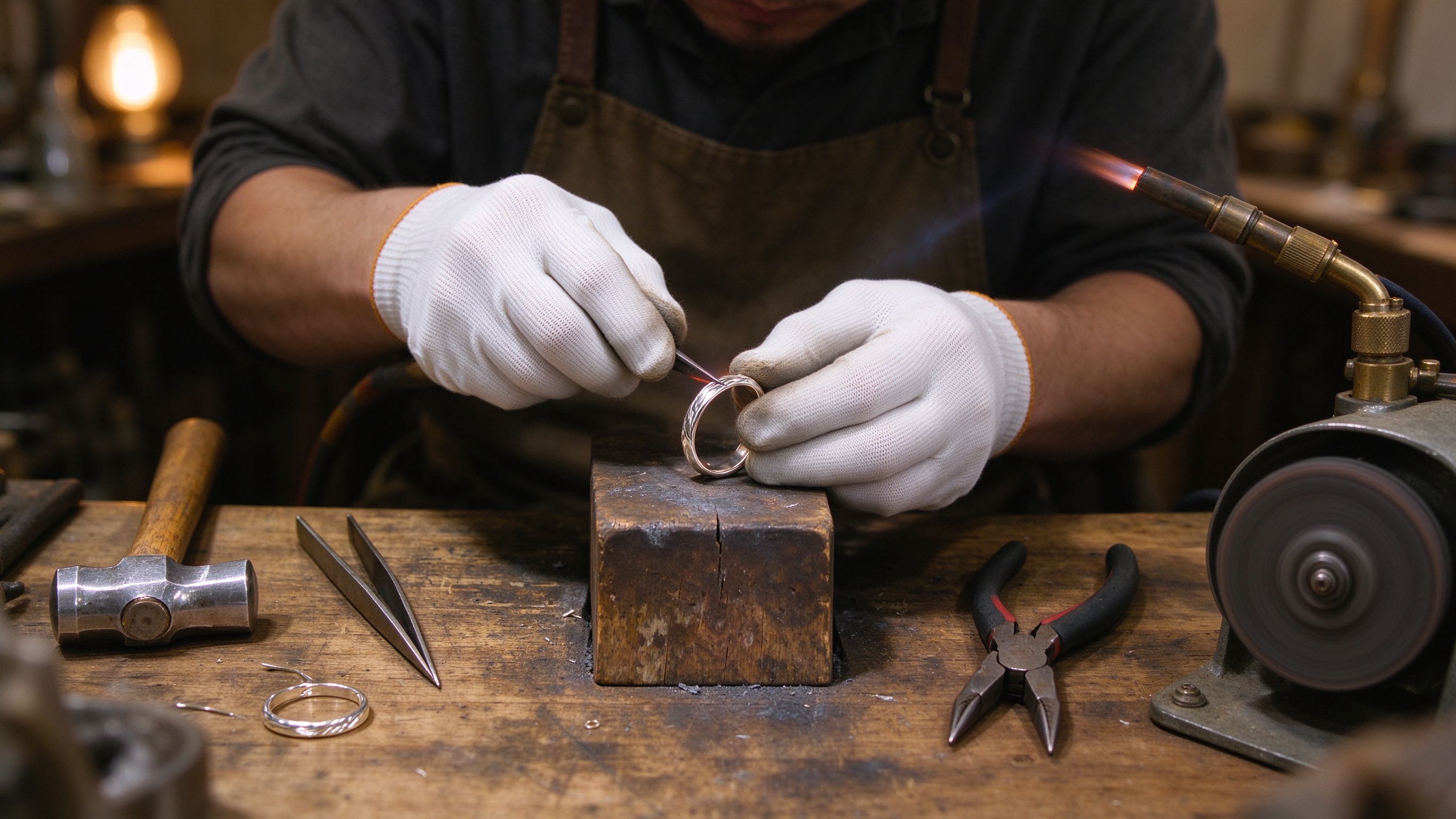
A well-run jewelry factory controls quality across three stages: incoming material, semi-finished goods, and finished product. There are typically six checkpoints: material intake, wax and casting inspection, pre-polish check, post-plating check, full finished-goods inspection, and packaging sampling. Any defect found is quarantined and reworked so that bulk orders match the approved sample. The point of QC is to catch problems internally, not after the client receives the goods.The Six QC CheckpointsMaterial intake: Silver purity, the 925 content, is checked with a spectrometer, and stone sizes and color batches are matched against the approved sample. Supplier certificates and test reports are verified before storage.Wax and casting: Wax models are checked against the rubber mold; cast pieces are inspected for porosity, distortion, and missing sections, with sprue residue cleaned off.Pre-polish check: Soldering joints and symmetry are verified, and ear posts are checked for alignment. Catching issues here is the cheapest point of rework, since soldering after polishing damages the surface.Post-plating check: Plating color, coverage, blistering, and shade differences are inspected. Plating thickness is measured with a thickness gauge to order spec, typically 0.5 to 1 micron or more of gold.Finished-goods full inspection: Every piece is checked for appearance, secure stone setting tested with a probe, clasp function, and clear stamps or logos. Ear post length and bend are also inspected.Packaging audit: Cartons are sampled to AQL standards for quantity, labels, and shipping marks against the packing list, and finished weight is checked against the weight sheet.Records and TraceabilityEach batch keeps inspection records and defect statistics. If the defect rate exceeds the threshold, root-cause analysis starts and the production line is notified. Export orders also keep nickel-release and lead and cadmium test reports ready for client or third-party factory audits. First-article and end-of-batch samples are retained for later comparison. Buyers and third-party auditors may request copies of these reports and retention samples during factory audits or before a reorder.MASCOT Jewelry runs a full-process QC system from raw material to shipment, meeting REACH and other export standards, and supports OEM and ODM bulk orders. Contact us for QC documentation and samples for consistent silver jewelry supply.

Silver Jewelry Laser Engraving: How Personalization Works

Laser engraving on 925 sterling silver uses a focused fiber laser to ablate the surface and leave a dark, permanent mark at a precision of about 0.1 millimeters. It is the standard method for personalizing names, dates, coordinates, and short phrases on silver rings, bracelets, and pendants, because the edges stay clean and the depth stays even across hundreds of pieces.What Can Be Engraved on SilverCommon content includes Latin letters and digits, names in other scripts, anniversary dates, GPS coordinates, heartbeat lines, fingerprints, minimal line art, and brand logos. Because polished silver reflects the laser, the factory usually applies a matte or sandblasted base before engraving so the mark reads dark and sharp. Engraving depth typically sits between 0.02 and 0.05 millimeters. Going deeper weakens the ring wall; going shallower lets the mark disappear after polishing.Workflow and File RequirementsArtwork confirmation: The customer sends text, font choice, and a vector file (AI or CDR). The factory checks the engraving area and minimum stroke width.Proofing: A wax or silver sample is produced first. The customer approves size and position in writing before bulk work begins.Bulk marking: A fiber laser machine marks each piece, taking about 30 seconds to 2 minutes depending on complexity.Finishing: Pieces go through ultrasonic cleaning, drying, and an optional anti-tarnish seal.What Customers Should KnowLaser marks cannot be polished off, so the proofing step must be taken seriously. Thin calligraphic fonts tend to blur on small surfaces such as ring interiors, so a clean sans-serif face with strokes no thinner than 0.3 millimeters works best. On gold-plated silver, the engraving exposes the silver base and creates a two-tone contrast, which is expected rather than a defect. Laser engraving is a low-cost add-on: simple text or digits cost only a few yuan per piece at the factory, while complex artwork is quoted separately. Because it needs no per-piece die, small batches of a dozen or two dozen pieces remain practical, which is why it dominates the personalization market.MASCOT Jewelry has run an in-house laser engraving workshop since 2012, supporting orders from one sample to ten thousand pieces. The factory exports 925 silver fashion jewelry to more than fifty countries and welcomes OEM and ODM inquiries for personalized collections.

Jewelry Bulk Order MOQ and Lead Time: Real Factory Numbers

For 925 silver jewelry, a typical minimum order quantity is 50 to 100 pieces per style, sample lead time runs 7 to 15 days, and mass production takes 25 to 40 days. These numbers reflect the standard range at a Shenzhen silver factory, and they move up or down with craftsmanship complexity, stone choice, and plating requirements.What Sets the MOQThe MOQ comes from mold cost, not from an arbitrary rule. Every new style requires tooling: wax carving, silicone mold making, casting, rough shaping, stone setting, and polishing. A new mold costs a few hundred to a few thousand RMB. If an order is too small, that tooling cost spreads over too few pieces and the unit price becomes unworkable. Setting the MOQ at 50 to 100 pieces keeps tooling amortized at a reasonable level. For restocking an existing mold, the MOQ can drop to 20 or 30 pieces.Lead Time BreakdownSample stage: 7 to 15 days. This covers artwork approval, tooling, first sample, and courier to the customer. One revision round adds 3 to 5 days.Material sourcing: Silver sheet, loose stones, and findings are usually in stock. Rare semi-precious stones add 7 to 10 days of procurement.Mass production: 25 to 40 days, flowing through casting, finishing, setting, polishing, plating, QC, and packaging.Freight: Sea freight to US or EU ports takes 25 to 35 days; air freight takes 3 to 7 days and must be counted in the schedule.How to Shorten the ScheduleThe most effective way to cut lead time is to avoid rework. Lock the size, stone seat, and plating color in the design stage so nothing changes mid-production. Choosing stones and plating finishes the factory already stocks removes waiting time. Before peak seasons such as Christmas, the workshop fills its calendar quickly, so placing the order two months ahead is safer. Payment is usually split between a deposit that triggers production and a balance paid after final inspection and before shipment. If each style runs small, several styles can share one order to reach volume.MASCOT Jewelry runs as a direct 925 silver factory in Shenzhen, accepting orders from 50 pieces per style with a 7-day sample rush service. OEM and ODM customers across more than fifty countries rely on this schedule, and the team welcomes catalog-based quote requests.