Products

Blog

From Sketch to Finished Piece: The Complete Silver Jewelry Production Workflow

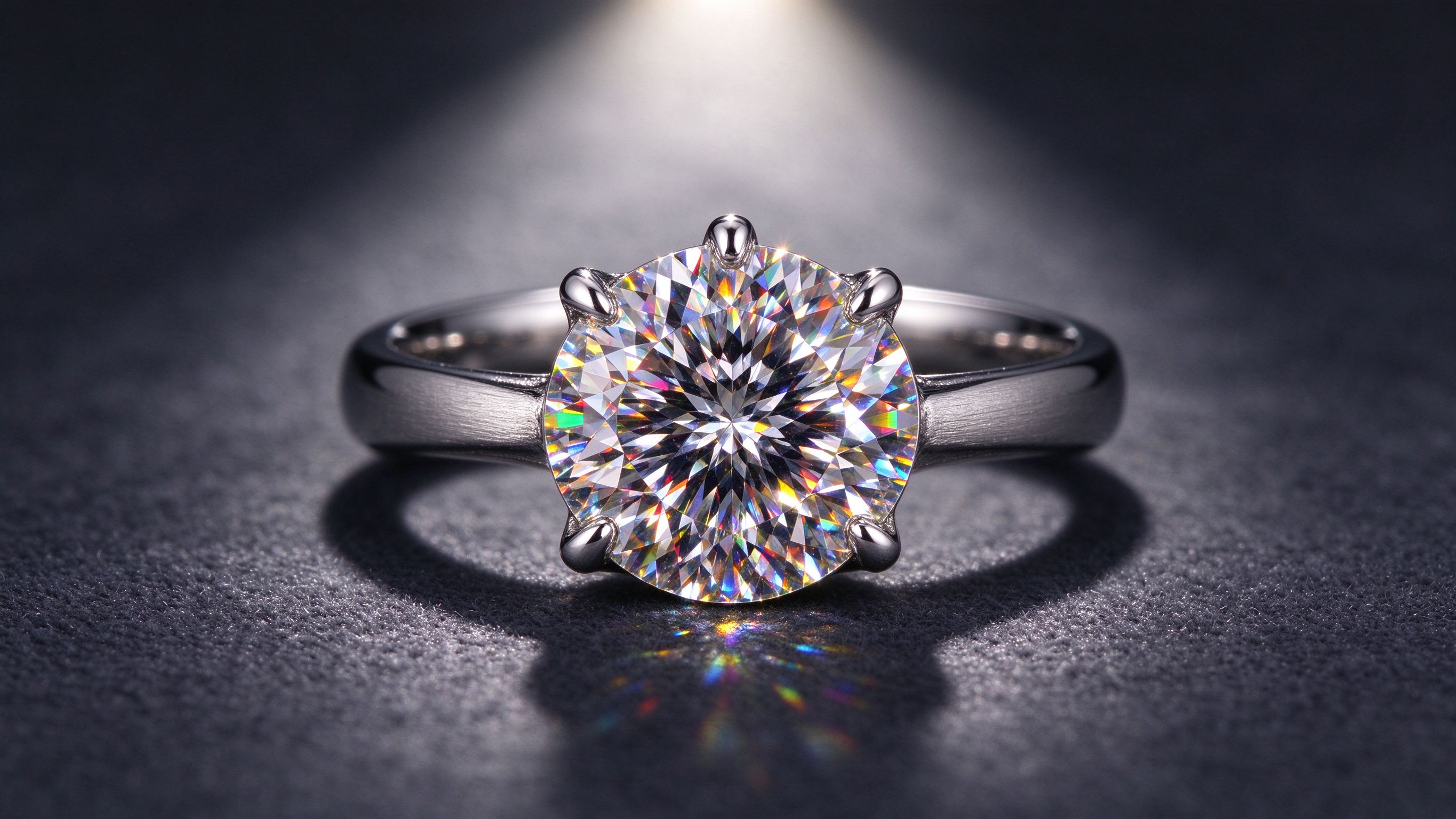
A finished 925 sterling silver piece normally passes through five stages from concept drawing to shelf-ready product: design and model making, casting, filing and finishing, stone setting, and polishing with plating. A standard order takes about 15 to 30 days, while complex pavé pieces take longer. Silver jewelry is not simply melted silver poured into a mold; it is a chain of metalwork, surface treatment and gem setting steps.1. Design and Model MakingThe designer draws three-view sketches or 3D renderings of the pendant, ring or bracelet. Once the shape, stone seats and dimensions are approved, the model maker builds a master silver plate either by hand-carving wax or by CNC. Wax carving suits organic curves and flowing lines; CNC is more precise for geometric shapes and repeatable production. The approved master is then used to vulcanize rubber molds for batch wax injection.2. CastingWax models are attached to a tree, invested in plaster and steamed out in a burnout oven to leave a hollow cavity. Molten 925 silver is cast into the cavity under centrifugal or vacuum pressure, which is the lost-wax investment casting process. After quenching, the plaster is broken away to reveal the silver tree. Simple flat pieces such as thin bangles may instead be stamped on a press, which is cheaper and faster.3. Filing and FinishingThe caster cuts each piece off the tree. The filer removes sprue marks with files and sandpaper, corrects distortion and smooths the lines. This step decides the fit and hand feel of the final piece and relies heavily on the experience of the bench jeweler.4. Stone Setting and Surface TreatmentCubic zirconia, moissanite or semi-precious stones are fixed by prong, bezel or pavé setting. Polishing follows: coarse grinding removes pits, then a cloth wheel with green compound brings the piece to a mirror shine. Pieces that need plating go to the plating shop, where rhodium or 18K gold is deposited over the silver base for color and tarnish resistance.5. Quality Control and PackagingEvery piece is inspected for loose stones, pits, plating color and proper stamps, then tumbled, wiped and packed to the brand specification. MASCOT Jewelry, a Shenzhen silver manufacturer founded in 2012, runs all stages in-house and supports OEM and ODM customization for brands exporting to more than 50 countries.

Jewelry OEM and ODM Customization: Process, MOQ and Key Considerations

OEM means the client provides the drawing and the factory produces to spec; ODM means the factory offers existing designs or semi-custom models that the client brands and sells. Both routes normally take 30 to 45 days from inquiry to delivery. The core difference is who owns the design responsibility and what minimum order quantity applies.1. Inquiry and QuotationThe client sends drawings, a physical sample or a reference style. The factory evaluates material, difficulty and process, then quotes unit price, mold fee and MOQ. For 925 silver pieces the typical MOQ is 100 to 300 pieces per style, higher for complex pavé work. The quote should state whether mold cost, plating, stones and packaging are included.2. Sampling and ApprovalThe factory makes one to three hand samples. The client approves size, weight, color and stone seats, then signs a sealed sample. Bulk production must match the sealed sample; verbal agreements lead to color and finishing disputes. Sampling takes 7 to 15 days, and the sample fee is often refunded once the bulk order is placed.3. Bulk ProductionAfter sample approval the order moves into mold making, wax injection, casting, filing, stone setting, polishing and plating. The client can request progress photos or video mid-production. It is wise to inspect at key nodes, such as before stone setting and before plating. Bulk lead time is usually 20 to 35 days depending on complexity and the factory schedule.4. Inspection and DeliveryShipment is checked under AQL standards for size, weight, stamps, stone tightness and surface defects. Export packaging includes individual OPP bags, anti-tarnish cloth and outer cartons with packing lists. Cartons should also carry the labels required by the destination market, such as nickel release marks and country of origin. The balance payment is settled before dispatch.5. Key ConsiderationsMaterial must be written in the contract, specifying 925 or 999 silver content.Plating thickness affects cost and color retention; 0.03 to 0.05 micron is standard.Logo and stamp positions should be agreed early to avoid rework.Keep the sealed sample and QC report for after-sales disputes.MASCOT Jewelry offers one-stop OEM and ODM service from design to shipment, with its own Shenzhen factory supporting custom designs for cross-border brands and online sellers.

How to Measure Ring Size: US, China and EU Ring Size Conversion

The reliable way to determine ring size is to measure the circumference of the knuckle base in millimeters, then convert that number into US, Chinese or EU sizes. Measure in the late afternoon, when the hand is warm and dry, and take three readings to average out swelling from heat or cold.1. Home Measurement MethodWrap a non-stretching string or narrow paper strip around the base of the finger, mark where it overlaps, then straighten it and read the length in millimeters on a ruler. Alternatively, measure the inner diameter of a ring that already fits you comfortably. Remember that the knuckle is usually wider than the finger base; the ring should slide over the knuckle but not slip off. Do not measure right after exercise, a hot bath, or on a very cold day, because finger circumference can shift by half a size or more during the normal day.2. US, China and EU Size ConversionChinese or HK sizes: around 47 mm circumference equals size 7, around 56 mm equals size 14, with roughly 2.3 mm between each size.US sizes: around 49.3 mm equals US 4, around 59.5 mm equals US 8, with most adults wearing US 5 to US 9.EU sizes: marked directly by circumference in millimeters, so 49 equals EU 49 and 59 equals EU 59.Quick reference: Chinese size 10 is close to US 6 and EU 52; Chinese size 13 is close to US 7.5 and EU 55; Chinese size 16 is close to US 9 and EU 59. When buying cross-border, trust the millimeter circumference rather than the number printed on the band.3. Buying TipsWide bands fit tighter, so choose half a size up for bold rings.Adjustable bands skip measurement but fit less securely than fixed sizes.Rings feel tighter in winter and looser in summer, so measure at room temperature.If the knuckle is large, prefer styles that can be gently resized later.MASCOT Jewelry supplies 925 sterling silver bands that can be produced to a client circumference or resized, and OEM and ODM orders can be marked with the target US or Chinese size for export to more than 50 countries.

Silver Soldering and Polishing: The Craft Behind a Bright Finish

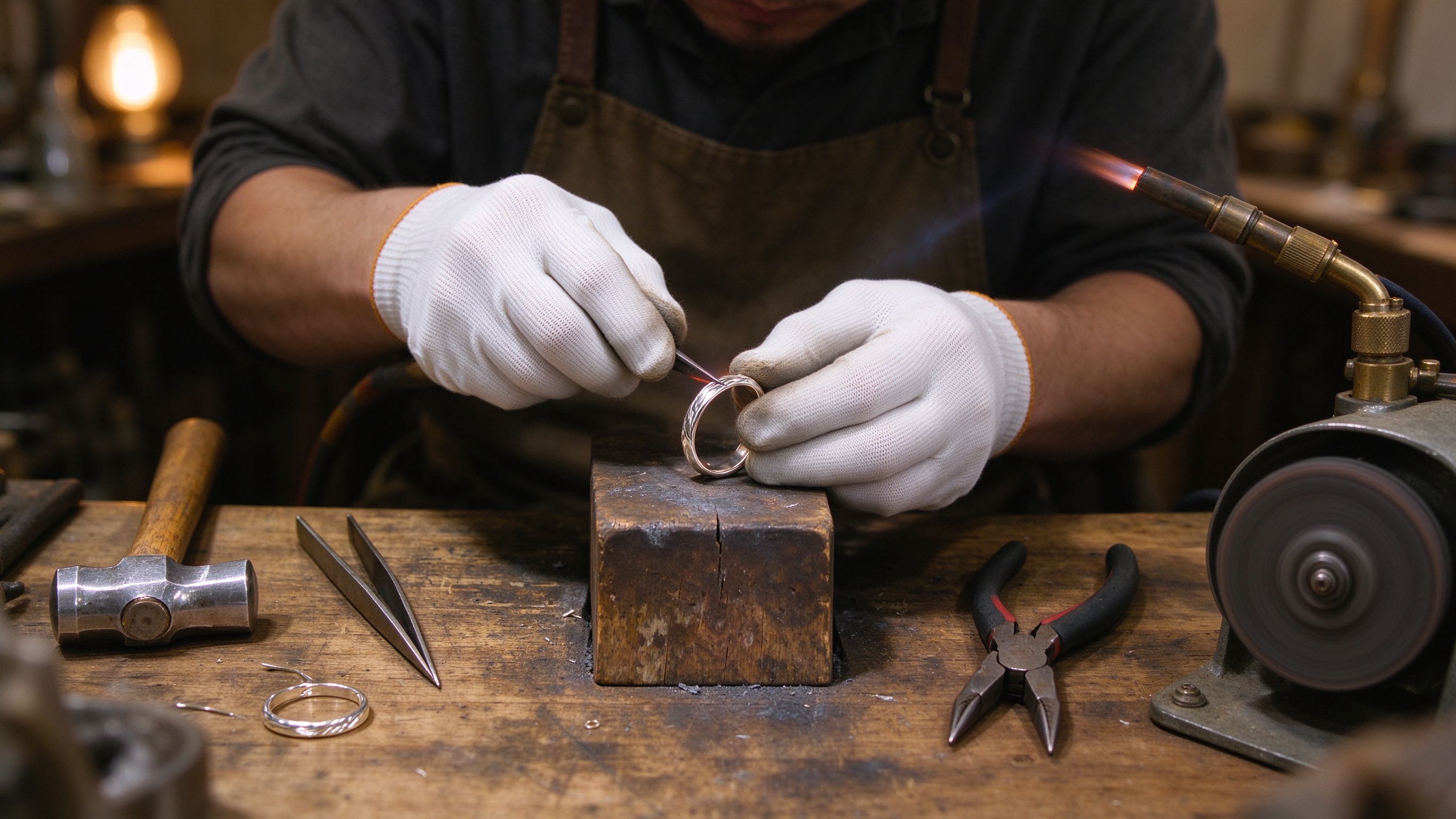
Silver soldering joins pieces locally at 650 to 740 degrees Celsius using solders of different melting points. After soldering, the piece must go through coarse grinding, fine grinding and cloth-wheel polishing to remove fire scale and seams; only then does it reach an even mirror shine. Poor torch control causes burn-through, black seams or unwanted melting of neighboring parts.1. Solder Types and PrincipleSilver solder comes in high, medium and easy grades. High-temperature solder, around 740 degrees C, is used first for main joints; medium, around 700 degrees C, follows; easy, around 650 degrees C, is reserved for final repairs. Working from high to low prevents later heat from melting previous seams. Solder is an alloy of silver, copper and zinc; higher silver content matches the color of 925 silver more closely.2. Soldering TechniquePolish the joint surfaces bright with sandpaper and apply flux, usually borax, to remove oxide.Warm the whole piece first, then focus the flame on the joint; solder flows into the gap by conduction, not by melting the solder directly in the flame.Complete each joint in one heat; repeated heating makes the silver grain coarse and brittle.Quench immediately in pickling acid or alum solution to remove black fire scale.3. Polishing ProcessPolishing splits into grinding and final buffing. Grinding uses files, belts and wool wheels to smooth solder marks, pits and file lines. Final buffing uses a muslin wheel with green or brown compound at high speed to reach a mirror shine. Pieces headed for plating are polished first, then sent to the plating shop for rhodium or 18K gold, which further brightens the surface and slows tarnish. Intricate openwork pieces need masking during polishing so the cloth wheel does not snap thin wires.4. Common DefectsTypical problems include porosity caused by greasy surfaces, cold joints that look joined but are not fused, overheated blackened areas and lost edges from over-buffing. These are corrected during rework by an experienced bench jeweler.MASCOT Jewelry runs its own filing and polishing workshop; every 925 silver piece passes three polishing stages and full inspection. We support OEM and ODM production for cross-border brand bulk orders.

925 Silver vs 999 Silver vs Alloys: Which Material Should You Choose?

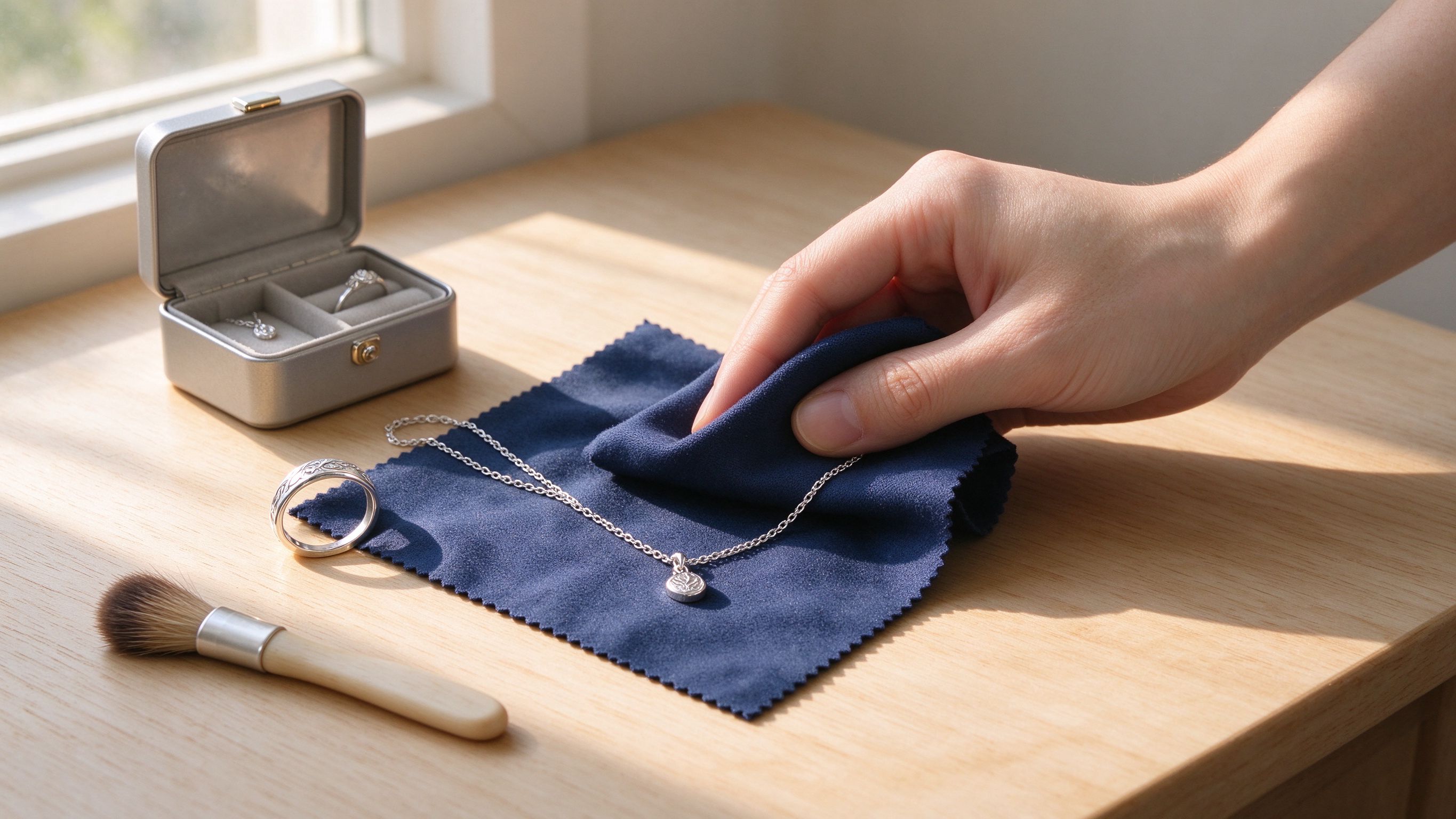
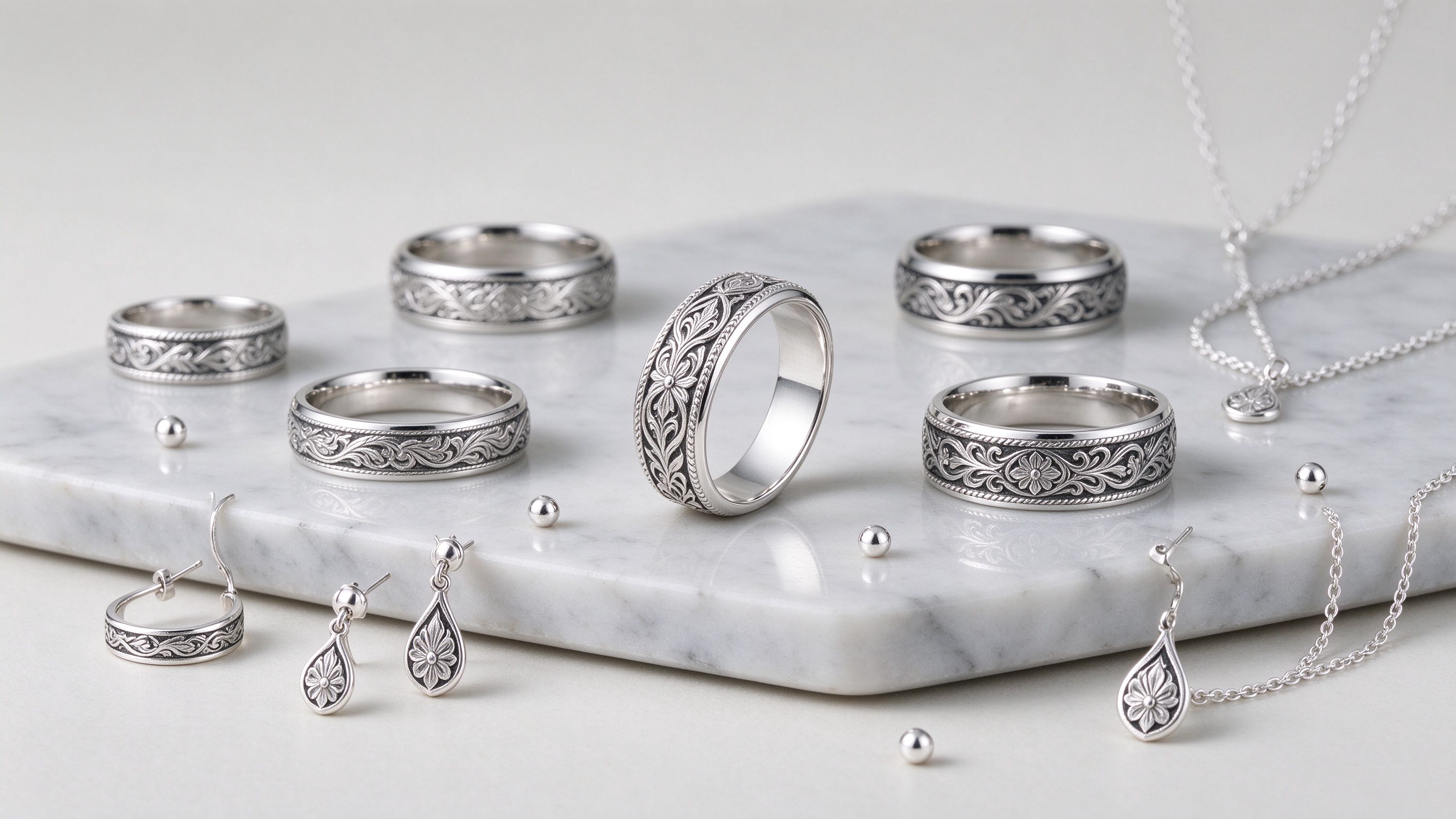
925 silver contains 92.5 percent silver and is hard enough for stone setting and daily wear, making it the international mainstream. 999 fine silver is 99.9 percent silver, softer and more visibly precious, but it deforms easily. Alloys such as copper, stainless steel and zinc alloy are cheaper and offer many styles, yet they tarnish faster and can cause skin reactions. Choose by wearing scenario, budget and willingness to maintain.1. 925 Sterling Silver925 silver is made of 92.5 percent silver and 7.5 percent copper, at roughly 70 to 80 on the Vickers scale. It can hold cubic zirconia or moissanite securely without bending easily. It accepts rhodium or 18K gold plating well, which extends color life. The trade-off is that silver still sulfides and darkens with sulfur and sweat, but this can be restored with a polishing cloth and occasional re-plating. Affordable fashion silver and export orders almost always use 925 silver.2. 999 Fine Silver999 fine silver has the highest silver content, a softer white tone and a strong sense of preciousness. It is common for silver bars, plain bangles and traditional craft jewelry. Because it is soft, stones set in 999 silver loosen easily, thin chains break under tension and the surface scratches readily. It suits buyers who prefer plain styles, wear occasionally or value bullion.3. Alloy MaterialsCopper alloy: can be silver- or gold-plated to look close to real jewelry at low cost, but exposed copper under worn plating oxidizes green.Stainless steel (304 or 316L): barely tarnishes and rarely triggers allergies, popular for streetwear and men jewelry, but it cannot reproduce the soft white luster of silver.Zinc alloy: fast die-casting for complex shapes, but lead risk must be controlled and it suits only low-price fast fashion.4. How to ChooseFor daily wear, lasting color and stone setting, choose 925 silver. For investment value, plain bangles and traditional craft, choose 999 fine silver. For cheap fast fashion worn for one season, choose quality copper-plated or stainless steel. Whatever you pick, verify the stamp and buy through reputable channels.MASCOT Jewelry focuses on 925 sterling silver and 18K gold plated pieces, and can also develop alloy styles on request. Our OEM and ODM service exports to more than 50 countries; request our catalog for samples.

Export Packaging and QC Standards for Fashion Jewelry

Export fashion jewelry must pass three layers of requirements: protective packaging, material compliance, and finished-goods quality control. The EU market requires REACH compliance for nickel release and lead and cadmium limits, while packaging must prevent tarnish, scratches, and moisture damage. A clean shipment usually goes through three gates: pre-production sample approval, in-line inspection, and final random inspection before the container is sealed.Export PackagingPackaging uses an inner and an outer layer. Each piece goes into an individual OPP bag or velvet pouch so that pieces do not scratch one another. Necklaces and bracelets are secured on cardboard cards to stop tangling. For gemstone and crystal pieces, silica gel desiccant and EPE foam cushioning are added to prevent shock damage in transit. The outer carton uses five-ply corrugated board, filled with foam or paper to eliminate movement, and marked on all six sides with fragile, this-side-up, moisture, and stack-limit labels. For full-container shipments, the carton side also shows the customer code, style number, and carton number for easier counting at the destination port.For retail-ready shipments to Western markets, clients often request custom flocked boxes, window cards, or hang tags showing material, origin, and barcode. Some brand clients also require recycled paper packaging and ask for PVC-free bags to meet the EU packaging waste directive.QC Standards and ProcessMaterial compliance: EU REACH limits nickel release on skin-contact metal items to 0.5 microgram per square centimeter per week, and lead below 0.01 percent. Plated products for export must use nickel-free or low-nickel plating, backed by SGS or BV test reports.Visual inspection: Each piece is checked for scratches, pits, even plating, secure stones, and clear logos or stamps, with no missing polish or rough spots.Functional tests: Spring rings and lobster clasps open and close smoothly; chains pass pull tests; rings stay round without distortion; ear posts stay straight.Packaging audit: Cartons are sampled to AQL 2.5 for major defects and 4.0 for minor defects, verifying quantities, labels, and shipping marks against the packing list and commercial invoice.Before bulk production starts, a pre-production sample is approved by the client, and final goods are 100 percent inspected plus sampled. MASCOT Jewelry exports to over 50 countries and is familiar with EU REACH and US CPSIA requirements. We support nickel-free plating and custom packaging for OEM and ODM orders. Contact us for samples and a quotation on export-grade fashion jewelry.