

 EN

 CN
 ES

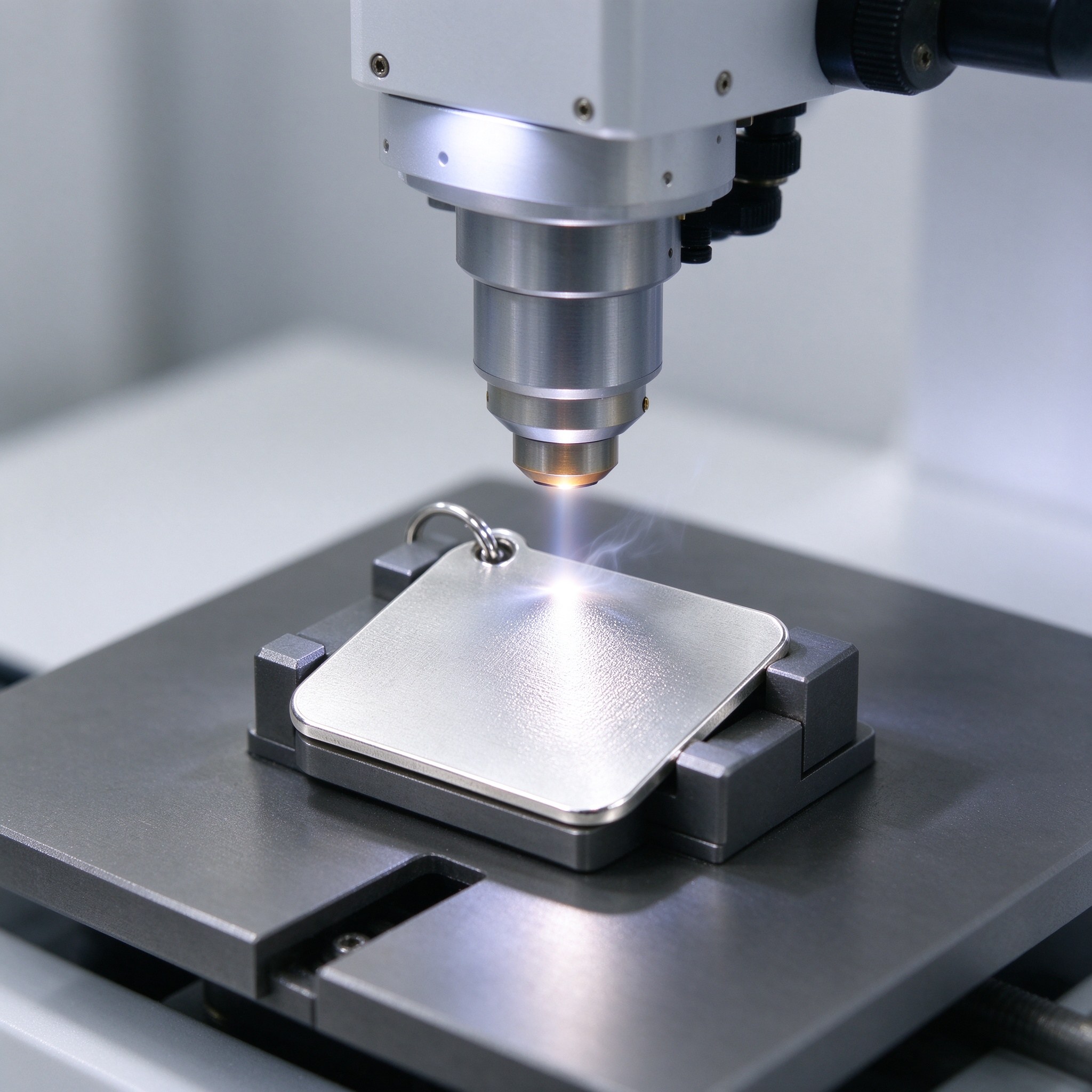
Laser engraving burns the mark into the metal surface: no tooling, fast revisions, shallow depth. Stamping presses a hardened steel die into the metal for crisp, durable relief but requires a die. Electroforming builds the logo as a separate metal badge later soldered on, allowing hollow, irregular and three-dimensional shapes. Enamel fills a recess with colored glass and fires it for saturated color. The logic is simple: low volume with frequent changes goes to laser, high volume needing relief goes to stamping, irregular 3D shapes go to electroforming, color goes to enamel.
Laser wins on zero tooling cost, same-day proofs and small runs. Limits: depth is typically a few to tens of microns, and oxidation or thick plating can wash out contrast; curved surfaces need a rotating fixture; lines thinner than about 0.15 mm tend to blur; white marks read well on dark plating, while light silver needs oxidation or a black fill to stay legible.
Stamping requires a steel die, priced by artwork complexity, and suits runs of several hundred pieces and up, with unit cost falling quickly as volume rises. Relief is pronounced, wear-resistant and permanent, which makes it right for inner bands, pendant backs and bangle interiors carrying brand marks and quality stamps such as 925 or S925. Revision means a new die, and thin walls can distort under pressure, so leave enough material thickness.
An electroformed badge is grown as a thin metal plate and then soldered or bonded on. It allows openwork, irregular outlines and sculpted relief, reading like a separate emblem, often on pendant backs and bangle sides. The cost is an extra assembly step and solder joints. Enamel fills a recess with enamel powder and fires it, giving single or multi-color saturation, but firing temperature must be controlled so the surrounding silver does not anneal and distort.
Common placements: ring inner band, where roughly 1.5 mm of width is the practical floor for readable text; pendant back; bangle interior; and earring backs, where space is tightest and initials only is the safe call. Legibility depends on character height, ideally 0.8 mm or more, line spacing, and background treatment such as oxidation or black fill. Always approve a physical sample; a vector file on screen does not predict how it reads in metal.
Laser engraving: no die cost, fast revisions, workable from a few dozen pieces. Depth is shallow, so use oxidation or black fill for contrast.
Width limits it to initials or a short mark; keep character height at 0.8 mm or more, and confirm with a physical sample.
Yes. A steel die is charged once by artwork complexity, and unit cost drops with volume, which suits runs of several hundred and above.
An electroformed badge is a separate metal piece grown and soldered on, allowing openwork and 3D relief at higher cost; laser burns the surface directly with no tooling and shallow depth.


