

 EN

 CN
 ES

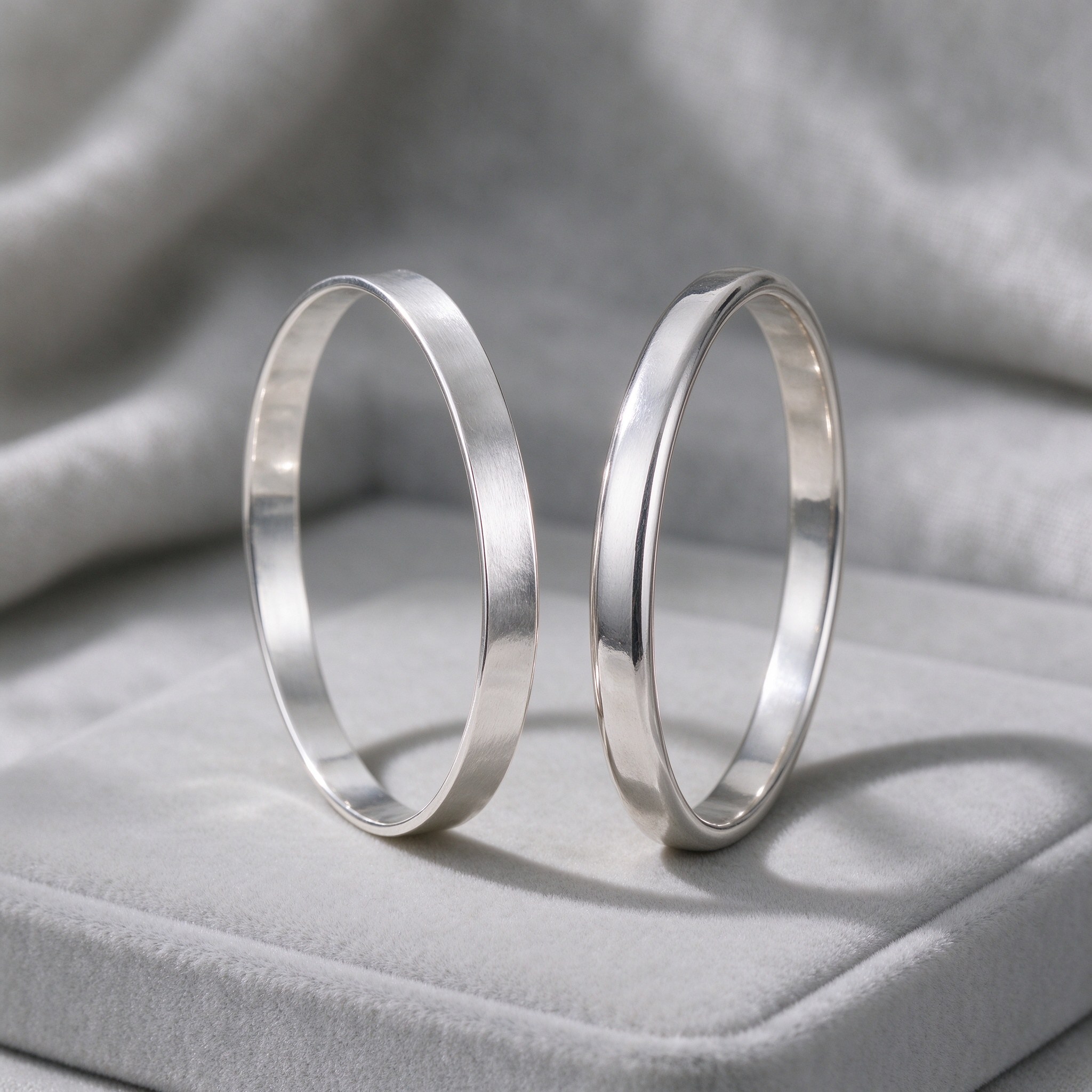
925 means 92.5 percent silver. It sets composition, not weight. The same ring design can differ by more than double between solid and hollow, thick-wall and thin-wall. Judging value by the 925 stamp alone misses the point; look at net silver weight, wall thickness and operations. The disciplined approach is to state finished weight and tolerance, commonly plus or minus five percent, on the quote and inspect bulk against that.
Hollow pieces are formed by wax or electroforming with an empty interior: large visual volume at low weight, good for big earrings and wide bangles, but weak against pressure, hard to restore once dented, and impossible to resize. Solid pieces feel substantial, last longer, can be resized and re-soldered, and cost more. Choose by market: retail large pieces lean hollow for price, custom and premium lean solid for durability.
Fine silver is soft; adding copper in 925 raises hardness, but it remains a relatively soft metal. Hardness also depends on condition: annealed is softest, easier to file and set stones, while rolled, drawn or stamped work-hardened states are harder, which rings and bangles exploit for deformation resistance. So the answer to why one 925 piece scratches more easily usually lies in annealing and hardening, not composition.
Plating barely affects weight, being microns thick and a few milligrams. Stones and findings matter far more: CZ, moissanite, pearl and glue settings all change total weight, as do clasps, extenders and tags. When comparing quotes, separate net silver weight, which drives metal cost, from gross finished weight, which drives shipping and hand feel.
Three checks without instruments: heft the piece, since clearly light for its volume means hollow or thin wall; look at edges and inner surfaces, where even wall thickness and no shrinkage marks indicate a stable process; tap it lightly, since solid pieces sound duller and hollow ones ring brighter. Add one more: ask for weight tolerance and whether it can be resized. A vague answer usually predicts loose consistency in bulk.
No. Weight follows structure and wall thickness. Lighter is not automatically worse, but the quote should state net silver weight and tolerance so pieces compare on the same basis.
Rarely. Hollow pieces collapse under heat and dent under pressure, usually cannot be resized, and dents are hard to restore, so after-sales cost is high.
Usually heat treatment: annealed pieces are softer and scratch more, work-hardened pieces resist better. Same 925, different process, different feel.
Separate net silver weight from gross weight: net drives metal cost, gross includes stones and findings. Inspect bulk against the agreed tolerance, commonly plus or minus five percent.


