

 EN

 CN
 ES

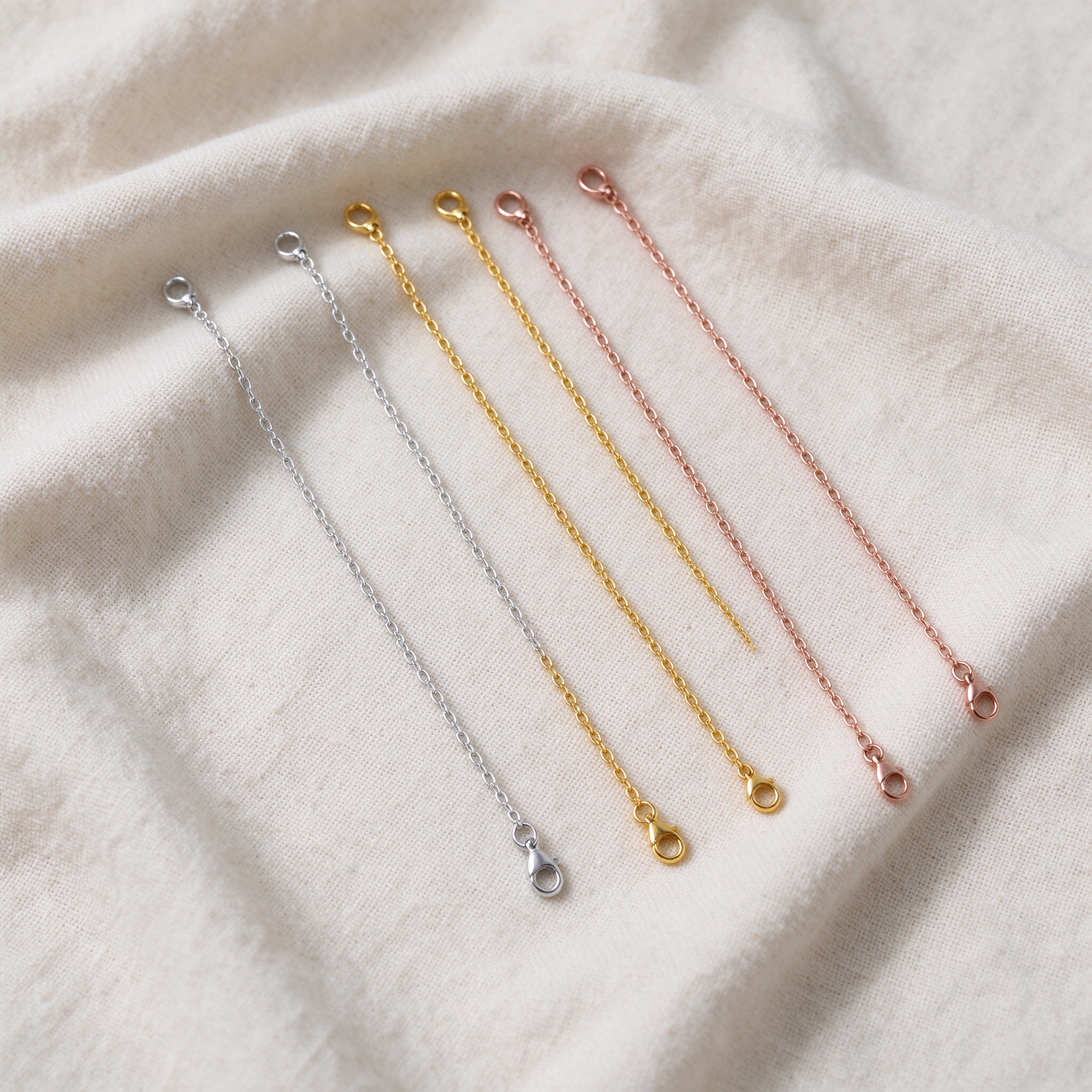
First, look at veins on the inner wrist in daylight: blue-purple suggests cool, green suggests warm, and an unclear blue-green suggests neutral. Second, use a white sheet of paper beside your bare face: a pink or red cast means cool, a yellow or golden cast means warm, no cast means neutral. Third, drape test: hold silver against white cloth and gold against yellow cloth on the inner wrist, and see which pairing makes the skin look clearer. If the three disagree, trust the drape test, because it shows the actual reflected interaction rather than a label.
Cool undertones sit best with high-polish silver and white gold, including rhodium-plated silver, where the cool white tempers redness in the skin. Warm undertones harmonise with yellow gold and rose gold, whose yellow echoes the skin instead of fighting it. Neutral undertones have the easiest time: silver, gold and rose gold all work, with rose gold usually the safest bridge. Note that silver is not one colour: high-polish reads cool white, matte reads soft grey, antiqued reads dark, and plated white reads bright, and those four behave differently on the same skin.
Perception is driven by area, lustre and neighbouring colour, not the metal alone. A large bright gold surface on a yellow-toned hand tends to look sallow, while a fine gold chain as an accent reads warm. Cool skin under a large gold block can look darker because the metal outshines the skin. Matte silver is friendlier to warm skin since it lowers contrast, while high-polish silver shines most on cool skin. Also avoid three metals at once, such as silver, gold and copper on one hand: the extra colours amplify unevenness in the skin.
It is common for the face to differ from the back of the hand because of makeup, sun or redness. The rule is proximity: earrings and necklaces sit near the face, so match the face; rings and bracelets sit on the hand, so match the hand. If you want one set that works everywhere, choose neutral silver or rose gold, which flatter both. One more detail: neck skin is usually lighter than the face and darker than the hand, so for a long necklace, judge by the chest area where it actually rests.
Two metals are steadier than three, and roughly seventy-thirty is the easiest ratio: silver as the base with gold accents such as studs, pendants or clasp details, or gold as the base with silver cooling it down. A fifty-fifty split demands more styling skill because the two colours compete. Keep temperature consistent: warm gold with warm silver such as antiqued or champagne tones, cool gold with bright silver. Bridge pieces help, for example a silver chain with a gold pendant, two-tone chains or alternating-metal rings, since they visually stitch the two metals together.
Yes, and matte or antiqued silver usually flatters more than high polish. Area and lustre matter more than the metal itself.
It lightens as plating wears. Rose colour often comes from plating or alloy ratio, and rings and bracelet insides fade first where friction is highest.
Large bright gold can dull the complexion through contrast, while fine chains and small pendants are usually fine.
Check wrist vein colour in daylight, then compare white paper and silver versus gold cloth. If results conflict, trust the drape effect.


