

 EN

 CN
 ES

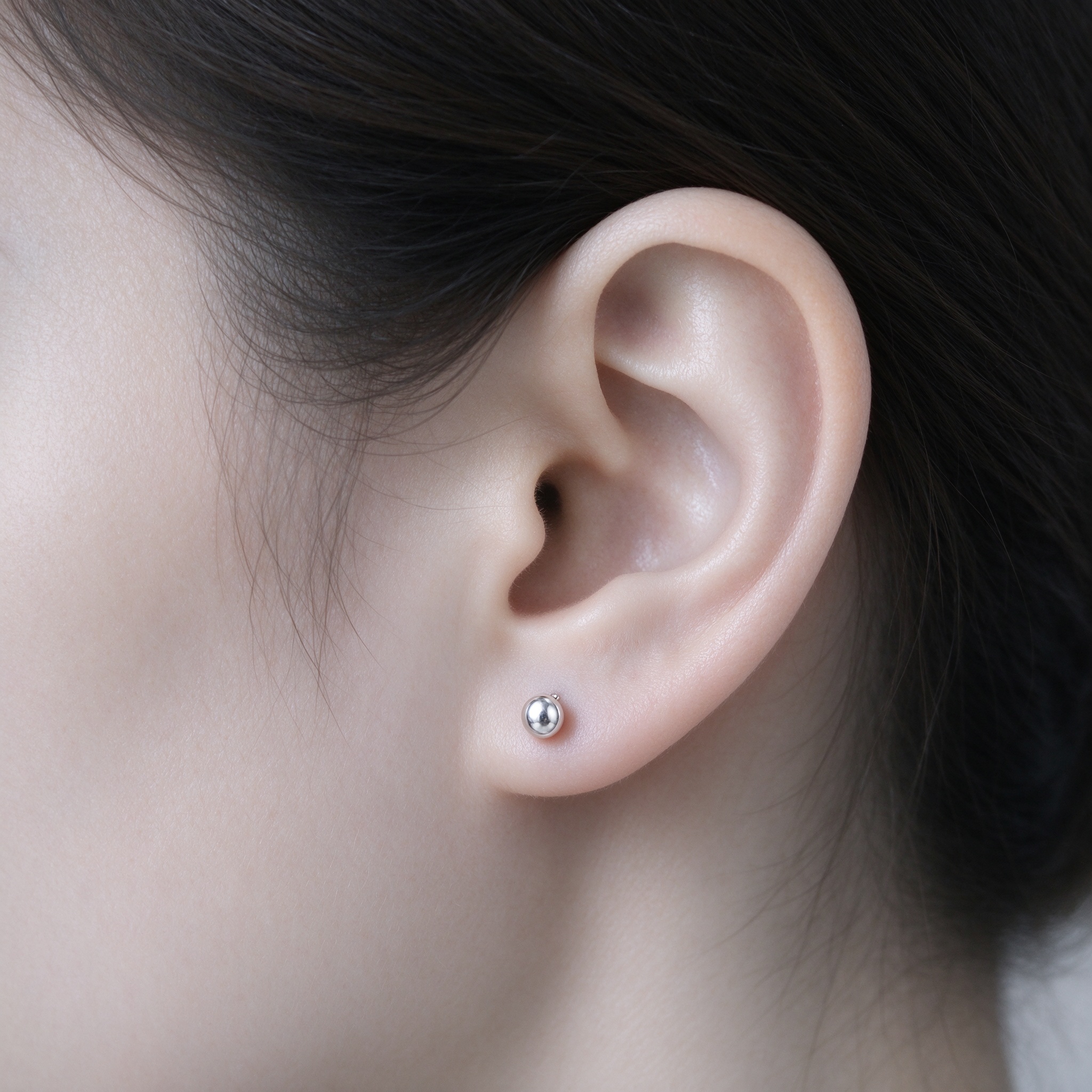
Lobe piercings sit in soft tissue with good blood supply and usually close over in six to eight weeks, stabilising around three months. Cartilage has far less blood flow: healing takes three to six months, some people feel tenderness at a year, and infections progress much faster than in a lobe. So the common six-week rule does not apply to cartilage, and the higher and more cartilaginous the placement, the longer the observation window. Do not change jewelry often while healing; every change is fresh trauma to the channel.
Clean once a day with sterile saline or a piercing aftercare solution, washing your hands before and after. Do not twist the stud: the old advice to rotate it to stop adhesion actually tears new healing tissue. After showering, dry the area thoroughly, since moisture is what bacteria favour. Sleep off that side, tie long hair back, and keep headphones, hats and scarves away from the site. Swimming, hot tubs and saunas are best avoided until fully healed.
Bacterial infection shows redness, swelling, heat and pain, with clear tenderness on pressure, possibly yellow discharge and mild fever. Do not try to tough it out alone, and do not rush to pull the stud out, since removing it can trap pus and form an abscess; get medical care. Metal allergy looks different: itching, redness and flaking with fairly defined edges, improving clearly when switched to titanium or silver, usually without fever. Nickel-plated alloys are the most common trigger, so sensitive people should choose titanium, silver or niobium.
Wait at least six weeks for lobes and three months for cartilage, and meet three conditions: no pain on touch, no discharge, and normal skin colour around the hole. Choose plain 925 silver or titanium studs for the first change, not plated pieces, large hoops or long drops, because a freshly healed channel cannot take the pull. Cartilage needs a straight bar; rings and drops change the direction of force and encourage migration. Keep hands clean, move slowly, never force it, and if it catches, stop and see a piercer.
Heavy earrings worn long-term are the main cause: the lobe is pulled down, the hole turns from round to oval and can eventually split. Prevention is straightforward: cap the weight per earring, avoid wearing heavy pieces daily and alternate with light ones, take jewelry off to sleep, and never tug on an earring. Holes placed close to the lobe edge are naturally prone to stretching, and heavy pieces make it worse. Cartilage migration usually comes from sleeping on it and from the leverage of rings. Once a hole is clearly stretched, reduce load to let it stabilise, or ask a piercer to assess repair.
At least six weeks for lobes and three months for cartilage, plus no pain, no discharge and normal skin colour. Changing early reopens the wound.
Do not remove it yourself. Removing it can trap discharge and form an abscess, especially in cartilage. Seek medical care for heat, swelling or pus.
Cartilage has little blood flow, so repair is slow and infection moves fast. Expect three to six months, avoiding pressure, pulling and frequent jewelry changes.
Most people tolerate silver and titanium well. Anyone nickel-sensitive should avoid nickel alloys and nickel plating, choosing 925 silver, titanium or niobium.


