

 EN

 CN
 ES

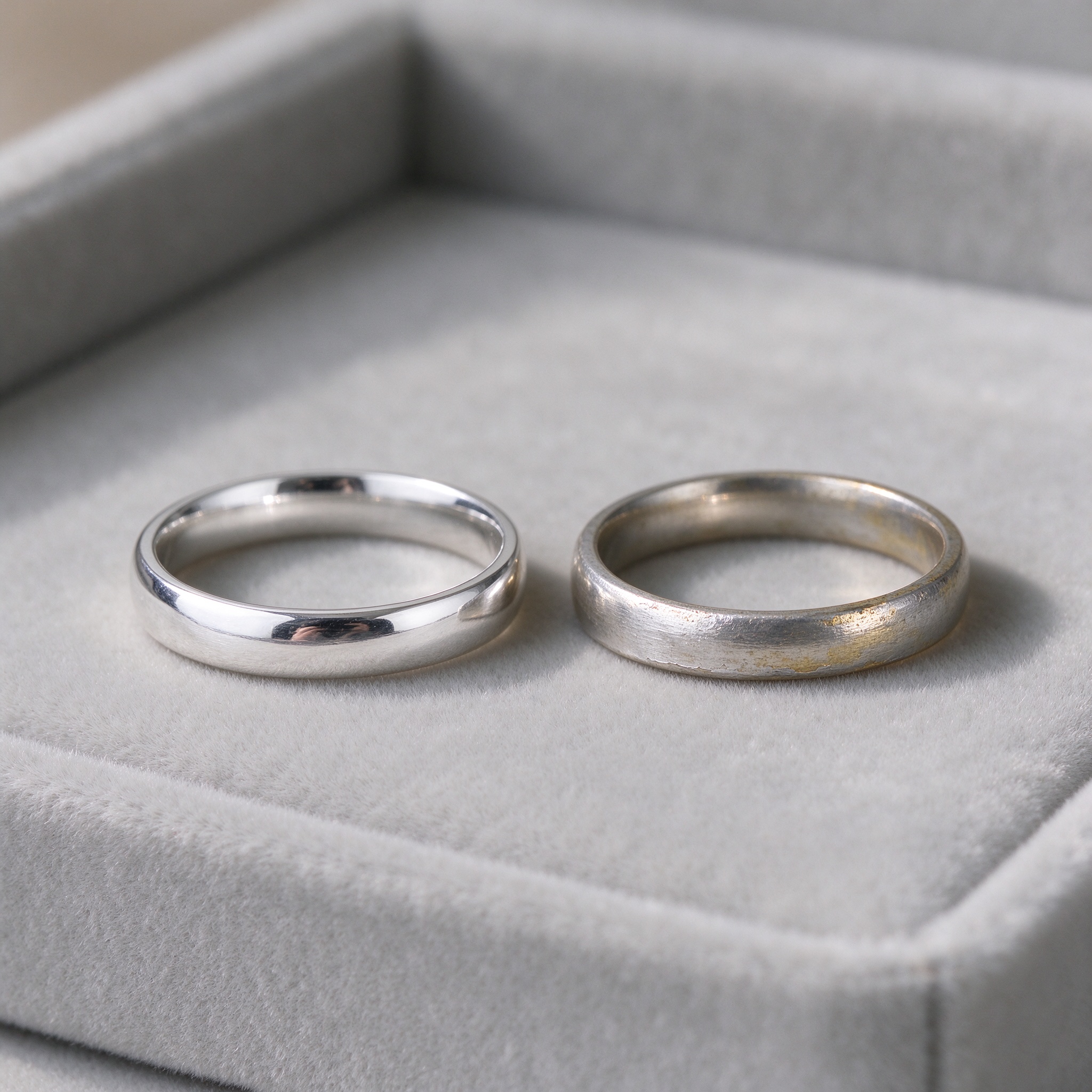
Sterling silver is 92.5 percent silver with the remainder usually copper. Pure silver is too soft for thin bands and earring posts, so copper adds hardness while keeping the colour and workability. Reputable pieces carry a S925, 925 or Ag925 stamp, typically inside the band, on the back of an earring post or on the reverse of a pendant. A stamp is a label, not a test result: plated pieces can carry the same three characters. Treat it as the first filter, never as proof.
Three different things get sold as silver jewellery: solid 925, a brass or copper-nickel base with a silver layer, and 925 silver with a rhodium flash for extra whiteness. The first two sit in very different price brackets; the third is a legitimate surface treatment on real silver. The question that matters is not whether there is plating but what sits underneath. On a brass base, worn plating reveals a yellowish or reddish core. On a sterling base, worn plating still shows silver, just duller. Ask your supplier what the base metal is before asking how many layers were plated.
One, stamp and finish: crisp, even stamps with clean edges versus uneven depth on copies. Two, weight: silver density is about 10.3, so the same volume feels noticeably heavier than brass. Three, worn spots: the inside of the band and the back of the clasp are where the truth shows. Four, heat transfer: silver feels cold then warms quickly against your skin, while light alloys lag. Five, instrument testing: X-ray fluorescence, or a third-party report from the supplier. A magnet only rules out iron; copper and nickel silver are non-magnetic, so never use a magnet as evidence.
Four factors stack up: plating thickness, plating process, wear environment and friction. Decorative plating under 0.5 micron typically shows white edges after two or three weeks of daily wear; one micron or more over a strike layer can last months to a year. Acidic sweat, perfume, washing dishes with the ring on and workouts all accelerate it. The inside of a band and a bracelet clasp take the heaviest wear because they rub skin and desk surfaces every day. Worn plating is not automatically a quality failure; what matters is whether the thickness and test standard your supplier quoted were actually delivered.
Put these in the spec sheet and most disputes disappear: base metal and silver content, whether solid 925 or plated brass; plating metal and thickness in microns; test requirements, usually salt spray hours or an artificial sweat cycle; stamp position and content, exactly where and what; and sampling ratio plus accept-reject criteria. If the quote needs to be cheap, say plated brass out loud instead of selling it at sterling prices. This is the most common dispute in cross-border orders, and return freight often exceeds the goods value.
No. Copper, nickel silver and zinc alloys are all non-magnetic, so a magnet only rules out iron-based material. Use weight-to-volume comparison or X-ray fluorescence for silver content.
Silver itself is low-reactivity, but sterling contains 7.5 percent other metals, mostly copper. A small number of people react to copper or trace nickel, especially in fresh piercings. Sensitive wearers should choose pure silver or titanium posts.
It depends on thickness and wear habits. Decorative plating under 0.5 micron usually shows white edges within two to three weeks of daily wear; one micron plus a strike layer can hold for months. Perfume, sweat and friction shorten it.
Pull three to five pieces: check stamp clarity and consistency, weigh identical models for stability, inspect clasps and inner bands under a loupe for exposed base, and send one piece for testing if needed. One fuzzy stamp or drifting weight means the whole batch needs re-checking.


