

 EN

 CN
 ES

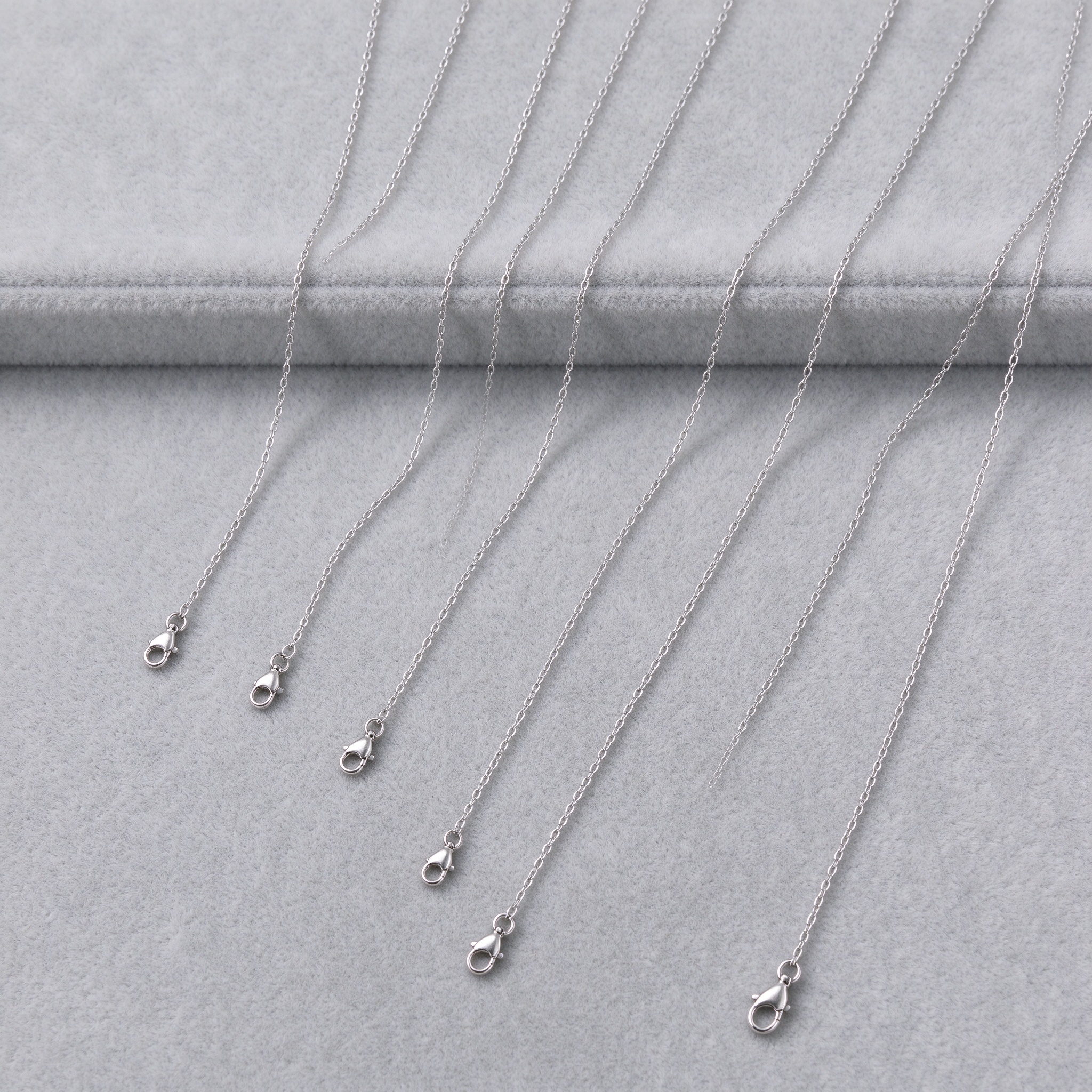
Common international naming: 35 to 37 cm is a choker at the base of the neck; 40 cm sits on the collarbone and is the most versatile; 45 cm falls just below the collarbone and is the everyday default; 50 to 55 cm lands on the upper chest and works over high necklines or in layers; 60 to 65 cm reaches mid chest, the short end of opera length; 75 cm hits below the bust; 90 cm and up can be doubled or worn long. Many suppliers quote 40 plus 5 or 45 plus 5 with an extender, so state whether the number includes the extender.
Height matters less than neck length and shoulder width. A long neck with visible collarbones carries 35 to 40 cm well; a shorter neck or heavy trapezius looks cramped at the base of the neck and opens up at 45 cm or more. On a broader upper body a thin chain disappears, so a slightly heavier chain worn shorter reads better. The practical test: hold a piece of string at the candidate length in front of a mirror and see whether it lands on the collarbone hollow or upper chest, the comfortable zones. That beats memorising numbers.
Crew neck: land the chain one to two centimetres above the collar or it looks cluttered sitting on the edge. V neck: 45 to 50 cm follows the point of the V and lengthens the neck. Turtleneck: wear the chain over the knit at 50 to 60 cm for layering; shorter sits awkwardly mid neck. Boat neck: a 35 to 40 cm choker sits exactly on the exposed collarbone line. Shirt: with one button open, a 45 cm chain lands in the opening. For wholesale assortments, pick two or three core lengths matched to your market rather than stocking all seven.
At the same length, a heavy pendant and a light one behave differently. On a thin chain, a pendant over about 5 g pulls the necklace into a V and tips it forward, which reads shorter from the front; shorten two to three centimetres or move to a 1.2 mm chain or heavier. The opposite case is a hollow pendant that is too light: a long chain floats and will not sit against the chest, so add a weighted tail or shorten it. When ordering custom, give the factory the pendant weight and ask them to hang a physical sample rather than judge from a drawing.
An extender covers two sizes and measurably reduces returns, at the cost of a short tail hanging at the clasp that sometimes shows at the front. A clean clasp looks better but demands accurate sizing. A common wholesale approach is to produce the main length and ship 5 cm extenders as a separate component so the buyer decides. Slider clasps suit thin chains and adjust continuously, but they drift during wear and need resetting.
In the collarbone zone, yes: five centimetres moves the chain from the top of the collarbone to below it, which is clearly visible, especially on a shorter neck. Sample both.
Usually total chain length including the clasp but excluding any extender. Put "total including clasp" or "chain only" in the spec, or one order will arrive in two different lengths.
Shorten two to three centimetres or move to a 1.2 mm chain for more rigidity. Above roughly 5 g of pendant, ask the factory to hang a physical sample and confirm the drop point.
Three or four matched to your main market: 40, 45, 50 and 60 cm cover most cases. Seven lengths raises stock and broken-size risk; use extenders for the gaps instead.


