

 EN

 CN
 ES

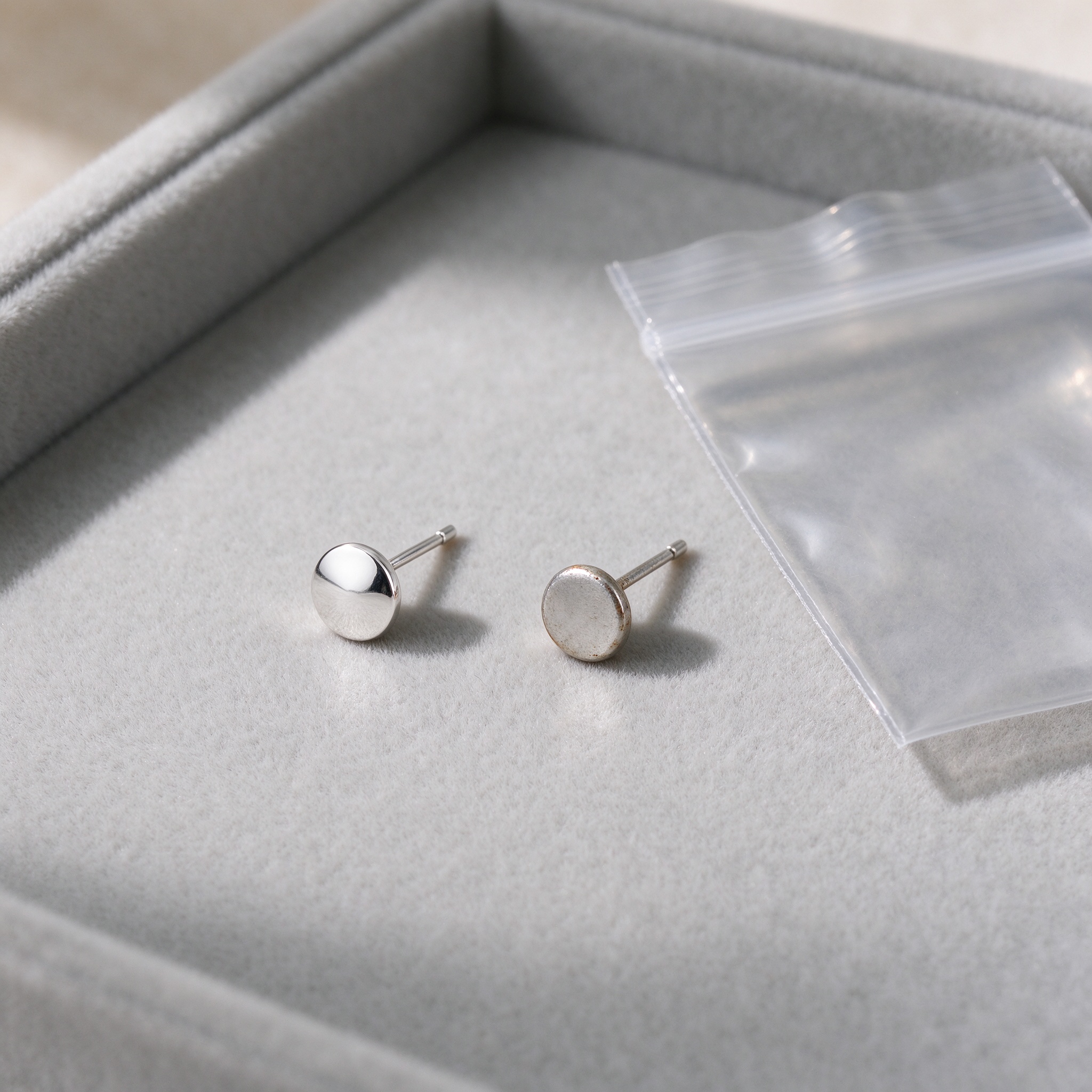
The typical pattern is contact dermatitis: redness and itching where the piece touches skin, sometimes small blisters or flaking, with a border that matches the shape of the jewellery almost exactly, a ring on the earlobe, a band on the finger, a line on the neck. Symptoms usually appear hours to a day or two after wearing and ease after removal, then return on contact. This is an immune response, generally lifelong once sensitised, and reactions can intensify with repeated exposure. The notes here cover material and design avoidance only; for symptoms, see a clinician rather than self-medicating.
Sterling is 92.5 percent silver with mostly copper in the balance, so nickel content is low by design, but trace impurities in alloy stock and nickel-bearing parts still introduce it. The more common sources are components: earring posts, butterfly backs, spring clasps, lobster clasps, extender chains and the nickel strike layer under plating. Many "silver posts" are actually nickel silver with a silver flash, which is a continuous nickel source inside a piercing. So low-allergen status cannot be judged from the main material; list every part that touches skin and confirm each one.
EU rules set a nickel release limit for piercing articles and items in prolonged skin contact at 0.5 micrograms per square centimetre per week under the REACH restrictions, tested by methods such as EN 1811 for release and EN 12472 for wear and corrosion simulation before testing. In plain terms, the test measures how much nickel lebs into simulated sweat, not the percentage in the alloy. That explains a common puzzle: a piece with slightly more nickel but a dense, intact coating can pass, while a cheap thin-plated item can fail quickly once the layer wears through.
One, change the substrate: titanium posts, medical or commercially pure, and nickel-free alloys for the body, at higher cost but far fewer complaints. Two, change the coating stack: copper or palladium strike with rhodium top, avoiding a nickel strike while improving wear. Three, physical isolation: a complete wrap over nickel-bearing components or an insulating coating between post and skin. Four, design avoidance: move springs away from skin contact and replace them with magnetic clasps or plain silver S hooks. Cost rises across those four, so pick according to market and retail price rather than stacking everything.
You can safely state facts: titanium posts, nickel-free strike layer, compliant with the EU nickel release limit with a test report available. Do not write hypoallergenic, guaranteed no reaction or medical grade; those are absolute or medical claims and become leverage in any complaint. A defensible structure is material, test standard, report reference, plus a line noting individual variation and suggesting a short trial wear for sensitive skin. Put the return rule for individual reactions in the policy as well, so there is no argument later.
Silver is low-reactivity and genuine silver sensitisation is rare. The high-frequency causes are trace nickel in the alloy and nickel release from posts, backs and clasps.
Not necessarily. A genuine piece with nickel-bearing fittings or a nickel strike can still react. Judge by the parts that touch skin, not by whether the body is 925.
Usually marketing language without verifiable backing. What is credible is specific material plus test standard and report, for example titanium posts, nickel-free strike, EN 1811 release compliance.
Titanium posts or a nickel-free coating stack typically add 10 to 30 percent per piece depending on volume and process. Against allergy returns and reviews, most mid and high-end ranges take the upgrade.


