

 EN

 CN
 ES

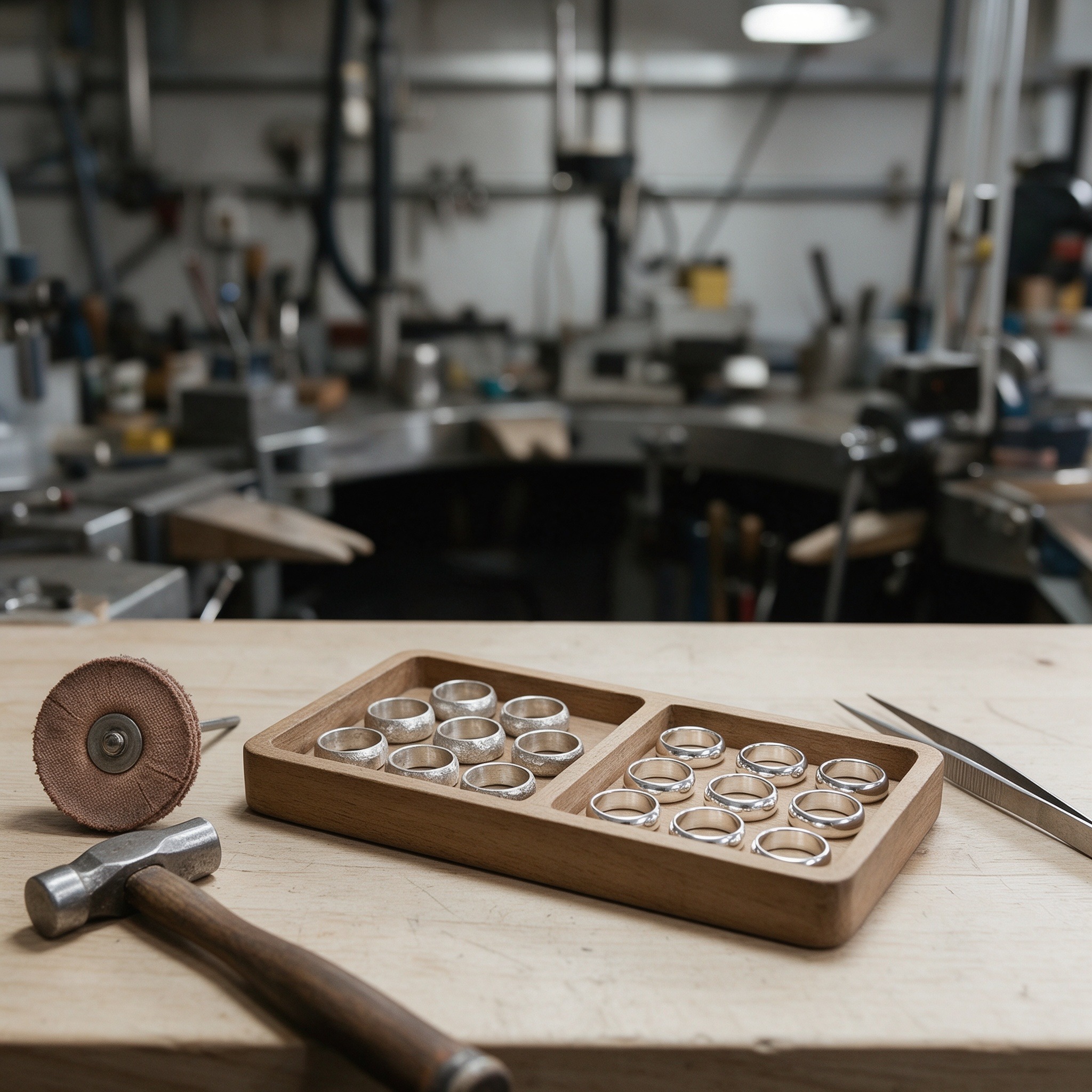
A complete order usually runs through sampling, customer approval, material preparation, forming (casting, stamping or forging), filing and finishing, surface treatment (polishing, antique, plating), stone setting and assembly, then inspection and packing. Consolidated, that is seven stages: sample, approve, prepare, form, finish, assemble, pack and ship.
The point of splitting is that each stage waits on something different: a customer, a subcontractor, or a production slot. Only by separating them can you tell what is compressible and what breaks when compressed.
Internal preparation and handoffs can be compressed: parallel material buying, earlier plate preparation, running polishing and antique work in one continuous batch. Physical and chemical time cannot: subcontract plating queues and plating cure, reaction time in the antique bath, hand labour in setting, drying after packing. Forcing those buys rework and scrap.
In practice surface treatment and assembly are the least controllable, because they depend on outside vendors and hands, and rework is expensive. Put buffer after these stages rather than squeezing them.
Making a sample takes days; the approval loop is what consumes calendar time: review, revise, re-sample, re-approve. Every extra round adds a full sampling cycle, and cross-border orders also carry time zones and courier transit.
The fix is not to push the factory but to front-load decisions: lock the drawing, material callout and finish reference before sampling, and state that structure will not change after approval. Most delays come from mid-project design changes, not slow production.
Factories schedule by tooling and line fit, not strictly by order date. Small runs across many styles mean frequent changeovers and far lower real throughput than theoretical capacity. A month before peak season, plating subcontractors fill first, because every factory pushes into the same vendors at the same time.
So either order earlier or accept split shipments. Splitting is not a compromise; it means shipping what is ready instead of letting one slow operation hold the whole order.
Stage records beat blame later: log a start and end time per stage so a delay can be traced to a specific bottleneck. Four causes dominate: customer approval, material arrival, subcontractor queue and quality rework. The first two are controllable; the last two need buffer.
Give customers a range plus checkpoints rather than a single date: forming 10 to 12 days, finishing 5 to 7 days, ship around day 18, with a progress confirmation on day 12. Then even a slip has a documented basis.
Excluding sampling and approval, bulk silver orders typically run 15 to 25 days depending on complexity, plating subcontracting and setting. Antique, pavé and rhodium all extend it.
Rush compresses queue time, not chemistry or hand labour. Around 30 percent is realistic, paid for with subcontractor surcharges and split shipments. Asking for half the time is effectively asking for lower quality.
Place orders 45 to 60 days before peak and allow buffer for plating and packing queues. Ordering 30 days before peak usually means lead times half again as long.
Give the fact and cause first, then new checkpoints and remedies such as split shipping, partial air freight or a discount on the next order. Repeatedly promising new dates and missing them damages the relationship more than the original delay.


