

 EN

 CN
 ES

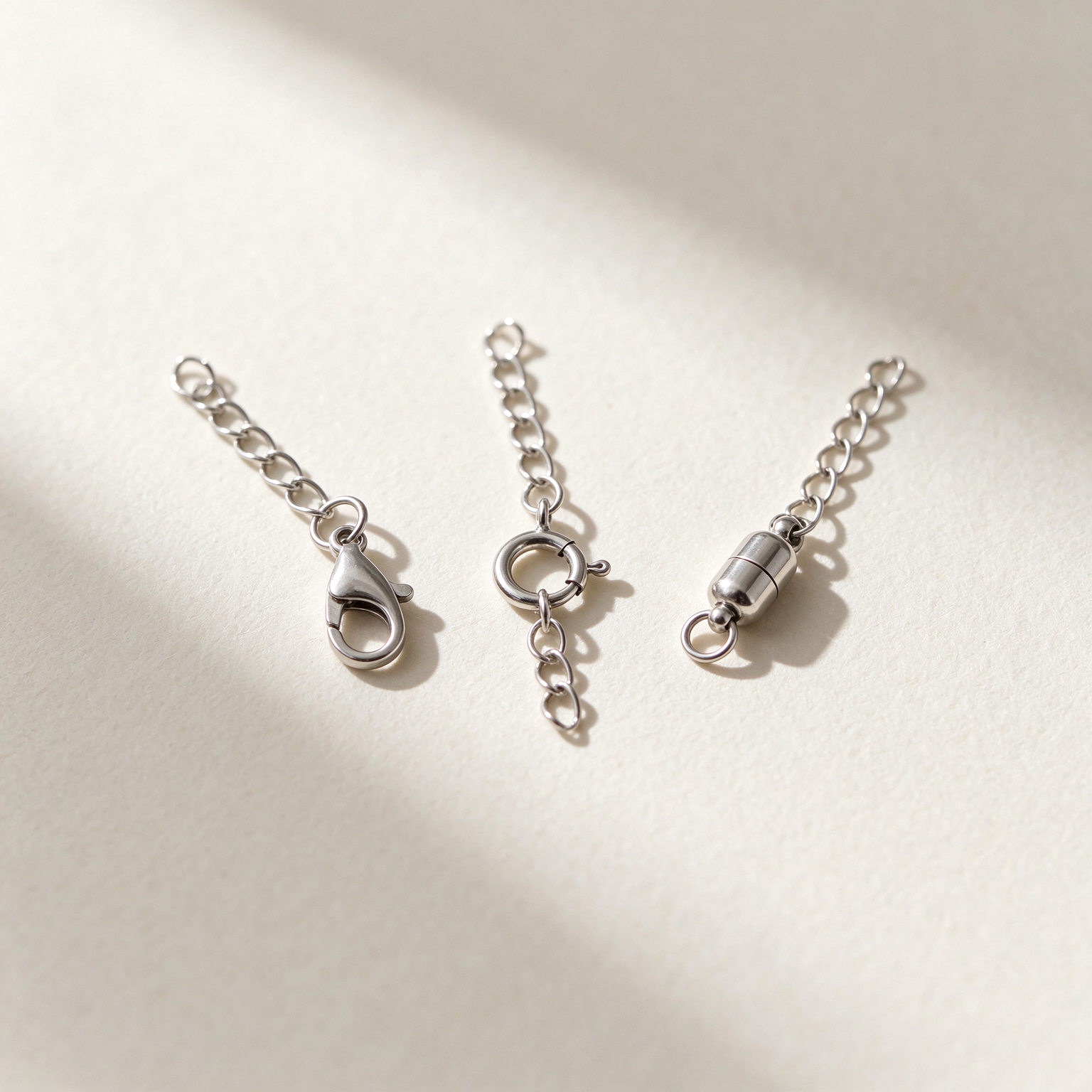
A lobster clasp looks like a shrimp claw, opening by spring press with a hooked seat and good load; it is the most common clasp for necklaces and bracelets. A spring ring is a small ring with an internal spring, light and fast to close but with a shallow hook, suited to thin chains and light pieces. A magnetic clasp pulls together by magnetism, easiest to put on and flat in look, but load depends on magnet strength and contact area and it cannot take heavy thick chains. There are also toggle and hook clasps with different slots.
Lobster clasps take medium chain weight with a deep hook that resists slipping and a long cycle life; spring rings are light and handy, but the spring slackens over time and can open; magnetic clasps are handy and flat, yet magnetism can drop under pulling or cold and may pull open on impact. Thick chains and heavy pendants favour lobster clasps; thin everyday chains can use spring rings; magnetic clasps suit only light, short pieces worn on and off often.
The clasp ring must match the chain tail ring and extender tag: too small will not close, too large wobbles and rubs the chain. Clasp width should sit with chain thickness; a thin clasp on a thick chain looks weak and hurts load. Bracelet clasps also need room for wrist size and one-hand opening. Bulk orders check smooth opening and the ring weld; the jump ring joining clasp to chain must be soldered shut.
Clasps should be 925 silver or rhodium-plated silver; thin clasps deform under press. Plating must be even, with no build-up at the hinge or moving part that stiffens the clasp. Check spring rebound and, for magnetic clasps, that the magnet edge is sealed and does not touch skin. Samples go through repeated opening and a light pull for loosening or bend. Findings should be quoted separately, so clasp cost is not missed behind the chain price.
One, clasp type, lobster, spring, magnetic or other; two, clasp size, material and plating; three, matched chain thickness and load position; four, whether the jump ring is soldered; five, opening cycle life and sampling standard. Heavy pendants and thick chains must not use magnetic clasps. After sample pull and repeated opening, bulk lots are sampled to the same standard on clasp security and feel.
The lobster clasp has a deep hook and better load, best for necklaces and heavier pendants; spring rings have a shallow hook and magnetic clasps are magnet-limited, suiting light thin chains.
It is easy to use but load-limited and may pull open under tug or impact, so it does not suit thick chains and heavy pendants. Light short pieces can use it; confirm the magnet edge is sealed.
It is usually a slackened spring or an unsoldered jump ring. Repeated opening and a light pull before ordering, with jump rings soldered; bulk sampling flags loose clasps for rework.
State clasp type, size, material, plating, matched chain thickness and load; pull and open samples, then bulk-sample against the sealed piece on security and feel. Findings cost must be listed in the quote.


