

 EN

 CN
 ES

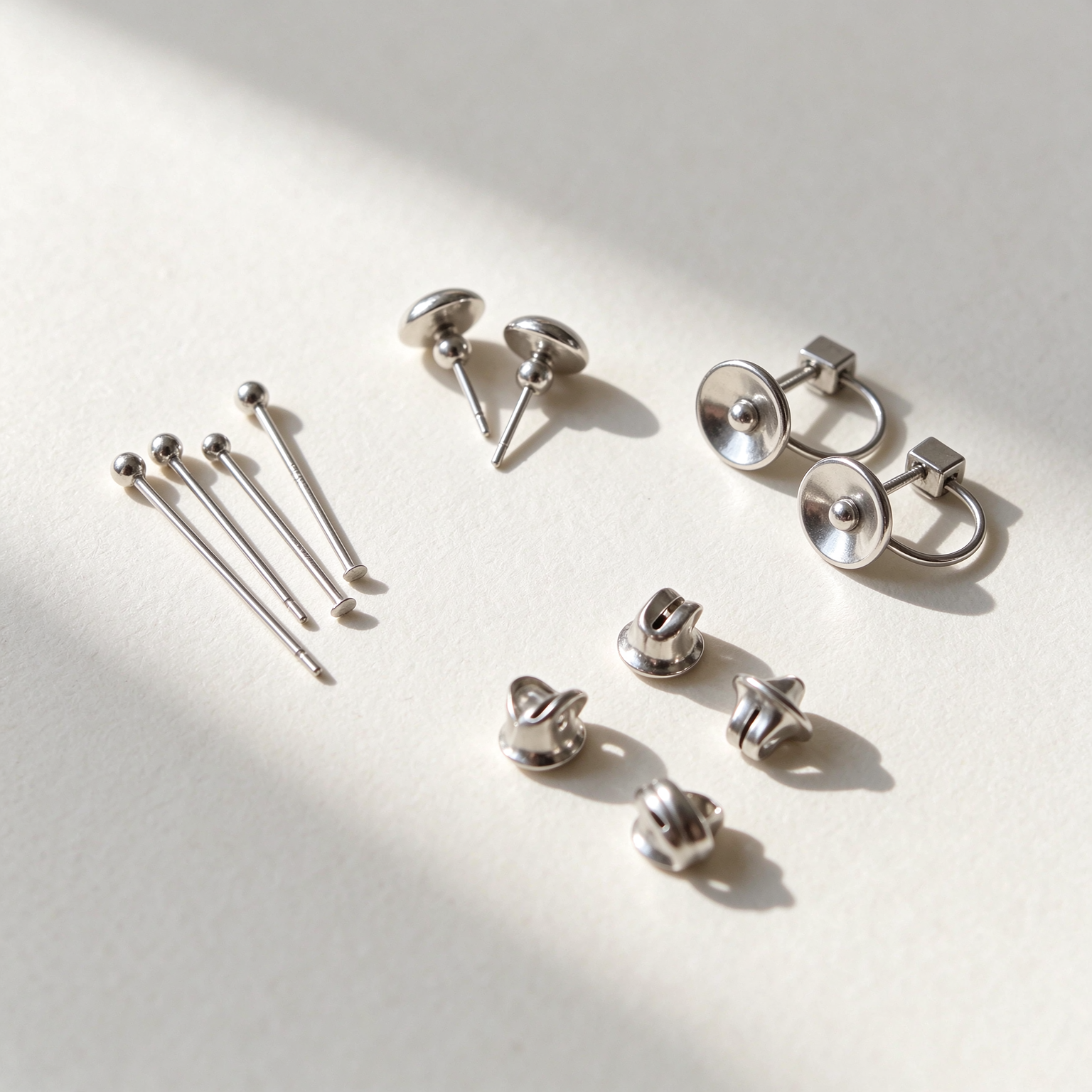
Posts are the standard stud: a straight pin through the earlobe, fixed at the back by a clutch; screw clips need no piercing and clamp the lobe by thread or pad; hoops and drops add moving parts to the post base. Posts are secure but need a piercing, while clips fit non-pierced wearers but need the right clamp force and contact point. When choosing a structure wholesale, decide first whether the target customer has piercings and whether the piece is everyday or decorative.
Reactions usually come from nickel or chromium ions released against the skin. 925 silver is relatively low in nickel and, made properly, suits most sensitive ears; cheap alloy posts with worn plating release nickel and itch and redden more easily. Low-allergy pieces favour 925 silver posts or silver in intact gold or rhodium plating, with material and nickel-release stated on the spec. The post must be smooth with no burr and welded points filed flat to avoid cutting the piercing.
Post gauge must suit the piercing: too thick is uncomfortable, too thin wobbles and pulls. Backs split into rubber, silicone and metal: soft backs are comfortable but age and need replacing, metal backs are secure but watch for tight indentation. Clips check the pad and thread, clamping without lobe pain or looseness. The post-to-body joint must be firm, and the rivet or jump ring on drops must not release. Bulk orders check left-right symmetry and post length.
Low allergy is not material alone: skin contact points must have no worn plating, rough weld or leftover glue. The pin should be polished straight with no sharp edge behind. Clip pads should use soft liners to spread pressure. New pieces get a short trial first, watching the lobe and behind the ear for redness or itch. Wholesale samples test fit, clamp force and contact surface, not just the front design.
One, structure, post, screw clip, hoop or drop; two, post material, purity and low-allergy status, nickel-free or not; three, back type and liner; four, post gauge, length and symmetry; five, low-allergy sampling and reaction handling. Pieces aimed at sensitive customers should use silver or intact plated metal across post and contact surface, not mixed alloy posts. After sample trial wear, bulk lots are sampled against the sealed piece on post security and contact state.
925 silver is relatively low in nickel and suits most sensitive ears when made properly, but individual reactions exist and a few react to silver itself. State material and nickel-release; avoid worn-plated alloy on contact surfaces.
Choose a screw clip or clip-on that clamps the lobe. Focus on clamp adjustment and liner pad, comfortable and secure; for long wear watch circulation at the clamp point.
Silicone and rubber soft backs fit comfortably but harden with age and need replacing; metal backs are more secure, watch tight indentation. Sensitive ears favour smooth glue-free soft backs replaced regularly.
State structure, post material and purity, nickel-free or not, back type and liner; sample fit and contact state, then bulk-sample against the sealed piece. Sensitive-customer pieces avoid mixed alloy posts.


