

 EN

 CN
 ES

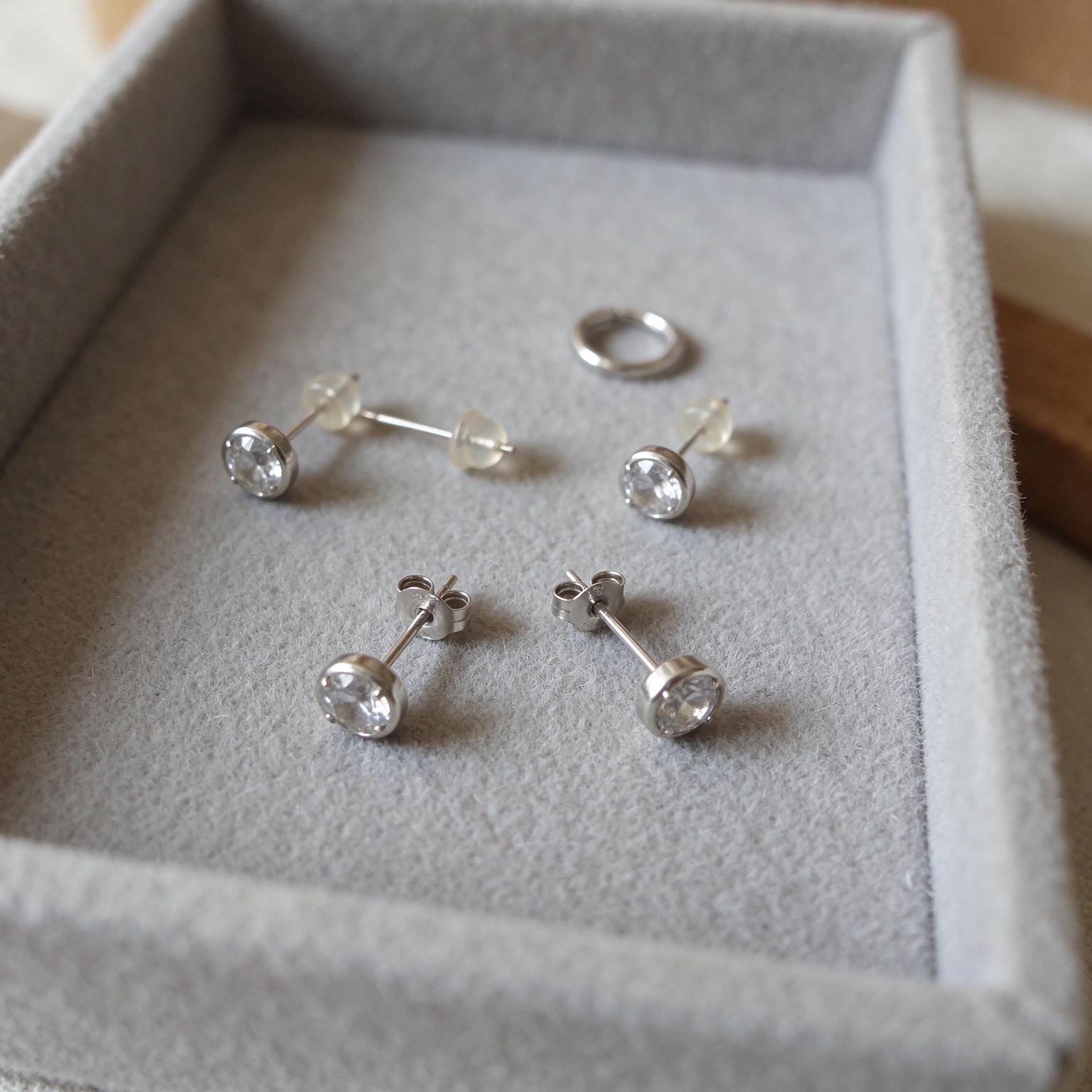
Standard studs use 0.8 mm, roughly 20 gauge; cartilage and helix piercings often use 1.0 to 1.2 mm. 0.8 mm suits most lobe piercings; 1.2 mm feels tight on a lobe. Fresh or irritated piercings need thinner posts to reduce friction, while stretched holes from heavy earrings need slightly thicker posts to spread pressure.
Silicone backs apply gentle pressure and suit long wear and sensitive ears; metal butterfly backs grip hard, leave red marks but rarely fall off; screw backs adjust tension and suit thick posts and heavy drops. Match back hole size to post gauge: too large slips, too small drags and scratches the post.
Lobes usually stay comfortable under about three grams per ear; beyond five grams the lobe visibly stretches. Cartilage tolerates less, with noticeable pull above two grams. For long drops and large hoops, place mass near the piercing to shorten the lever. Hollow construction reduces weight but thin walls deform, so thicken the load-bearing area.
Nickel is the usual allergen, especially in plating strikes and alloy posts. Choose 925 silver posts with a nickel-free strike, or pure titanium; avoid unspecified "hypoallergenic steel". Do not change styles repeatedly in a healing piercing, and avoid plated posts. Surface roughness matters too: burred posts scrape the canal.
Post diameter, post length, weight per ear and back material decide comfort, so list them alongside whether the strike is nickel-free and whether the piece suits lobe or cartilage. In sampling, have different ear types try a piece and record redness or slipping. Note in after-sales copy that piercing condition affects comfort.
It resists bending better but loads the hole more. 0.8 mm is enough for daily lobe studs; cartilage needs 1.0 mm and up.
Low grip and low friction loosen with repeated use. Use a smaller silicone back or switch to screw backs.
Move to a slightly thicker post to spread pressure and reduce weight per ear. Continuing with heavy drops stretches it further.
Not always. Nickel-free 925 silver with a proper strike works too. Titanium is lighter and more inert for people reactive to several metals.


