

 EN

 CN
 ES
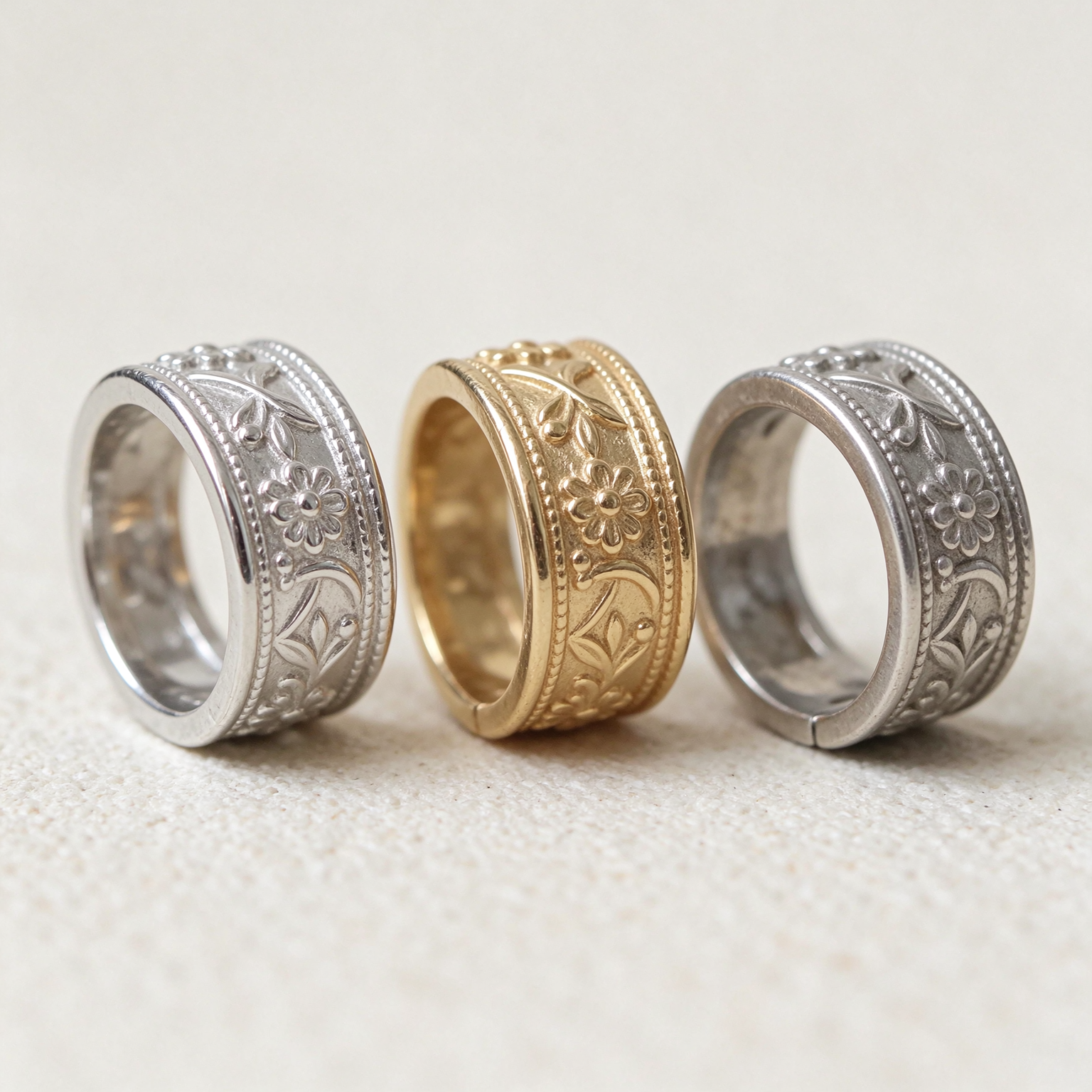
Rhodium is commonly 0.05 to 0.2 micron; decorative flash can be thinner. Gold runs from flash plating under 0.1 micron, through decorative 0.3 to 0.5 micron, to wear-resistant 1 micron and above. A quote that says "gold plated" without a thickness makes no promise at all.
Ring inner bands and shoulders, bracelet clasps, necklace lobster claws and ear post bases take the most friction. Prong tips and chain link corners concentrate stress and blister thin films. Judge a plated piece by these zones, not by how bright the front looks.
Rhodium reads cool white: thinner films look steel-like, thicker ones mirror-bright. Gold colour depends on karat colour plus thickness; too thin lets the silver base show through as a greenish or grey cast. Resale values the silver weight only; plating adds nothing, and thick gold over silver never becomes a gold piece.
Rhodium over silver usually needs a palladium or nickel strike to block silver migration. Nickel-sensitive markets require a nickel-free strike at higher cost. Gold needs thorough polishing and degreasing first, or even a thick film blisters. Test adhesion by bend, tape pull and salt spray, and write the sampling ratio into acceptance.
Specify base metal and purity, plating type, thickness range, thickened wear zones, and adhesion plus salt-spray requirements. Replating means stone removal, repolishing, replating and inspection, typically three to seven days and more for stone-set styles. Define who pays freight for the first replate in the after-sales terms.
Yes, at different rates. Rhodium is hard but thin, and friction zones reveal the silver first. Correct strike and thickness last longer; still avoid hard contact.
Generally yes, since gold consumption and labour rise. Base metal, pre-treatment and testing also move price, so thickness alone does not rank quality.
Yes, by replating after stone removal and repolishing, usually three to seven days. Stone-set pieces carry removal risk and higher cost.
Keep them away from hard objects, perfume and chlorine, remove before showering or sport, wipe with a soft cloth, and replate as soon as bare silver appears.


