 EN

 CN
 ES
An inquiry arrives as one line: "How much for 200 pieces of this ring in sterling silver?" The reply that wins the order rarely starts with a number. It starts by telling the buyer what the number depends on, then gives the number three ways.
Within the first reply, three questions deserve an answer before any figure: can this design be made as shown, what is the minimum that makes it economical, and what in the design will constrain cost or timing. A factory that answers "yes, USD 6.20" and nothing else is telling the buyer it has not looked at the drawing.
Concrete flags worth raising early: a stone size that requires a custom seat, a hollow construction that cannot take the plating thickness requested, an engraving depth that will not survive polishing, a clasp that is not available in the finish asked for.
A sheet with these five blocks removes most of the follow-up emails, because each block closes a question the buyer would otherwise ask one at a time over two weeks.
Buyers rarely need one price; they need to see the shape of the cost. Quote the same piece at three quantities with the assumptions held constant, and add one line showing what changes if packaging or plating changes. That turns a negotiation about a single figure into a choice between three documented options, which is a much shorter conversation.
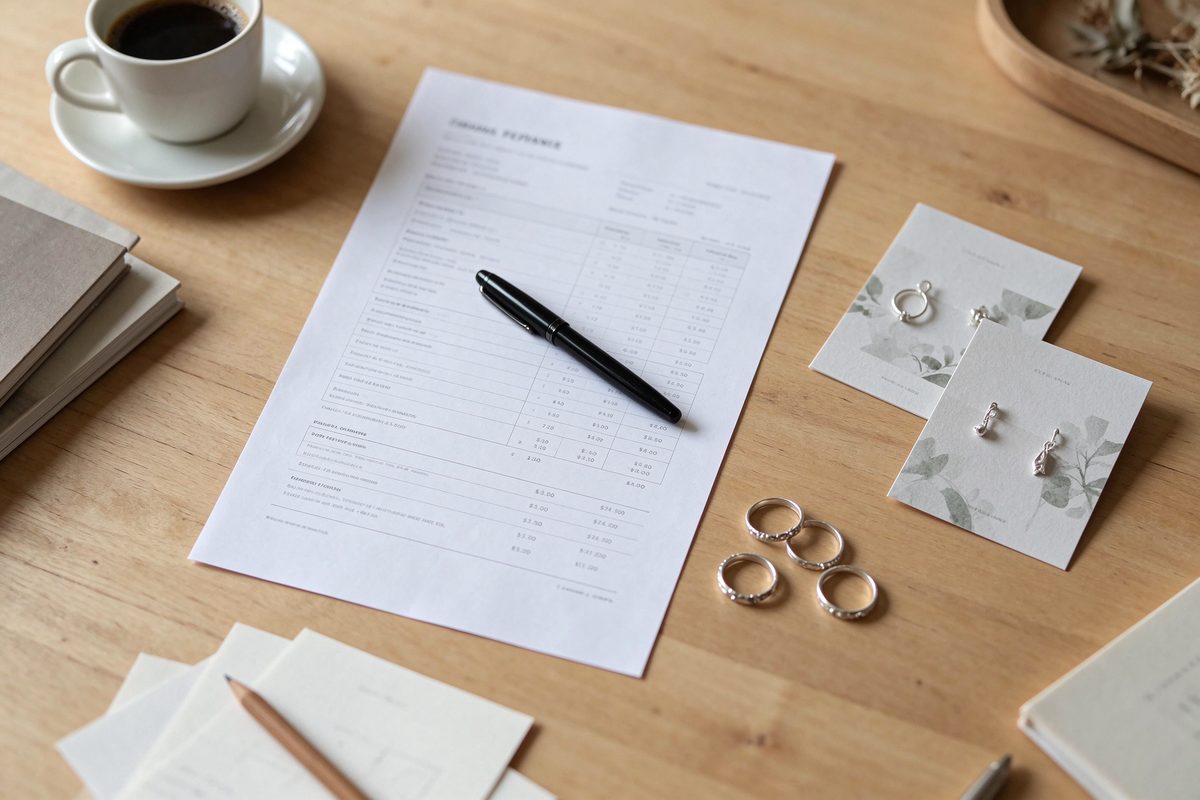
Keep the reply to one page: a short paragraph confirming feasibility, the item line, the three-quantity ladder, the assumptions block, the timing block and the commercial block. Send it as a PDF named with the style reference and the date. The naming alone makes you easier to find in a buyer's inbox three weeks later, which is when the real decision usually happens.
The quotation is not paperwork around the sale. It is the first piece of evidence the buyer has about how you will behave when something goes wrong.