

 EN

 CN
 ES

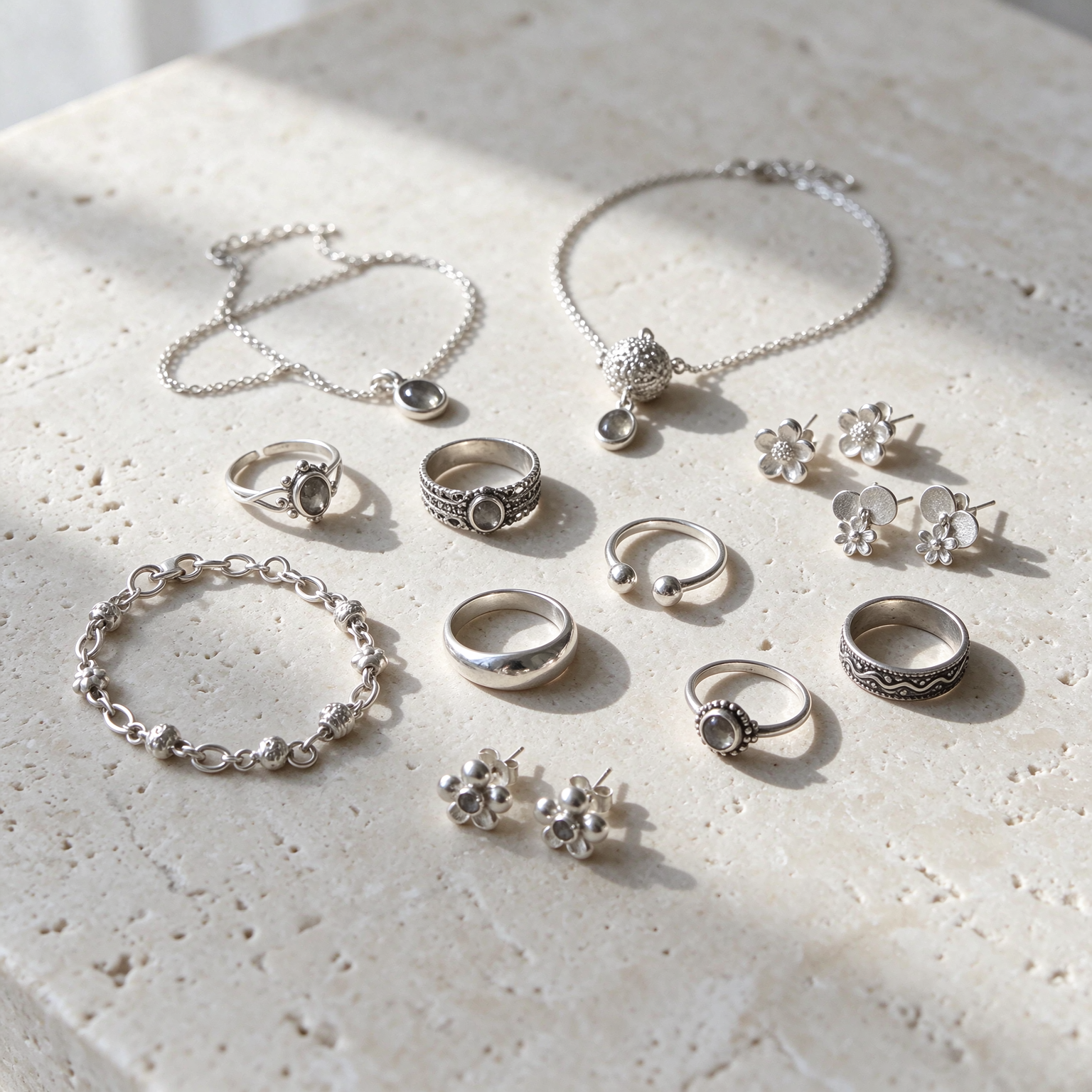
One-style bulk suits a proven best seller, with deep stock and lower unit price, but concentrated inventory and risk. A mixed batch combines many styles in small quantities to test reactions, then reorders what sells. For new shops or uncertain markets, mixed lots cut single-style risk and cover different people and prices. Proven winners can be deepened on top of the mix; the two approaches work together.
Build sets around a unified material and base tone: one lot in plain 925 silver, or a consistent rhodium white, rose gold or black plating so pieces pair easily. A series can cover necklace, studs, ring and bracelet sharing a motif, curve or stone, letting buyers buy a set. Mixed colours and unrelated elements look patched together and lower the set rate.
Allocate styles by target customer: daily commuting, gifting and trend pieces each take a share; the men and women ratio depends on channel position, and neutral basics have the widest reach. On price, set entry, main and image tiers: entry attracts traffic, main drives volume, image lifts the grade. Cover high-frequency daily wear, then add a few statement and seasonal pieces, avoiding one batch that is all the same type and price.
Register category, style, quantity, material, plating, stone and price on the list, marking whether pieces pair into sets. Start each style small and record first-batch sales and feedback; list sellers for reorder, cut slow movers from later stock. Split standing basics from trial new styles, keep basics in stock and cap trial quantities. Check size, chain length and MOQ per style before ordering to avoid missing items.
Variety draws visits and pairing, but deep stock per style traps cash. The logic: keep stable depth on classics, hold shallow fast-turnover stock on trends and new styles, and kit sets in small series batches. Review sell-through regularly and shift funds from slow movers to reordered sellers. A supplier supporting mixed batches, reorders and custom design keeps assortment flexible and lowers one-time bulk pressure.
It depends on the supplier and style, often multiple styles in small quantities per piece or by weight. Trial new styles small, deepen after sales prove it; confirm the exact MOQ with the supplier.
Unify material and plating tone, share a design element, and cover necklace, studs, ring and bracelet. Styles that match within a series are easier for buyers to buy as a set.
Set entry traffic pieces, main volume pieces and image pieces at separated prices for different budgets. Do not concentrate a whole batch on one price tier or the audience narrows.
Cut later restock, clear current stock through display and pairing, and reduce similar styles in future lots. Record sell-through on the checklist and tilt reorders toward sellers.


