

 EN

 CN
 ES

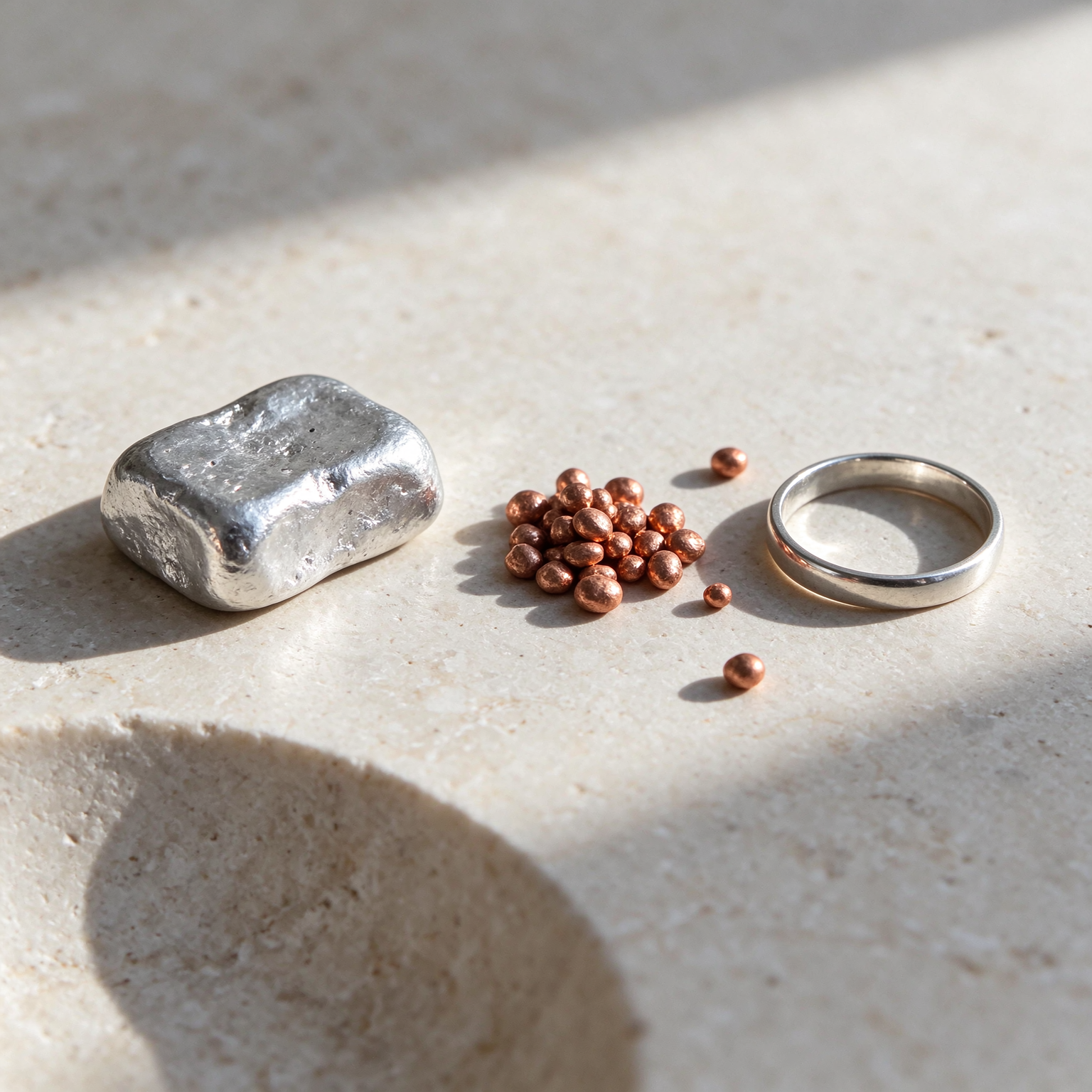
Fine silver (999) has high silver content and a soft metal body; nails or hard objects leave dents, and thin bands, links and settings bend under pressure, so fine detail is hard to keep. As a material, fine silver stretches well and is easy to work, but alone it lacks bend resistance for daily rings, bracelets and chains, which is why it rarely forms structural jewellery parts.
Sterling silver holds about 92.5% silver and 7.5% copper. Fused copper forms an alloy that mainly raises hardness and strength, so the metal resists knock and squeeze better while keeping toughness for sheet rolling, wire drawing, stamping and setting. Copper also changes feel and ring tone, giving finished pieces a sturdier body, with fine links and thin edges less prone to easy bending.
After alloying, hardness rises so the surface and structure wear better and dent less in daily use; toughness keeps the metal from cracking while bending into rings, drawing wire or pressing motifs. The ratio balances hardness and toughness: more copper hardens but raises brittleness, less copper stays soft. Factories choose alloy state and craft by whether the piece is a ring, chain or pendant.
Fine silver is cool white with a soft sheen; copper shifts the base tone slightly warm, and polishing or plating then gives different silver-white, rhodium-white or gold tones. Copper content also affects tarnish speed; a copper alloy shows slightly different surface change over sweat and air than fine silver. These are material traits, not a sign of low grade, so read them together with the plating note when choosing.
Common marks are 999 fine silver, 925 sterling and 990, where the number is the silver parts per thousand. 925 is the international jewellery standard, balancing purity and structural strength; fine silver suits ornaments, bars and soft styles; 990 sits between. For wholesale selection, choose purity by wear position and shape: rings, chains and stone pieces usually use 925, while soft large pieces and collectibles may use fine silver.
Common sterling is about 92.5% silver and 7.5% copper. Copper raises hardness and strength for better bend resistance and forming; the ratio adjusts slightly by style and craft.
No. 925 is the international jewellery standard; copper alloying improves hardness and toughness. It is still marked and traded as sterling, not as a filler or lower silver content.
Fine silver stays soft; bands, links and settings bend under pressure and lose their shape. 925 balances hardness and toughness, suiting daily structural parts and detailed styles.
The base tone and tarnish pattern differ slightly from fine silver, but tarnish is driven mainly by sweat, air and storage. Wiping, separate storage and plating matter more directly than copper content.


