

 EN

 CN
 ES

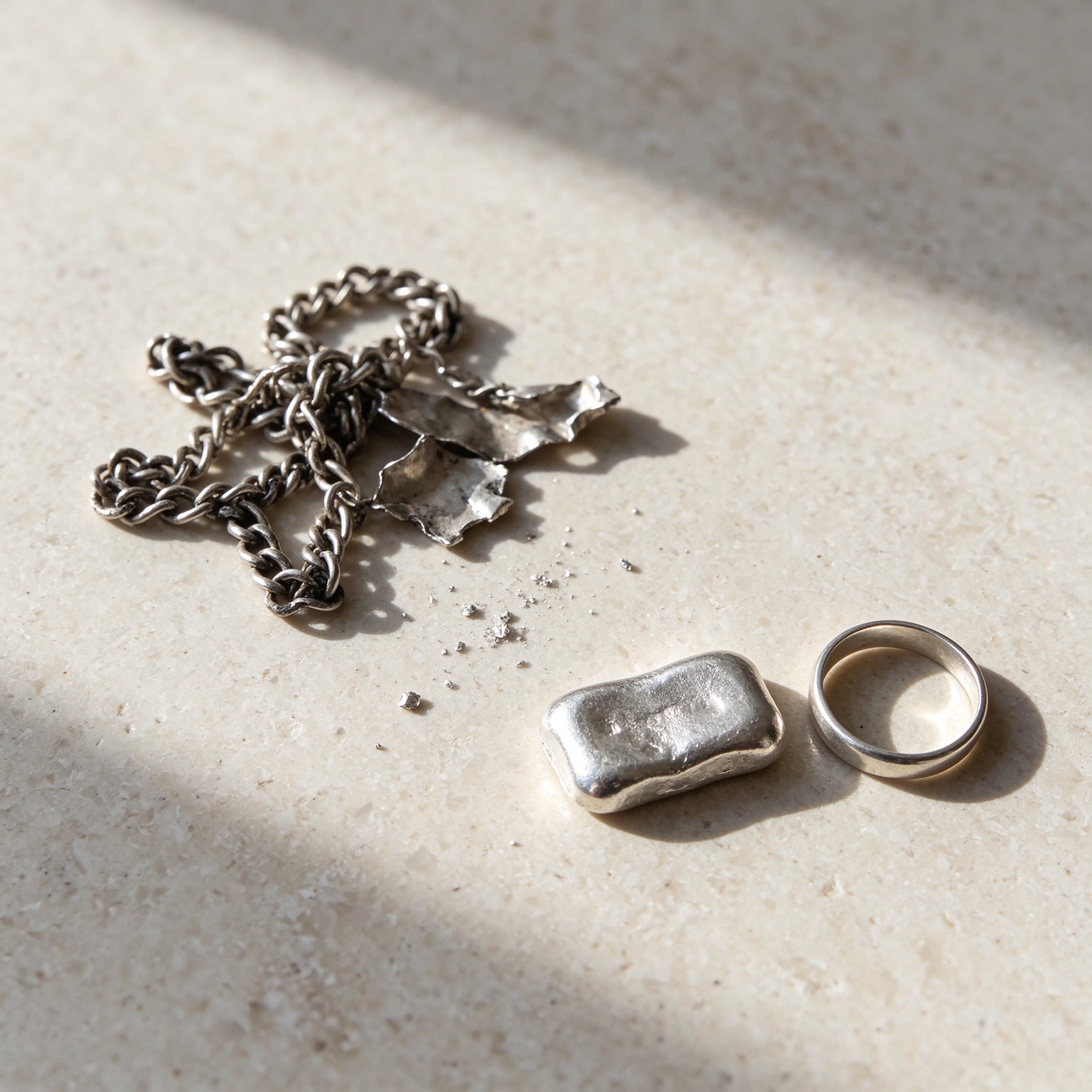
Recycled silver mainly comes from old silver jewellery, factory offcuts, broken pieces and some industrial recovered stock. These are sorted, dismantled and refined, impurities removed, and returned as usable stock. Unlike virgin silver mined from ore, recycled silver lowers reliance on new mining and is part of metal circulation, but it remains silver with the same material properties.
Recovered stock is first sorted and separated from other metals and impurities; then melted, refined and assayed for silver content and alloy ratio. When target grade is reached, copper or other alloy is added for 925, and it is cast into bar, sheet or wire for production. Each recycled batch can differ in content, so batch assay and ratio adjustment are key, sharing some forming steps with virgin stock.
Whether virgin or recycled, finished jewellery is marked by silver parts per thousand; 925 means about 92.5% silver. Grade follows assay results, not whether the stock began as ore or recovery.Assayed recycled 925 follows the same hardness, colour and working standard as ordinary 925, and the finished mark should state material honestly; recycled source should not be treated as a higher grade.
With matched grade and craft, recycled and virgin silver pieces show no essential difference in look, feel or daily wear; polish, plating and tarnish state come mainly from finishing. Recycled silver shows in source and circularity, not in a different wearing experience. Read material grade, plating and style together rather than choosing only by recycled label.
If a brand positions around circularity, the copy may state the recovered source and grade standard honestly, without overstating environmental effect or claiming unverifiable certification. The factory can share batch and assay information; write material, alloy and marking into the wholesale spec. Recycled silver is one material option, chosen by brand positioning and cost.
No. Recycled silver is re-melted stock that passes assay and can become 925 jewellery. Grade follows silver content, not whether it began as recovery or ore.
At matched grade and craft, look, feel and wear show no essential difference. Sheen, colour and tarnish are set mainly by polish and plating finishing.
Yes, if assay reaches about 92.5% silver and alloyed to the 925 standard. Marking must state material honestly; recycled source is not a higher grade or separate certification.
Check grade, plating and style first, then the source note. Environmental claims should be stated honestly, without unverifiable certification or effect promises.


