

 EN

 CN
 ES

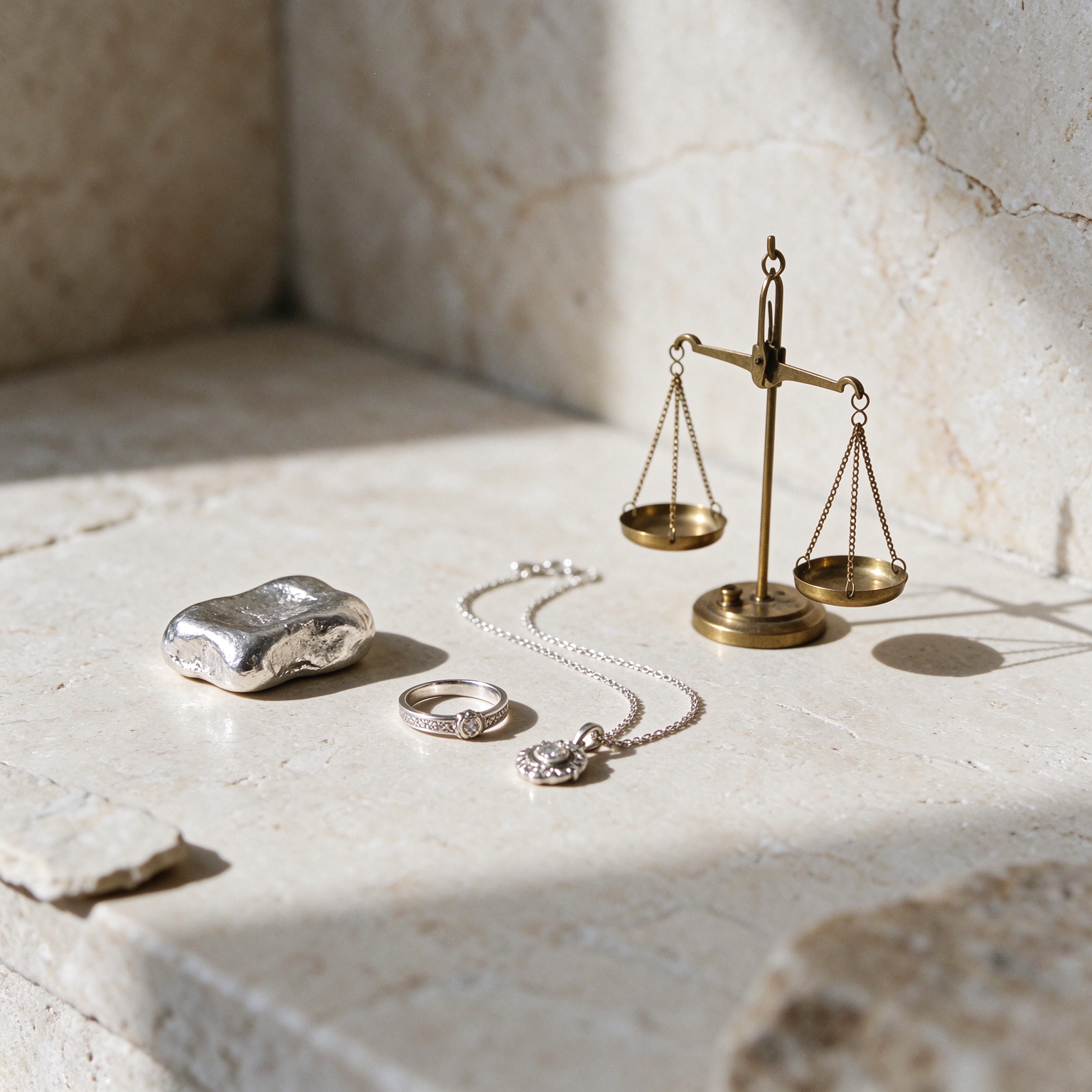
Value splits roughly into silver metal, labour, and style or brand premium. Metal is weighed by grade: 925 silver is 92.5 percent silver with alloy. Labour covers moulding, casting, polishing, stone setting, plating and hand work; design, brand awareness and markup form the premium. On resale, buyers usually value metal and grade first, while labour and premium are rarely recovered in full, unlike gold jewellery.
Silver price moves with the market, and metal cost is weight times silver price. But retail price is not metal price; labour and premium often take a larger share. Light studs and thin chains use little metal, while heavy bangles and wide rings use more. Listing metal and labour separately helps buyers understand the price and makes it easier to adjust quotes when silver moves.
Labour depends on craft: plain bands and simple pendants need few steps and cost less; openwork, relief, stone setting, antiquing and multi-piece assembly add clear cost. Hand finishing, setting and QC also count. Complex pieces look good, but these steps are usually not priced separately by resellers, so read them as wear value rather than recoverable value.
Scratches, bending, loose stones, plating wear and tarnish all affect secondhand condition. Tarnish can be cleaned, but deep scratches, breaks and missing stones are hard to restore. Trend matters too: plain bands, basic chains and simple studs have a wide audience after a season; bold looks and limited colours narrow the resale pool. Storage and care directly condition resale grade.
For regular restocks, favour classics: plain bands, basic chains, simple studs and plain bangles, with simple structures and steady demand. Ornamental and trend pieces add variety but turn over faster. Balance classics and trends, keep depth shallow on complex pieces, and state material, weight and craft so buyers hold realistic expectations on value and wear.
Silver jewellery is mainly a wearable item, not an investment. Metal can be traded, but labour, design and brand premium are mostly lost on resale, and wear and tarnish cut the price further.
Grade, weight and metal price first, then condition. Labour, settings and premium are generally not paid at original price, and stone pieces depend on stone retention.
Labour pays for steps and hand work; resale usually estimates metal and grade and does not price complex craft separately. A high-labour piece shows its value mainly in how it wears.
Plain bands, basic chains, simple studs and plain bangles resell more easily across seasons. Trendy looks have a narrower pool, so stock them more cautiously.


