

 EN

 CN
 ES

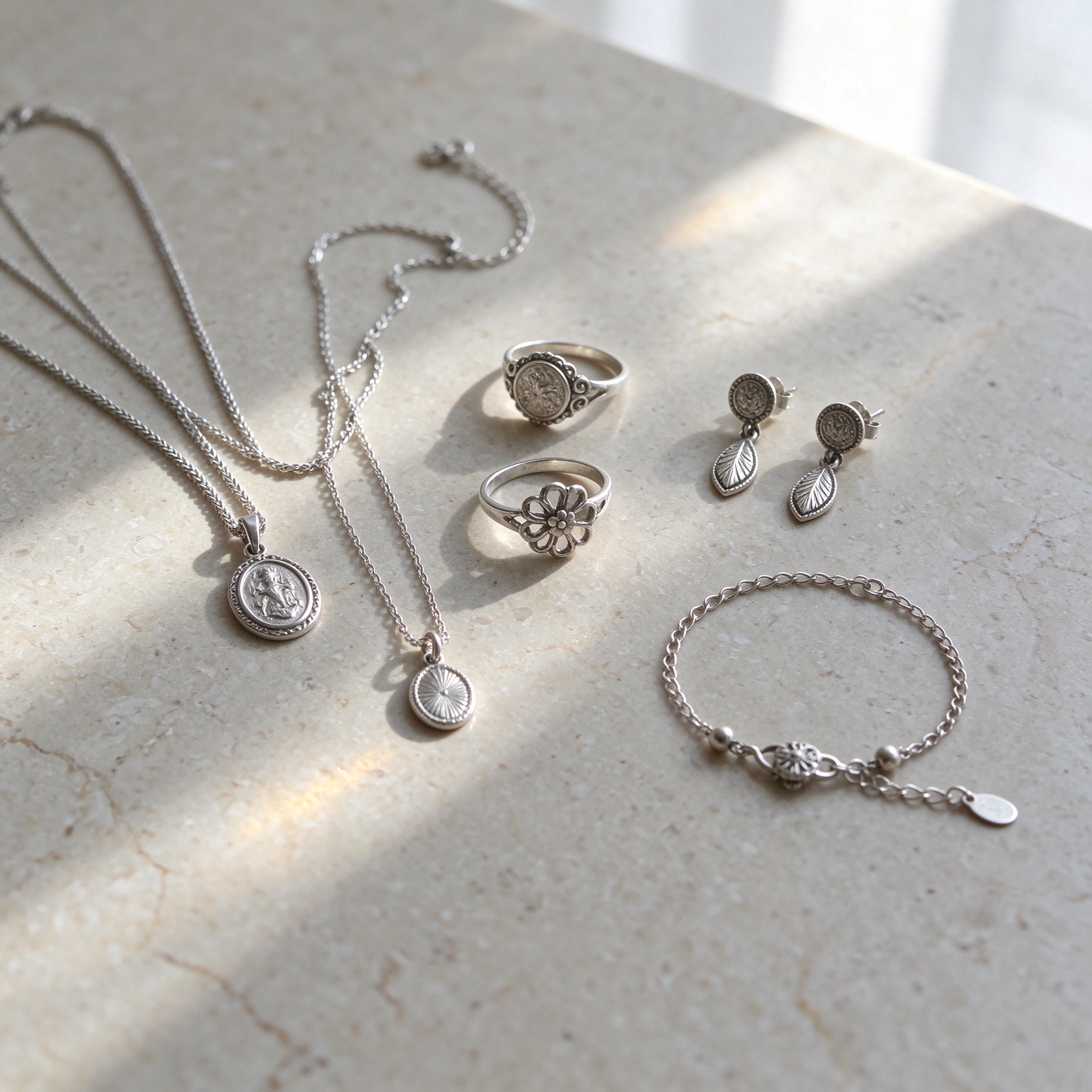
Put the most searched category and material words in the first half, such as 925 sterling silver, ring or necklace, then follow with style, stone, colour and audience attributes. Do not pile the brand name and a stream of synonyms at the front. The title should show material, category and style at a glance, and still work after mobile truncation. Order core words against platform suggestions and competitor organic ranking rather than guesswork.
Keywords do not belong only in the title. The title carries top-priority category and material words; bullets hold specs, craft and occasion words; the detail body covers long-tail questions such as how to measure size, allergy risk and care. Place synonyms and common spellings where they fit instead of repeating every sentence. Keywords must match real page content: if the title names a stone, detail and images must agree. Irrelevant stuffing lowers conversion and may be penalised.
Use a clean white or consistent scene for the hero shot; the second shows front detail and the metal stamp; the third shows size comparison or worn proportion; the fourth captures clasp, post or chain fitting; stone pieces add a close-up of the face and setting. Images must show the material, stone and craft the title promises, avoiding renders that do not match the product. Add more structure and back shots for complex bracelets and pendants.
State whether the body is 925 silver or plated, the plating metal and thickness, and whether stones are natural or synthetic; give ring size, chain length, bracelet circumference or pendant size with the measuring method; mark occasion and audience; add care notes on anti-tarnish and avoiding perfume and sweat. Specific details lower returns from mismatched expectations. Custom pieces should note changeable material, engraving range and sample lead time.
Common issues are repeated synonyms and overlong titles; adjectives without specs, such as stylish and versatile with no size or material; images that do not match the product in stone or plating colour; and missing size and care info that forces buyers to guess. Before listing, check readability, bullet completeness and image angles against competitors, fill in missing material, size and care details, and review the mobile display.
Keep it readable: core category, material and key attributes only, no repeated synonyms. Put long-tail and question words in bullets and detail; an unreadable title hurts clicks.
They set buyer expectations and allergy judgement. Stating 925 versus plated, plating metal and natural or synthetic stone reduces returns and disputes from mismatched expectations.
Usually hero overall, second stamp detail, third size or worn proportion, fourth clasp or post structure, and a stone close-up for stone pieces. Add structure and back shots for complex styles.
Give numbers and the measuring method: ring size, chain length, bracelet circumference or pendant size, with handmade tolerance. Add a measuring sketch or worn proportion so buyers can match their own needs.


