

 EN

 CN
 ES

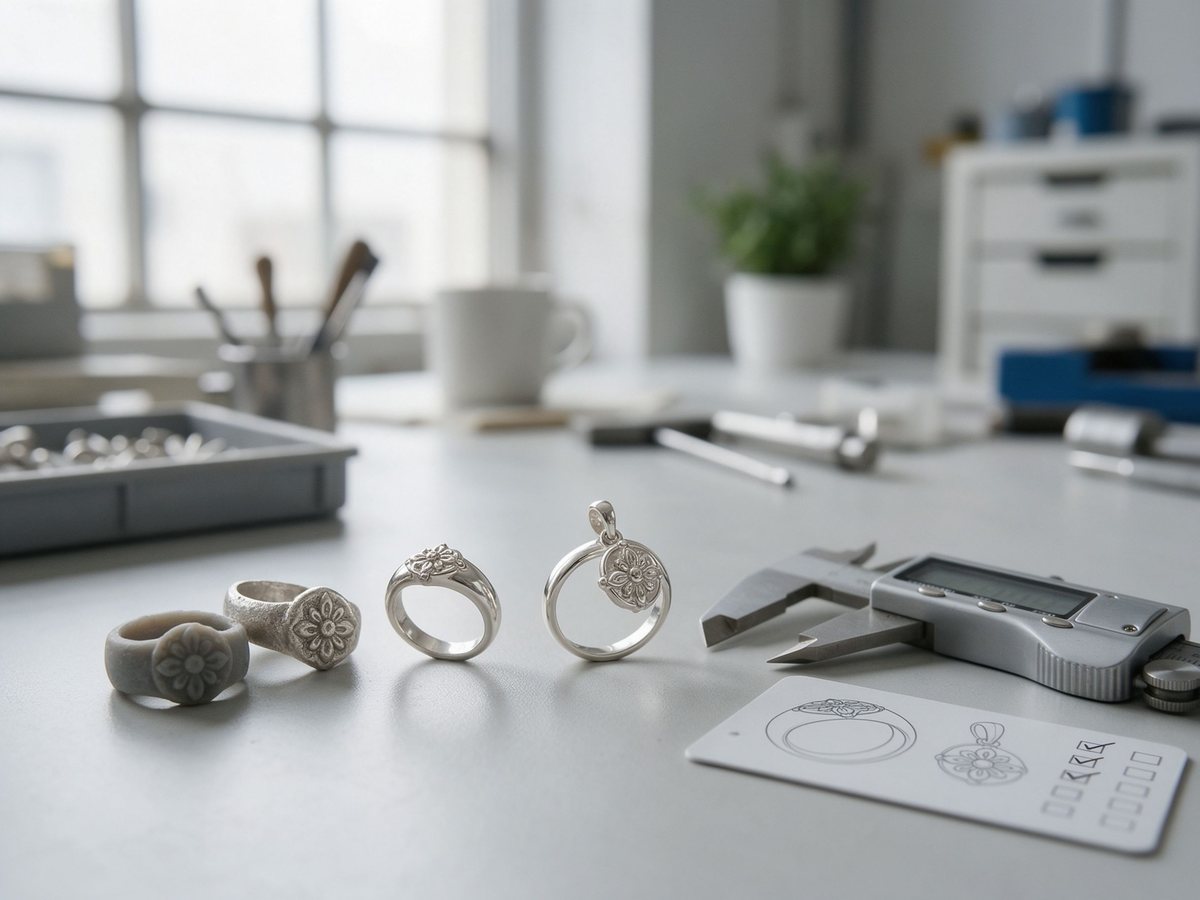
Most rework in custom silver jewelry does not come from production—it comes from weak sampling approval: a first sample judged only from photos, revisions agreed verbally, a sample that never ran the mass-production process, and an approval with no physical reference left behind. Split sampling into five checkpoints, each with a clear pass/fail, and most later disputes disappear before they start.
The first sample answers “is the shape right and can it be made,” not “is it shiny.” Measure three things on arrival: outer diameter, inner diameter and thickness against the drawing; whether load-bearing areas such as settings, prongs and clasps are thick enough to resist deformation; and whether weight sits in the expected range. Surface finish can be corrected later; a structural mistake means a new mold.
Separate comments into structure, dimensions, surface and process. Submit one category per round. Mixing them makes it impossible to tell which change fixed what, and the loop drags on. Put revision notes on the drawing—circled area plus a one-line conclusion—and you cut communication effort by half compared with prose.
Treating the first sample as a production sample is the most common trap. A first sample may be hand-finished, while mass production goes through mold making, casting, filing, setting, polishing and plating. The golden sample must be made on the same route as bulk, and should be checked for porosity on cast surfaces, stone seating, plating color against the target, and solder joint strength.
Approval is not a signature; it locks a standard. Seal one physical sample, archive six-angle photos, and put material, purity, plating type, stone and tolerances in writing. Incoming inspection then compares against these three references instead of “it looks different.”
Hold a short meeting after approval: hand the sealed sample, photos, tolerance sheet and packing requirements to the production and QC teams, and define the size of the first run and when the first-piece check happens. Do not go straight to bulk—run a small batch against the approved sample first, then scale. It is the cheapest insurance you can buy.
Sampling approval is really about moving taste debates upstream into a shared standard. Clear checkpoints and complete records turn the bulk order into pure execution.


