

 EN

 CN
 ES

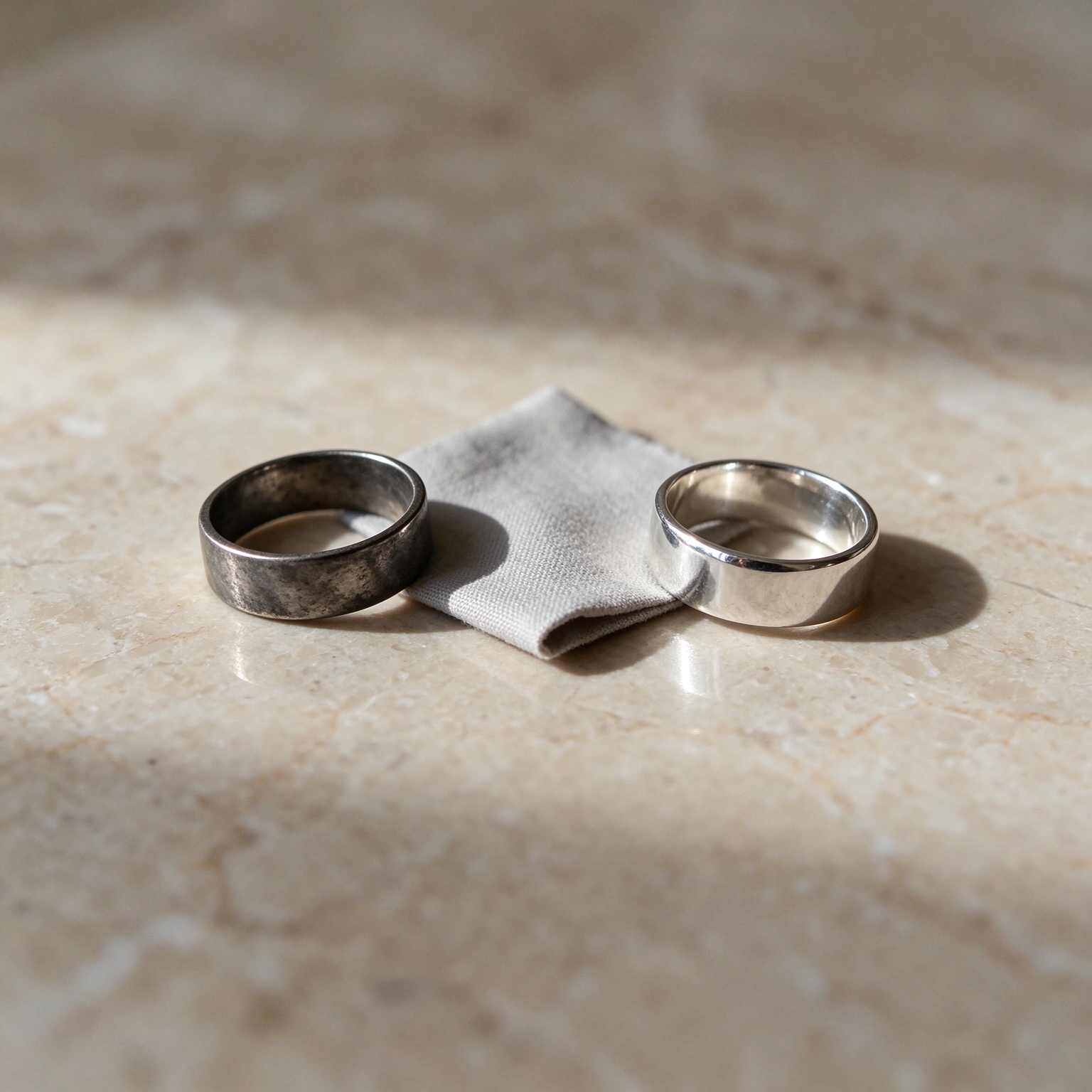
Silver reacts with hydrogen sulphide and sulphur compounds in air, sweat and cosmetics, forming a grey-black silver sulphide layer. The colour runs from pale yellow through brown to black as the layer thickens. Dry air alone barely affects fine silver; what darkens a piece quickly is sulphur, chlorine and friction acting together.
Sweat, especially acidic sweat; perfume, lotions and cosmetics carrying sulphur or alcohol; rubber bands, wool, leather and sulphur-bearing cleaners; damp storage where humidity is high; hot springs and chlorinated pools. On plated pieces, separate worn plating that exposes the base from tarnish on the silver itself, because the fix differs.
First, dry polishing: a treated silver cloth with polishing compound removes light tarnish in one pass, and the cloth should not be washed afterwards. Second, mild soapy water with a soft brush for crevices, then dry immediately with a soft cloth. Third, chemical dips only for plain silver with heavy tarnish: they strip a trace of silver and must never touch plating or stones. Toothpaste is abrasive and dulls polished faces with repeated use.
Ultrasonic cleaning suits plain silver without stones, but not rhodium or gold plating, pearl, turquoise or malachite: vibration and solution lift plating and crack soft stones. Chlorine bleach, pool water and seawater corrode the surface. Tissue paper leaves fibres in crevices. Storing pieces open in a bathroom combines humidity with sulphur and tarnishes faster than daily wear.
Specify individual PE bags with anti-tarnish paper or strips, desiccant adjusted by season, plating film thickness and wear zones, acceptance limits for colour variation, and a care card in the box. Put the phrase "tarnish is a normal physical reaction and can be restored by polishing" on the listing to cut avoidable returns.
No. Sterling silver contains copper and reacts with sulphur to form silver sulphide. A polishing cloth or professional repolish restores it. Authenticate by hallmark, density and assay, not colour.
For an emergency only. Abrasives dull the polished face and residue is hard to rinse from crevices. Use a silver cloth routinely and professional polishing for heavy tarnish.
No. Dips contain acid and reducing agents that attack plating and seep behind stones. Wipe with a soft cloth and have the piece replated if needed.
Clean, dry, sealed with an anti-tarnish strip, away from bathrooms, kitchens, rubber bands and wool.


