

 EN

 CN
 ES

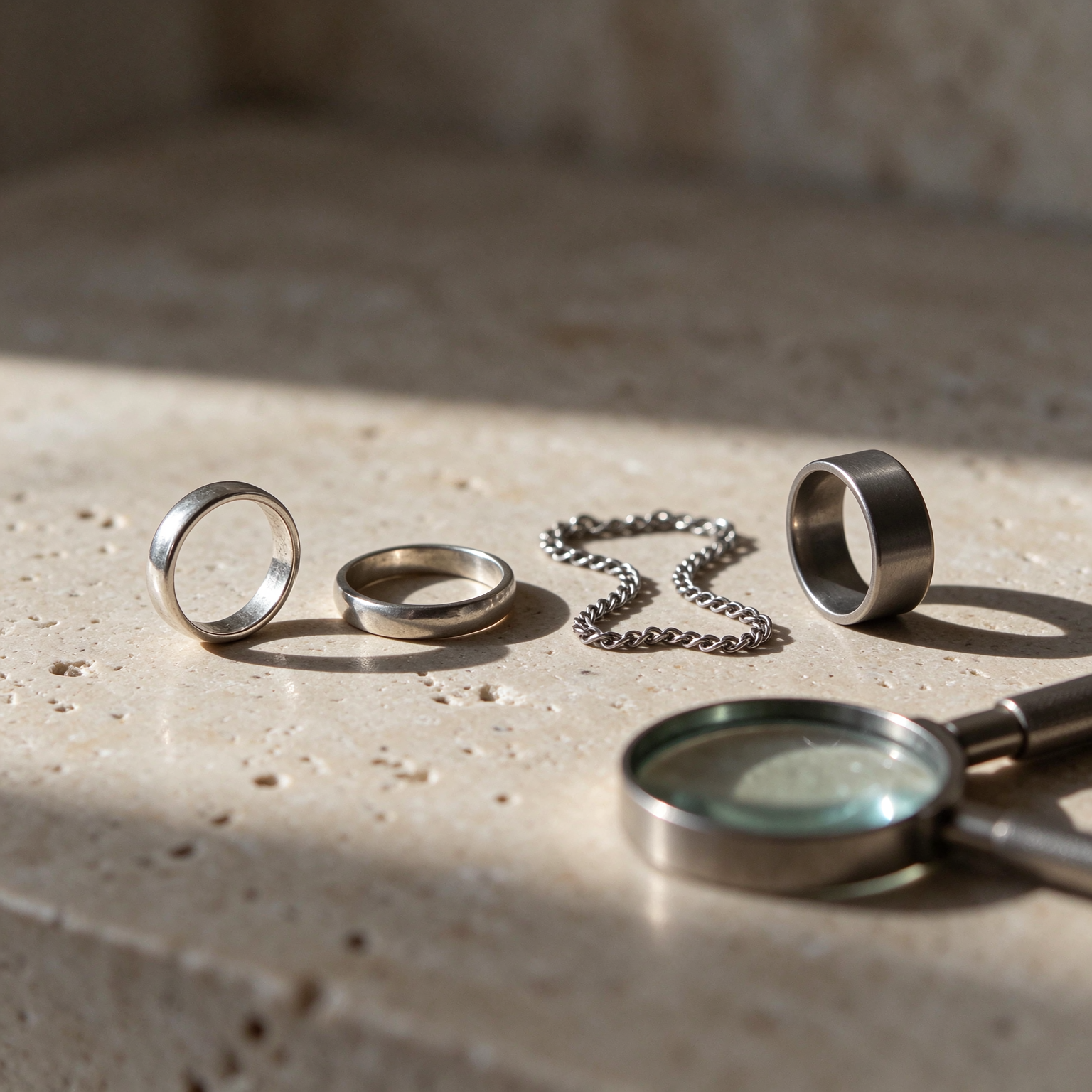
Compliant pieces carry S925, 925 or Ag925 inside a ring band, on a pendant back or at the ear post. A stamp is a clue, not a test: copper-nickel can be stamped 925 too. Names such as Tibetan silver or German silver usually mean a copper alloy with little or no silver and should be priced as base metal.
Sterling silver sits near 10.2 to 10.3 g/cm3, copper-nickel around 8.8, stainless steel 7.5 to 8, and pure titanium about 4.5. The same volume feels noticeably heavier in silver. Weigh the piece and measure volume by water displacement to get a rough density; hollow and thin-wall pieces read low, so compare against a solid reference.
Silver conducts heat strongly: it feels cold on contact and warms quickly to skin temperature. Stainless and titanium conduct less, so the initial cold is weaker and warming slower. Plated and silver-filled pieces still show silver-like behaviour on the surface, so pair the feel test with weight.
Magnets only detect ferromagnetic material: 304 and 316 stainless are non-magnetic and so are copper-nickel alloys, so "not magnetic" proves nothing. Sound depends on structure and wall thickness; hollow silver sounds dull. Scratch tests cannot separate similar hardness and damage the product. Real composition needs X-ray fluorescence or fire assay.
State the material and purity in the order, exclude vague names, require a third-party or in-house XRF report tied to the batch, sample by weight, dimension and appearance on receipt, specify base metal and film thickness for plated goods, and attach hallmark position, material declaration and report requirements to the contract.
Not necessarily. 304 and 316 stainless and copper-nickel are non-magnetic too. Use density and assay as well.
Usually not. It is typically a copper alloy with little or no silver, sold as ethnic-style jewellery rather than precious metal.
Weigh the piece, measure volume by displacement, divide. Sterling lands near 10; well below 9 suggests copper-nickel or steel. Hollow pieces do not work.
X-ray fluorescence for non-destructive screening, or laboratory fire assay. Ask suppliers for batch-linked reports and write tolerances into the contract.


