Products

Blog

What Is 925 Sterling Silver? Properties and Authenticity Check

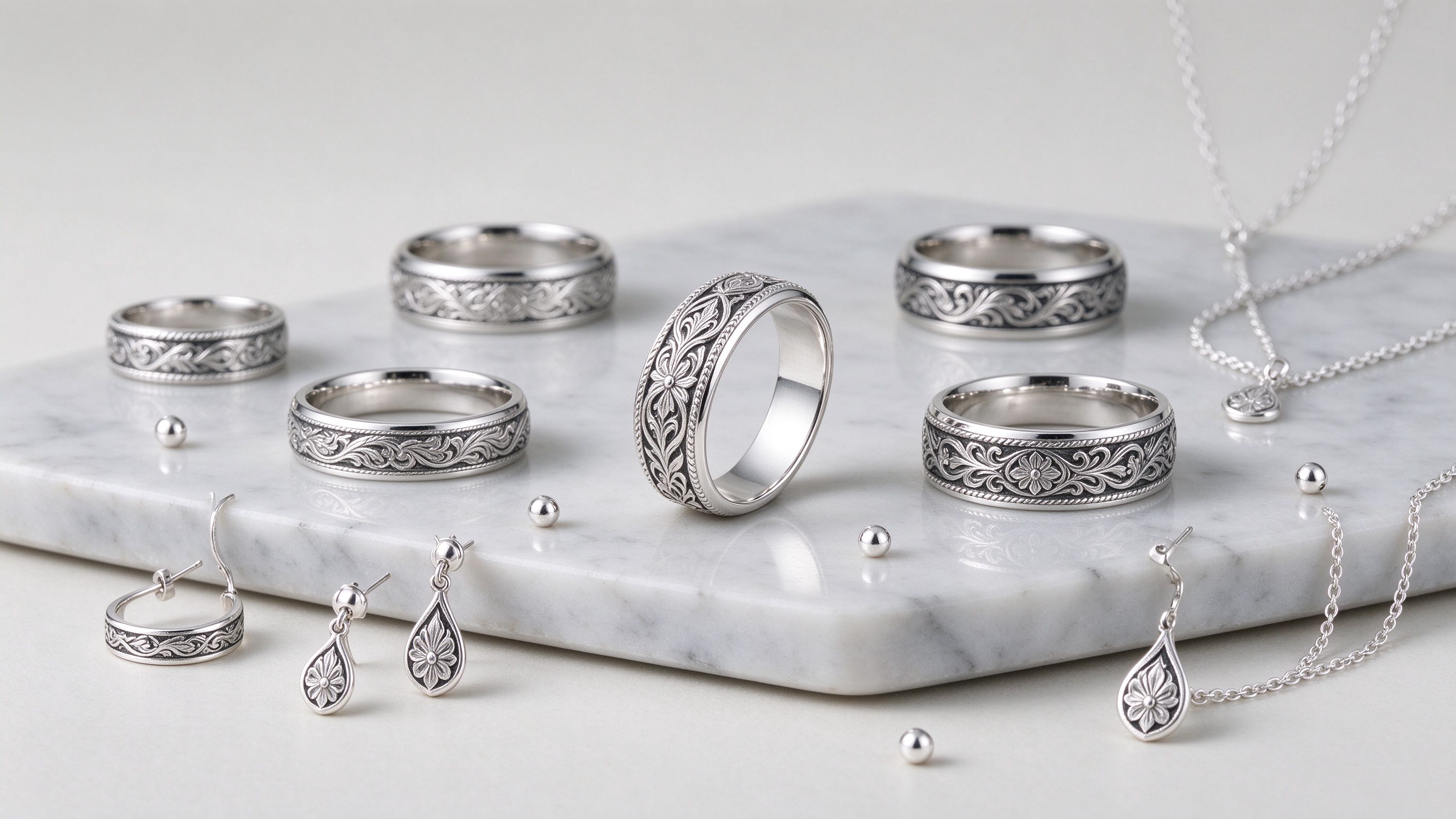
925 sterling silver is an alloy containing 92.5% pure silver and 7.5% other metals, usually copper, and it is the internationally recognized standard for jewelry. Genuine pieces carry a clear "S925" or "925" stamp, develop a black silver sulfide layer when tarnished rather than green copper corrosion, and hold moderate hardness without bending easily. This guide covers its material properties, hallmark recognition, and practical tests.Material PropertiesPure silver (999 fine silver) is too soft for durable jewelry, so 7.5% copper is added to form the 925 alloy. Copper greatly improves hardness and wear resistance while preserving silver malleability and bright white luster. The density of 925 silver is about 10.36 g per cubic centimeter, with a melting point near 890 degrees Celsius, making it suitable for casting, stamping, filigree, and stone setting. To slow tarnish, many sterling silver pieces are rhodium or platinum plated; once the plating wears, the silver base will darken, which is normal.Hallmark RecognitionStamp location: Ring interiors, necklace clasps, earring posts, and bracelet inner sides usually carry "S925", "925", or "STERLING".Stamp quality: Genuine marks are sharp, uniform, and deeply struck; blurry or missing stamps are a warning sign.Makers mark: Many pieces also carry a manufacturer mark next to the purity stamp.Four Practical Authenticity TestsSilver polishing cloth: Rubbing a genuine piece with a polishing cloth leaves black silver sulfide residue, and the item itself brightens; stainless steel or silver-plated alloy shows no black mark.Hardness test: A light scratch with a needle leaves a faint mark without cracking; overly soft pieces may be tin-lead alloy, and overly hard pieces may be cupronickel or steel.Sound test: Sterling silver dropped on a hard surface gives a dull thud with no bounce; fakes sound crisp and rebound.Weight feel: Genuine silver feels dense and heavy for its size; suspiciously light pieces may be hollow silver-plated alloy.Common fakes include thin silver-plated copper that wears through within weeks to show copper, cupronickel which is a pale nickel-copper alloy often allergenic, and tin-lead alloy which feels light in hand. Buy from channels that support re-testing and brand guarantees. As a professional Shenzhen silver jewelry manufacturer, MASCOT Jewelry produces 925 sterling silver to national standards with clear hallmarks, offers OEM and ODM service, and exports to over fifty countries. Contact us for samples and pricing.

Why Does Silver Tarnish? Causes and Proper Care Guide

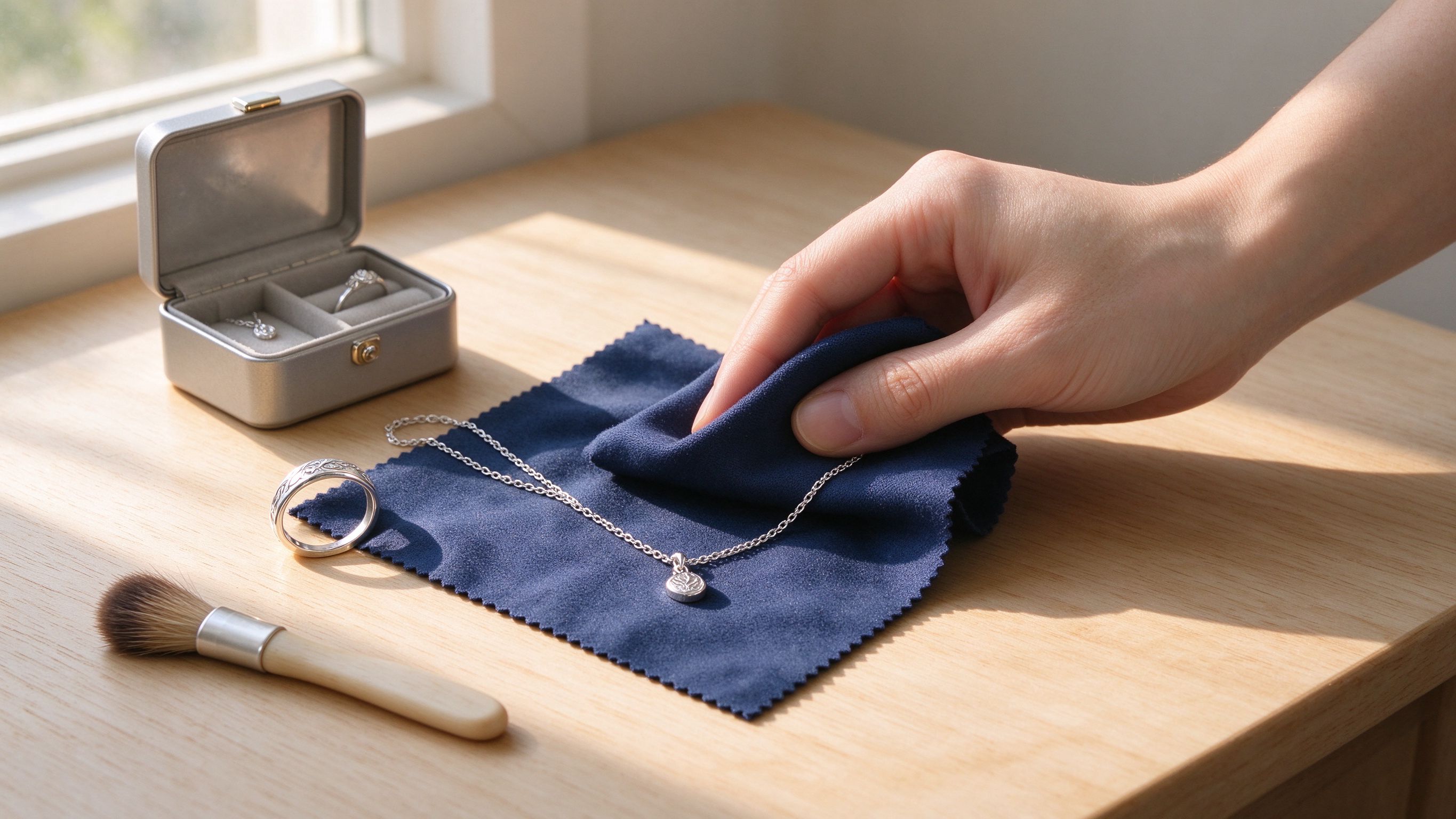
Silver tarnish is the black silver sulfide layer formed when silver reacts with sulfur, not a sign of poor quality. Sweat, hot springs, perfume, sulfur soap, and hydrogen sulfide in the air all accelerate this reaction. Proper care means isolating sulfur sources, storing pieces dry, and cleaning gently rather than polishing aggressively.The Chemistry Behind TarnishSilver is stable on its own but reacts quickly with sulfur. The reaction of silver, hydrogen sulfide, and oxygen forms black silver sulfide (Ag2S), which coats the surface as a dull layer. When rhodium or platinum plating is intact, tarnish is blocked; once the plating wears or contacts sulfur materials, the silver base darkens. Higher copper alloys may also develop green copper patina, which should be distinguished from normal silver tarnish. Normal tarnish usually starts as a dull sheen, then yellows, and finally turns deep black; this progression confirms the piece contains silver. Green spots that cannot be wiped off usually indicate a broken copper base under worn plating.Common Causes of Fast TarnishSweat and body chemistry: Sweat contains sulfur and ammonia; acidic skin or exercise without wiping speeds up darkening.Chemicals: Perfume, hairspray, nail polish, sulfur soap, and bleach contact silver directly.Environment: Hot springs, seawater, and polluted air carry hydrogen sulfide.Storage: Exposure to humid air, rubber, wool, or sulfur-containing paper accelerates tarnish.Proper Care MethodsWearing order: Apply makeup and perfume first, let them dry, then put on silver; remove silver as soon as you get home.Daily cleaning: Rub gently with a dedicated silver polishing cloth in one direction; for heavy tarnish, dip briefly in silver dip for seconds, then rinse immediately and dry.Storage: Keep each piece in its own sealed bag or anti-tarnish cloth, squeeze out air, and store in a dry cool place away from scratching.Avoid: Wearing silver while swimming, soaking in hot springs, or doing housework; never use toothpaste for repeated scrubbing because its grit scratches the plating.Regular care keeps silver bright for years. MASCOT Jewelry finishes its 925 silver pieces with multi-step polishing and plating before delivery, includes care instructions, and supports OEM and ODM bulk orders exported to over fifty countries. Contact us for details.

Moissanite vs Diamond: Four Ways to Tell Them Apart

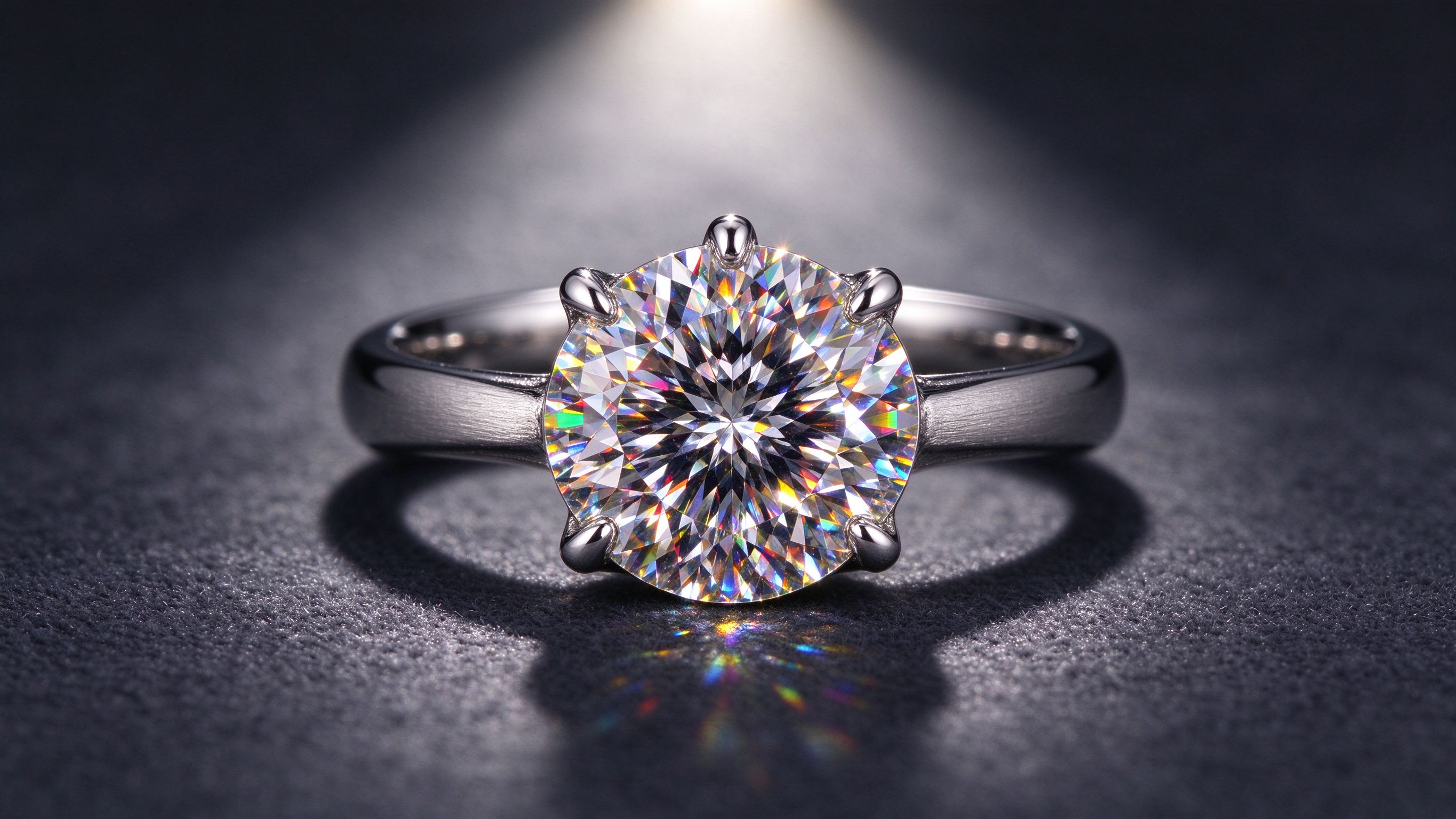
Moissanite (synthetic silicon carbide) looks extremely close to diamond, yet the two differ fundamentally in hardness, fire, thermal conductivity, and origin. Moissanite shows stronger fire at a fraction of the price, but it is slightly softer and has double refraction. Professional identification relies on a thermal tester and magnification, since the eye alone cannot fully separate them.Key Parameter ComparisonComposition and origin: Diamond is natural pure carbon; moissanite is lab-grown silicon carbide (SiC).Mohs hardness: Diamond is 10, the maximum; moissanite is 9.25, slightly below diamond but far above other simulants.Refractive index and fire: Moissanite has a refractive index of 2.65 and about 2.5 times the dispersion (fire) of diamond, showing more vivid rainbow flashes.Double refraction: Moissanite shows double refraction, so pavilion edges appear doubled under 10x magnification; diamond is singly refractive with sharp edges.Four Identification MethodsThermal tester: Diamond conducts heat extremely well and triggers the tester; most moissanite reacts differently and needs a conductivity meter to confirm.10x loupe: Moissanite shows doubled edges under the table and parallel needle-like inclusions; diamond often shows natural growth graining and original facets.Watch the fire: Moissanite flickers strongly with orange-green flashes; diamond fire is softer and more restrained.Certificate and girdle code: Genuine moissanite comes with a lab-grown certificate; diamond carries a grading report such as GIA, with a matching girdle laser code.Buying AdviceChoose diamond for natural rarity and resale value; choose moissanite for high value, daily wear, and visual impact. Moissanite is widely used in silver and 18K gold jewelry for outstanding looks on a friendly budget. From a wear standpoint, moissanite at 9.25 on the Mohs scale resists everyday scratching, but it should still be kept away from drops and hard impacts. Diamond is the hardest material, yet it is also brittle and can chip under a sharp blow. Both stones should be cleaned regularly with a soft cloth and kept away from long-term contact with hand cream and sweat. MASCOT Jewelry supplies moissanite-set 925 silver pieces, clearly distinguishing stones and including descriptions, with OEM and ODM service exported to over fifty countries. Request samples from us.

How Is Cubic Zirconia Cut? CZ Cutting Process Explained

Cubic zirconia (CZ) is the diamond simulant closest in appearance to a real diamond, and its cut directly determines brightness and fire. Premium CZ goes through crystal growth, oriented sawing, rounding, faceting, and polishing; a standard round brilliant cut usually has 57 or 58 facets.Material and Crystal GrowthCubic zirconia is made from zirconium oxide stabilized with yttrium oxide, melted and crystallized in a cold crucible under high-frequency heating. The rough stones are colorless transparent blocks that can be doped with metal oxides to produce red, blue, green, and other colors. As a lab material, CZ has very high clarity, clean and free of natural inclusions.Common Cut StylesRound brilliant: 57 or 58 facets, the classic cut with even fire, used in most settings.Princess cut: Square with sharp corners, V-shaped facet pattern, modern and clean.Oval, pear, and heart cuts: Fancy shapes used for pendants and earring center stones to flatter the hand.Step cut: Emerald-style with parallel facets, emphasizing transparency over fire.The Cutting WorkflowOrient and saw: Align the rough to set the table direction, then cut with a diamond saw blade.Rounding: Shape the rough into a round girdle, setting diameter and girdle thickness.Faceting: Grind the table, kite facets, star facets, upper and lower girdle facets, and pavilion mains in sequence.Polishing: Polish facets with diamond powder to a mirror finish.Inspection: Check symmetry, proportions, and chipping, then sort by cut grade.Poor proportions (table percentage or pavilion depth) cause light leakage or a dead white look and kill fire. The difference between premium CZ and cheap CZ lies mainly in refractive index, clarity, and cut grade; low-cost rough often looks grayish, cloudy, or static in its fire. When buying in bulk, ask the supplier for size tolerances, cut grade, and photos of the actual light performance, and keep samples for comparison. Colorless CZ is the most common choice, while fancy colors require controlled doping and consistent batch-to-batch tone. MASCOT Jewelry selects high-cut-grade CZ for its 925 silver settings for outstanding light performance, and supports OEM and ODM projects with customer-supplied or selected stones, exported to over fifty countries. Contact us.

What Is 18K Gold Plating? Process and Wearing Tips

18K gold plating is an electrochemical process that deposits a thin layer of 18K gold (75% gold content) onto a silver, copper, or other base, giving the jewelry a golden color and better corrosion resistance. Common layer thickness ranges from 0.05 to 0.5 microns; thick plating above 1 micron wears better but costs more. Thin plating requires avoiding friction and chemicals.Plating WorkflowPretreatment: The base is degreased, acid-pickled, and activated to remove oxide and oil, ensuring plating adhesion.Underplate: Usually a nickel or copper barrier layer is added to prevent base metal ions from diffusing upward.Gold plating: Gold ions deposit in a gold bath under current, controlling thickness and color (24K tone, rose gold, yellow gold).Post-treatment: Rinsing, drying, and testing thickness and adhesion.Plating Thickness and DurabilityThin plating (0.05 micron): Low cost, suited to short-term fashion pieces; the base may show through within months.Standard plating (0.1 to 0.2 micron): One to two years of daily wear, balanced value.Thick plating (above 0.5 micron): Noticeably better wear resistance, suited to high-frequency wear and export quality.Wearing and Care TipsAvoid friction: Gold plating is softer than solid gold; keep it away from hard objects and stacked jewelry.Keep chemicals away: Perfume, sweat, hot springs, and bleach speed up color change and peeling.Cleaning: Wipe dry with a soft cloth; never use silver dip or toothpaste, which corrode the gold layer.Storage: Keep in an individual sealed bag to reduce air exposure.Plating is a common process that upgrades silver appearance and value. Note that a traditional nickel underplate can trigger nickel allergy, and exports to Europe and the United States should meet relevant nickel-release standards. For nickel-sensitive customers, a nickel-free copper underplate or a direct thick-gold process is available. Plating thickness can be verified with a thickness gauge or X-ray fluorescence, and the required micron level should be written clearly on the purchase order to prevent thin fashion-grade plating from being shipped. MASCOT Jewelry offers 925 silver with 18K gold plating under OEM and ODM service, supporting different thicknesses and color tones, exported to over fifty countries. Contact us for process details and pricing.