

 EN

 CN
 ES

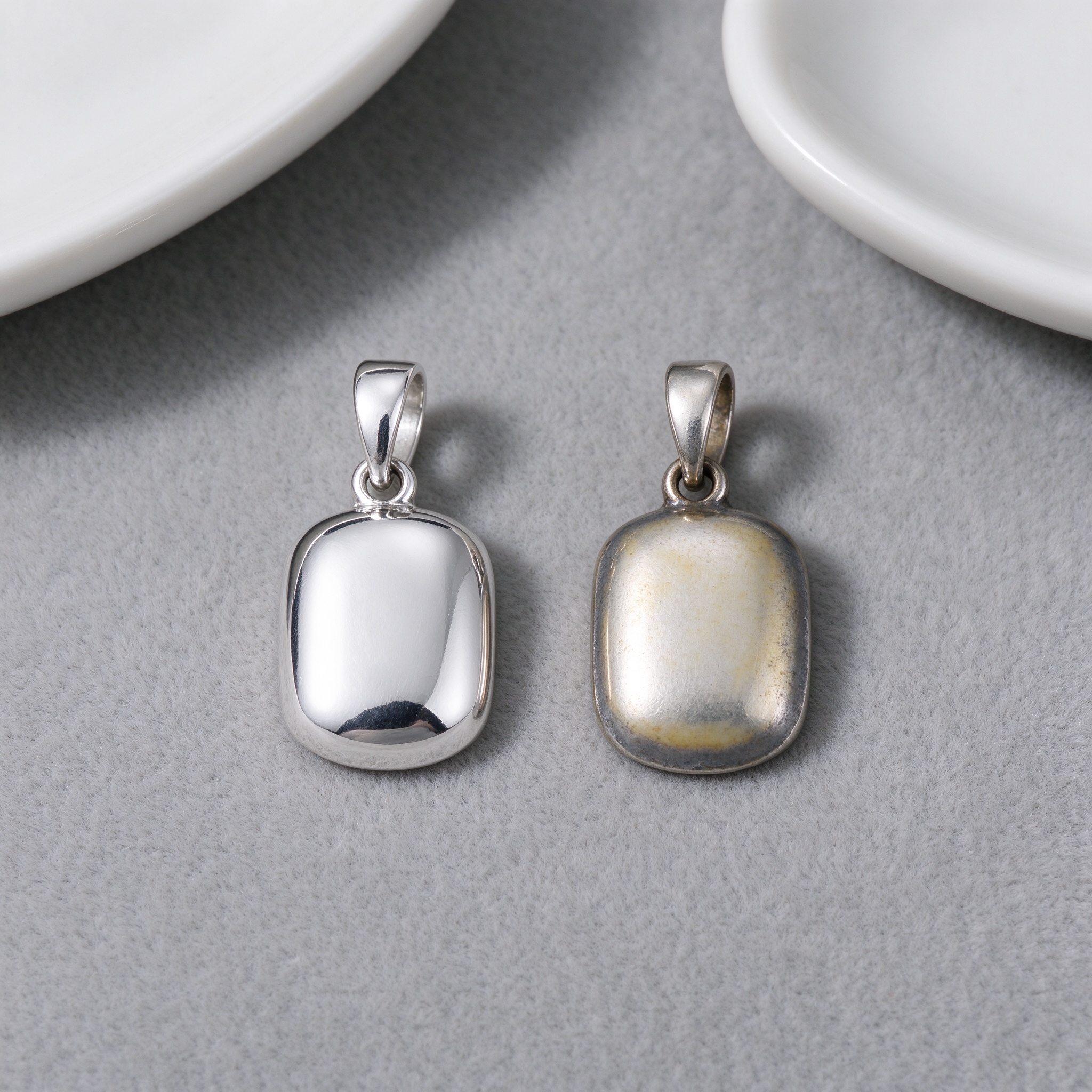
The dark layer on silver is mainly silver sulfide. Silver meets hydrogen sulfide in air, plus sulfur-bearing compounds in sweat, and forms a grey-black film on the surface. This has nothing to do with the body clearing toxins: sulfur is eliminated mainly through urine and breathing, not discharged through skin to react with a ring. The reverse also fails: not tarnishing does not mean better health, only less sulfur contact, less acidic sweat, or intact plating. Treating tarnish as a health signal hides the real causes, which are usually environment and cosmetics.
Sulfur-bearing environments come first: hot springs, sulfur soap, some rubber items, and low-grade paper and packaging all release sulfur. Cosmetics and daily products come second: sulfur compounds in perfume, chemical filters in sunscreen, hair dye and chlorine in pools all attack the surface. Sweat is third: acidic, salty sweat strips shine faster. Friction and humidity are fourth: the part of a chain that rubs against skin always dulls first, which is why necklaces usually tarnish faster than rings, given the difference in contact area and chemical exposure.
Three variables explain the difference: sweat acidity and sulfur content, chemical exposure in daily life, and the piece surface itself. Rhodium or white-gold plating acts as a barrier and shows little change for months. A polished unplated piece can dull in two to three weeks. Antiqued finishes are deliberately sulfurized, so colour is stable but lightens with friction. Silver also keeps better in dry climates than in hot humid ones, and pieces stored untouched in drawers next to sulfur-bearing paper can tarnish faster than ones worn regularly.
Light dullness: a treated polishing cloth, rubbed in one direction, removes most grey film. Medium tarnish: the aluminium foil and baking soda method in hot water reduces silver sulfide in minutes, though stones should not be shocked by rapid temperature change. Heavy tarnish: silver dip works fast but is acidic or thiourea-based, attacks plating, erases antique effects, and should only be a brief dip followed by thorough rinsing and drying. Toothpaste is safe only on smooth unplated silver; it scratches matte finishes and stones.
Three cases are effectively irreversible: plating worn through to the base, which is missing plating rather than tarnish and needs replating; deep pitting corrosion that polishing cannot level; and antique or oxidised finishes stripped by dip, where the colour depth cannot be rebuilt. Pearls, amber, turquoise and coral must never go into dip or hot water, since they lose lustre or crack. Work in order: polishing cloth first, then check whether the issue is plating, and only then consider chemicals. When unsure, professional polishing is safer than an unknown cleaner.
Yes. Tarnish is cosmetic and does not affect safety. It may however mean the plating is gone, in which case wear will keep dulling the piece.
Yes. It is aggressive, attacks plating and strips antique finishes, and repeated use roughens the surface. Keep dips brief and rinse thoroughly.
It does, more slowly. Plating is a barrier, and once worn through the silver beneath sulfurizes, so service life tracks thickness and friction.
A necklace contacts sweat, perfume, sunscreen and friction over a much larger area, so sulfur exposure is higher and tarnish comes sooner.


