

 EN

 CN
 ES

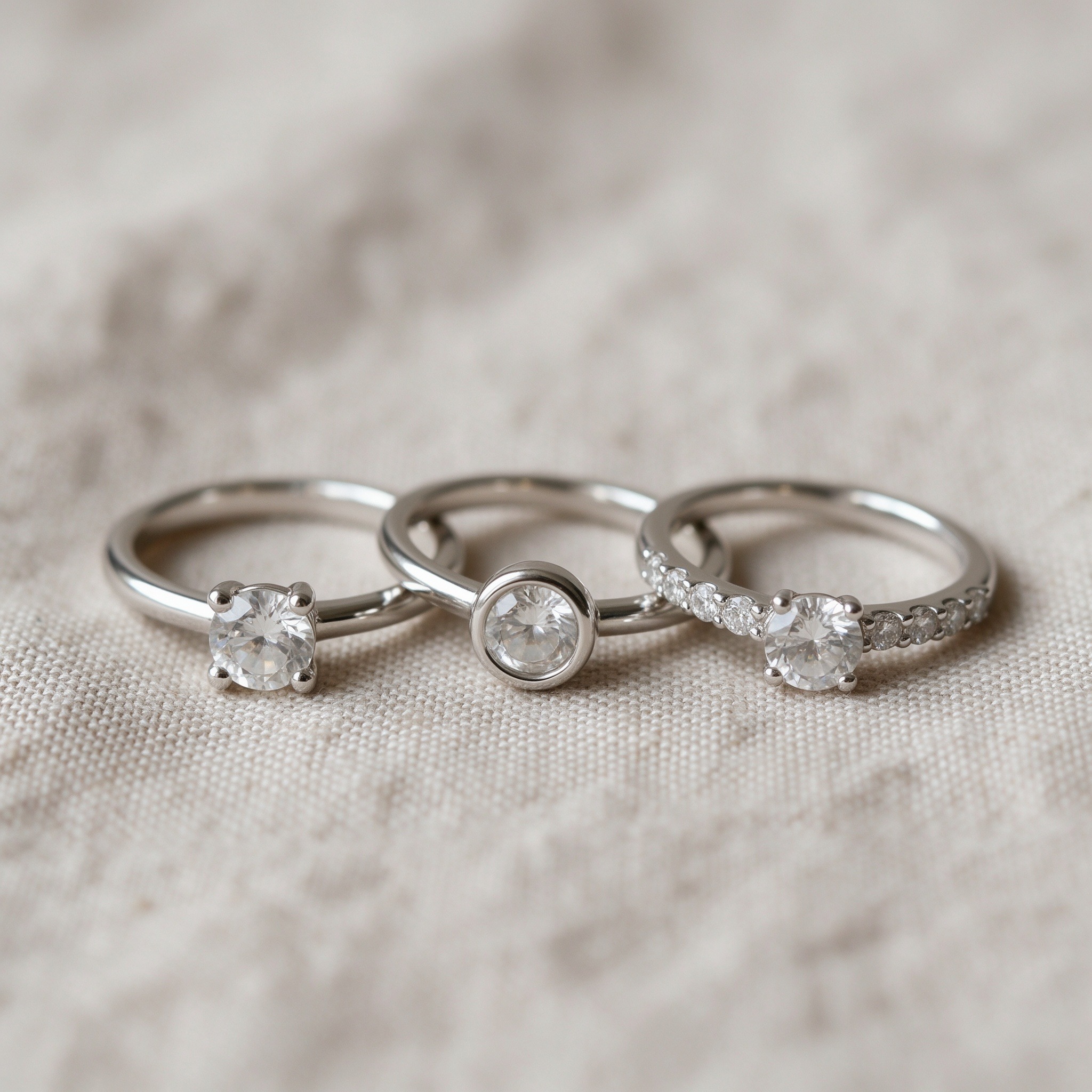
A prong setting grips the stone girdle with three to six metal claws, exposing the most surface. A bezel wraps a rim of metal around the stone, leaving only the table visible. Pavé drills a neat grid of small holes into the metal and presses one to two millimetre stones into them, held by hole walls and burnished edges, usually in rows.
Different structure means a different load path: prongs rely on tip pressure, bezel on a full ring of metal, pavé on hole walls and metal deformation. Their ceilings and failure modes are entirely different.
Prongs fail at the tip: thin prongs deform, long prongs snag fabric, and once one is lifted the stone loosens. A bezel encloses the stone and takes impact best, at the cost of covering the girdle, losing brilliance, and risking pressure on the stone when resizing. Pavé risk sits in hole accuracy: a hole slightly too large and the stone rattles, slightly too small and it cracks, and thin walls collapse.
Same word, different reality: bezel usually has the lowest loss rate, prong sits in the middle, pavé the highest. For cross-border orders this ranking deserves confirmation before appearance.
Prong setting needs each claw shaped and tightened, moderate labour. Bezel requires turning, pressing and trimming the rim, skilled hands and expensive repairs. Pavé is the most labour-intensive: drilling, setting and burnishing by hand, where one lost stone often means redoing a whole section. Per-piece labour usually ranks prong, bezel, pavé.
The cost that quotes omit is lost-stone repair. Without hole inspection, after-sales replacement on pavé can exceed the original labour premium once freight is counted.
Centre stones, pendants and rings suit prongs because the stone must show. Daily wear, childrens pieces and impact-prone designs are safer in bezel. Rows, letter tags and geometric lines suit pavé for the most continuous look. If a setting sits too close to the band, resizing will press the stone, so leave clearance at design stage.
A common compromise is prong for the centre stone and pavé for accents, keeping the visual focus while controlling cost. Most bestsellers use exactly this mix.
First, are the prongs tightened and level, checked under a loupe for contact with the stone. Second, setting depth: is the girdle below the rim. Third, fit between seat and stone diameter, typically 0.02 to 0.05 mm clearance. Fourth, hole alignment and spacing on pavé. Fifth, a drop or vibration test, dropping a few samples from a set height onto a soft pad and checking for looseness.
Write stone type, diameter, tolerances, seat material and the lost-stone criterion into the spec. Inspect by lot and widen sampling when a single piece fails rather than eyeballing the tray.
The tips are left too long or too sharp. Shorten and round them, or switch to a bezel. Any tip protruding more than 0.3 mm will catch knitwear, and fixing it at sampling is far cheaper.
Yes, but it is labour-heavy: re-drill, set and burnish, often across a whole section because the old hole is deformed. Confirm the stone diameter matches the hole or it will fall again.
Yes, provided zoning and disclosure are written down so buyers do not assume one material throughout. Mixing affects pricing and after-sales terms, so list both separately.
Three things: correct seat-to-stone clearance, tightened and rounded prong tips, and a sampled drop test before shipping. For pavé add hole alignment inspection instead of relying on feel.


