

 EN

 CN
 ES

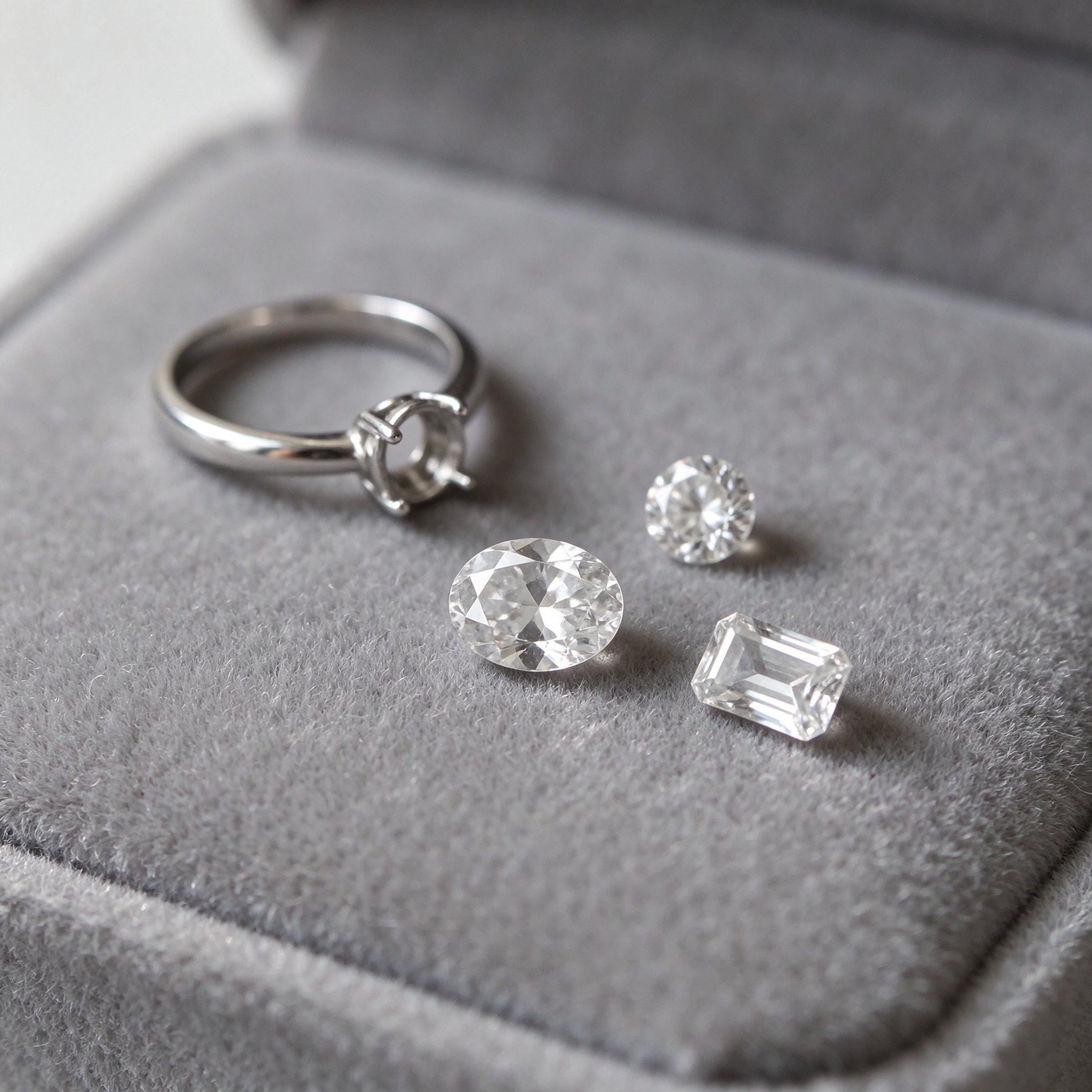
Cubic zirconia, or CZ, is a lab-made diamond simulant with the lowest cost, suited to high-volume everyday pieces. Moissanite is a silicon carbide crystal with higher refractive index and fire than CZ, priced in the middle and closer in look to diamond. Diamond is a natural carbon crystal, the hardest and most expensive, usually graded with a certificate. All three can be set in sterling silver, but they sit in different slots: CZ for decorative fast movers, moissanite for a quality alternative, diamond for high-ticket memorial pieces.
Diamond scores 10 on Mohs, moissanite about 9.25, CZ around 8 to 8.5. Softer stones scratch more easily against desks, keys and fine sand, and CZ facets going cloudy after months of wear is common. Moissanite has the highest dispersion, with obvious coloured flashes as it turns; CZ looks bright but flat; diamond fire sits quieter and even. Take jewellery off for washing up, workouts and perfume. Friction against the silver setting is the main wear cause, regardless of stone type.
The most vague part of a quote is stone weight and size. CZ sells by carat or millimetre diameter, moissanite lists carat and matching diameter, diamond grades by carat, colour, clarity and cut. At the same diameter moissanite weighs less than diamond, and CZ density differs again, so size cannot be judged from carat alone. Ask the supplier to state stone type, diameter in mm, carat weight, cut shape and certificate included. A quote that only says diamond or simulant is the most likely to lead to a dispute later.
For fast-moving everyday pieces, studs and bracelet accents, CZ keeps cost down and replacement cheap. For engagement, memorial and gift rings and pendants where quality matters, moissanite fire and durability fit better. Move to diamond only when the customer wants a natural stone and accepts the budget and certificate. The finer the silver setting, the harder the stone should be; CZ chips more easily under thin prongs. Main and side stones in a set should share a type to avoid a quality gap.
One, stone type and lab-versus-natural origin; two, diameter, carat weight and cut shape; three, setting method, prong, bezel or pavé, and stone seat size; four, surface finish and plating thickness; five, sampling and return criteria. Moissanite can come with a test certificate; diamond must carry a grading certificate. Check stone shine, prong tightness and back transparency on samples before bulk sampling to the same standard.
No. Moissanite is a lab-grown silicon carbide crystal that looks close to diamond but differs in composition and price; diamond is natural carbon. The two should be listed separately by stone type on any quote.
CZ does not oxidize, but its lower hardness lets facets scratch and go cloudy, which looks like fading. Reducing friction and taking it off for chores and workouts delays the haze.
Thin-prong pieces suit moissanite or diamond for hardness and lower chipping risk; thick bezel everyday pieces can use CZ to control cost. The finer the silver setting, the softer the stone it should avoid.
Ask for diameter in mm, carat weight and cut shape on the spec sheet. On arrival, measure diameter with callipers and compare weight. Stone diameter across a batch should stay within tolerance; drift beyond that means re-checking the whole lot.


