

 EN

 CN
 ES

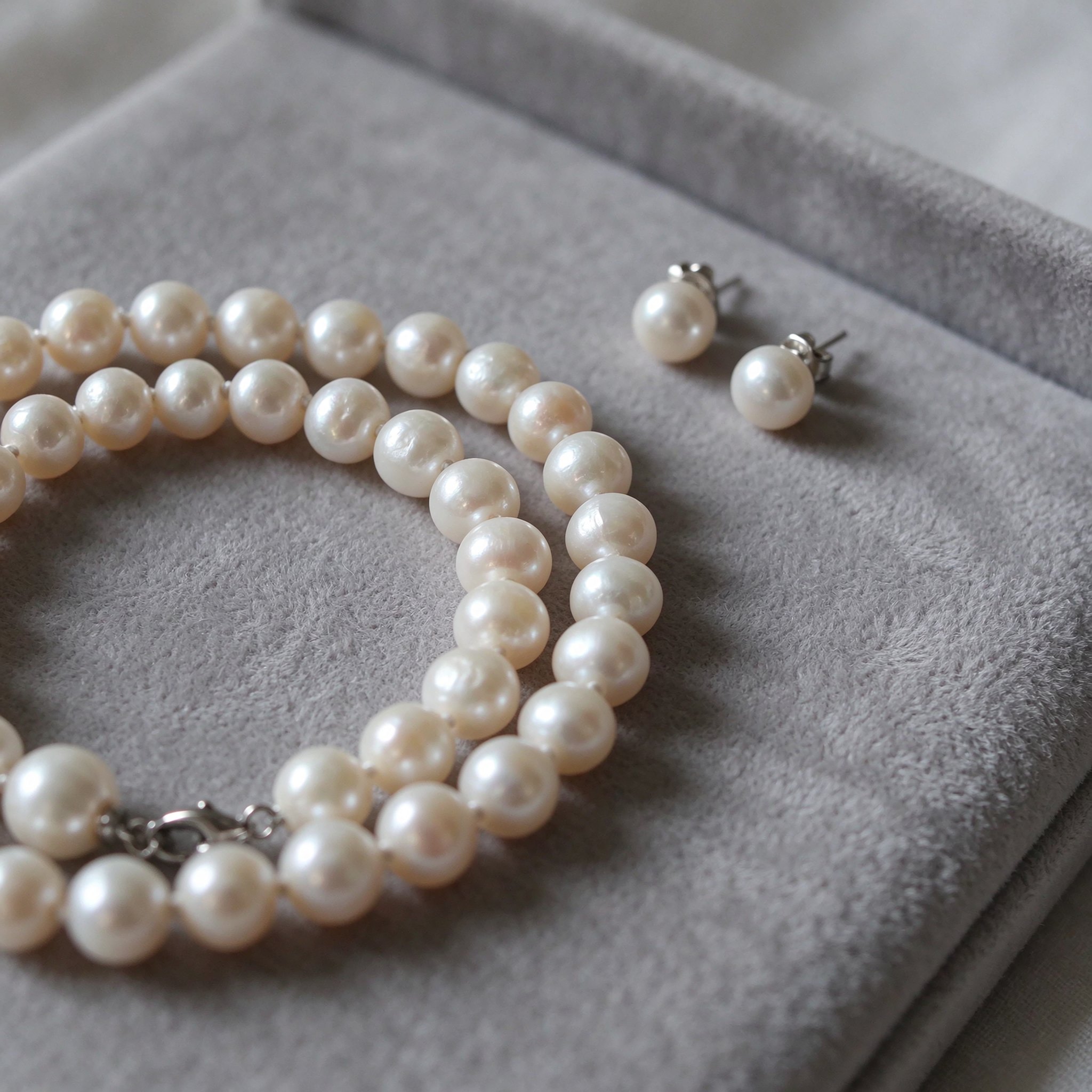
Freshwater pearls grow in river and lake mussels, with larger supply, friendlier prices and shapes ranging from near-round to oval and baroque. Saltwater pearls grow in shellfish, with more even roundness and lustre and higher prices. Wholesale silver everyday and volume pieces usually use freshwater pearls set in 925 silver to control cost. Both are organic gems made mainly of calcium carbonate, react to acid and cannot be cared for like ordinary stones.
Lustre is the first test: a strong pearl reflects a clear outline and human figure, while weak lustre blurs the reflection. Roundness checks whether diameters match across a strand; near-round pieces can tolerate oval shapes in single designs. Thicker nacre lasts longer, while thin nacre peels and sheds easily. Blemishes cover growth marks, dents and scratches; wholesale pieces allow minor natural blemishes but not clustered flaws in a prominent front spot. Rotate each pearl in natural light, as indoor gloss hides defects.
Pearl holes must be straight, with no chipped edges and a smooth channel that does not fray thread. Silver bezels or prongs should not press on the high-lustre face and wear the nacre away. Stud posts must fix firmly to the pearl seat, and pendant bails should add a metal pad between bead and hole to reduce pull-off risk. Bulk orders should check the angle of every hole, otherwise a strand sits unevenly. Add a washer where pearl meets silver to stop the metal scratching the bead.
Yellowing mostly comes from sweat, sebum and leftover cosmetics forming a film, not from the pearl itself changing. Wipe with a soft cloth after wearing before storage; avoid direct contact with perfume, hairspray and makeup remover. Do not shower, swim or work out in pearls, as chlorine and sweat age the nacre faster. Store each piece in its own soft pouch, away from silver chains and diamonds; pearl hardness is low and collisions leave marks. Air long-stored pieces now and then instead of sealing them in a damp box.
Necklaces demand the most even roundness and lustre, with a natural graduated sequence; single studs can use near-round beads judged on front lustre and symmetry. Bracelet beads can be slightly smaller, focusing on durability and secure holes. Gift and memorial pieces pick strong-lustre near-round pearls; volume everyday pieces take medium lustre with light growth marks. Main and accent pearls in a set must share tone, and silver finish should match pearl whiteness to avoid a colour gap between yellowish beads and bright silver.
Sweat, sebum and cosmetic residue darken the surface as a film, which can be wiped with a soft cloth dipped in very mild soap water then dried. Irreversible peeling comes only from aged, thin nacre; regular cleaning slows it down.
Not recommended. Perfume alcohol, hairspray, remover and skincare oils eat into the nacre. Apply makeup and scent first, then put pearls on; wipe them after taking them off.
Silver darkens by oxidation, independent of the pearl; but metal rubbing the bead can scratch nacre. A washer at the contact point protects both.
Seal one sample setting the lustre, roundness and blemish standard, then bulk-check against it. Diameter tolerance and lustre grade must match across a strand, with no clustered obvious blemishes on the front.


