

 EN

 CN
 ES

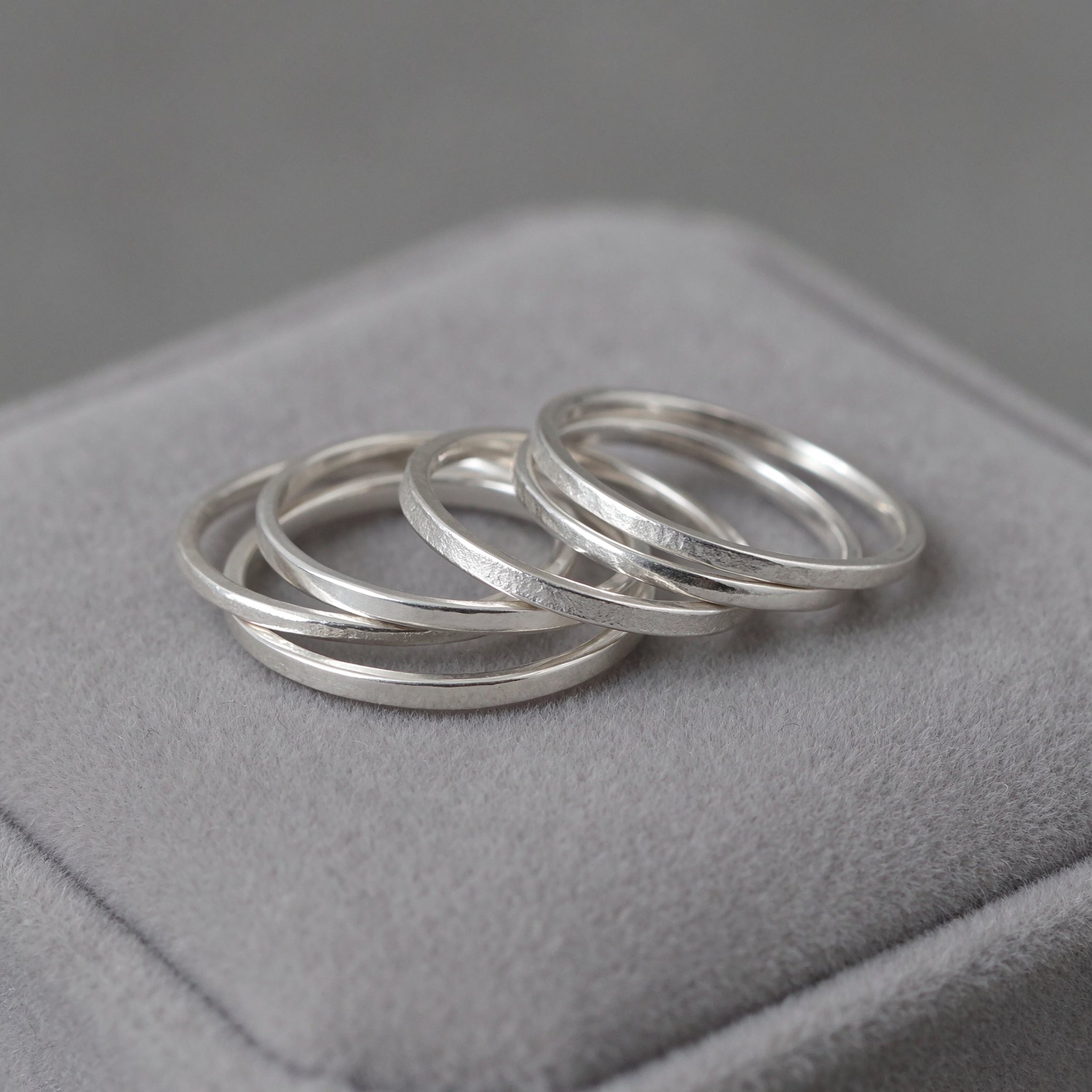
A stack usually splits into three: the hero ring is the focus, with a main stone or wider face; the side ring carries the line beside it, medium width and low-key stones; slim rings fill gaps, narrowest and mostly plain. Width drops from wide to slim across the three, avoiding two wide rings side by side. Wear the hero on the middle or ring finger, the side ring next to it, slim ones near the knuckle; the order can follow the hand shape.
Common band widths run from 2 mm slim to 8 mm wide. The widest hero should stay under 8 mm, side rings 3 to 4 mm, slim rings around 2 mm. Band thickness affects comfort: too thin bends easily, too thick catches the knuckle. Adjacent rings need a clear width gap, otherwise they merge visually. Test the stack on a sample finger first: knuckle passes smoothly and the band does not press the skin at the root.
Metal colour within a set should stay unified: all silver-white, all gold-plated, or silver-white with a small gold accent. Mixed colours top out at two and sit apart, not side by side. Stone style should match too: pavé pairs with plain slim bands, avoid two large main stones competing. Alternating plain and stone bands read better than an all-stone stack. Pack photos show the stacked look; each piece should be labelled with width and suggested position.
Common sets run three to five rings. The more pieces, the more sensible the size split: US 6 to 8 are the core range for most of the set, with 5 and 9 in small numbers. Rings in a set can share one size or differ slightly by finger position. Confirm before ordering whether the set is one size or mixed sizes, so buyers can match positions. Inner bands must be smooth, with no burrs to catch skin or knitwear under friction.
Rings in a stack rub each other, so band edges should be rounded and stone prongs tucked flat, not exposed. Main stones sit tight in their prongs to avoid catching fabric. Thin bands bend over time under stack pressure, so reinforce the inner root. Plating wears faster under stack friction, so set plating thickness evenly. Check sample roundness, inner smoothness and prong tightness, then bulk-check to the same tolerance.
Three to five is a safe daily range. Fewer shows no layering; more looks crowded and snags easily. Fix one hero first, then add two decreasing-width pieces to form a set.
Yes, but keep to two colours maximum and place them apart, not side by side. The set keeps one main colour; the other colour is a small accent only.
US 6 to 8 are the core, 5 and 9 in small numbers. Confirm one-size versus mixed-size sets first; smooth inner bands and a smooth knuckle pass are basic acceptance checks.
Thin bands do lose their round under long-term stack pressure. Inner-root reinforcement, rounded edges and even plating reduce the risk; check sample roundness and prong tightness first.


