

 EN

 CN
 ES

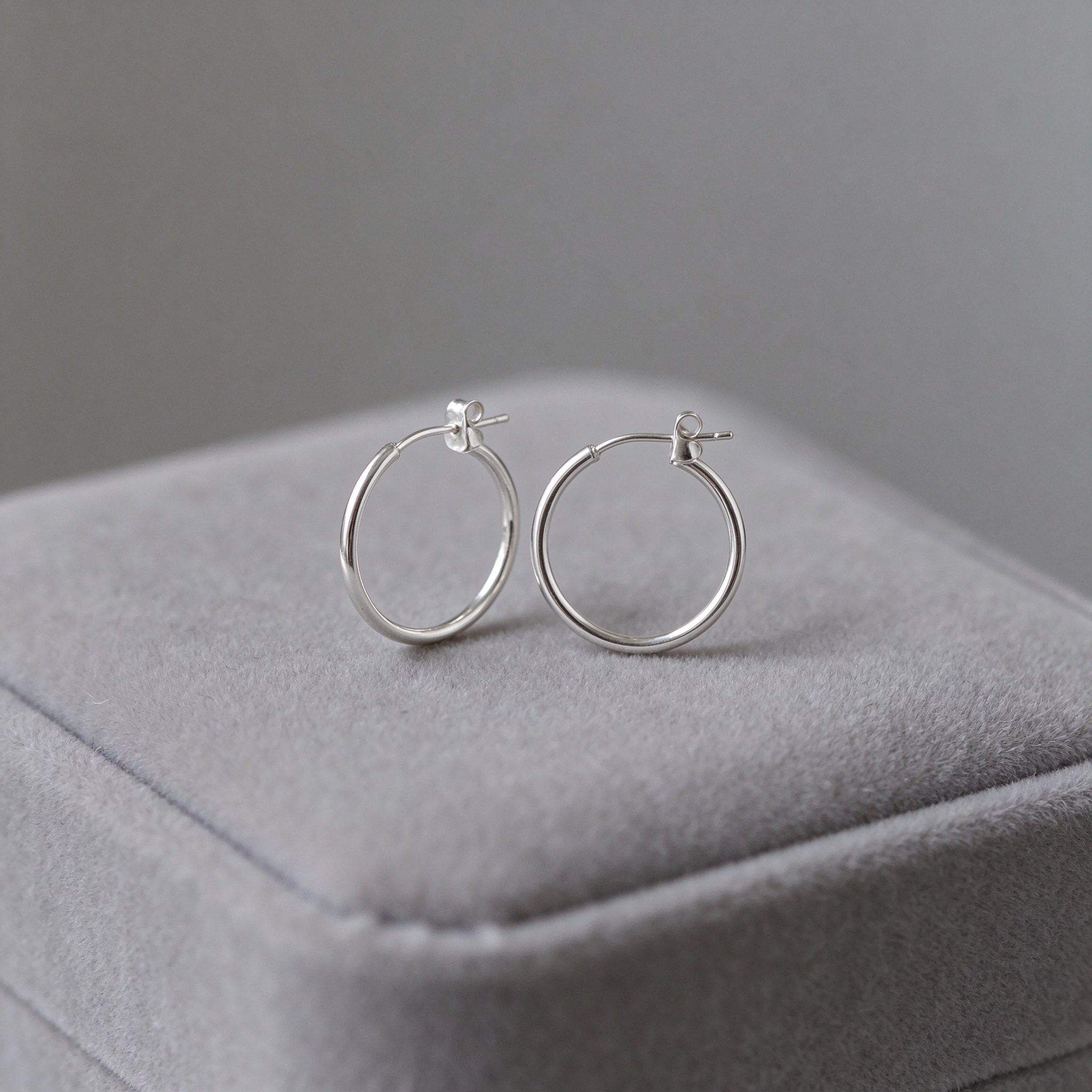
Hoop diameter runs from 1 cm small rings to over 5 cm large ones; bigger diameter means a bolder look and more swing. Wire thickness must match diameter: large hoops use thicker wire to resist bending, small hoops can stay slim for delicacy. Everyday volume pieces commonly sit at 2 to 3 cm diameter and 1.2 to 1.8 mm wire. Wholesale stock splits small, medium and large tiers; buyers choose by face and outfit. Try samples for swing and ear fit; over-large wires catch hair and collars.
Common structures are post-and-back, self-hoop click and snap closure. Post-and-back holds with the clutch, and clasp tightness decides whether it drops; self-hoops insert one end into the opposite catch and must align without slack; snap clasps open and close, and the hinge spring is checked over repeats. The post needs enough hardness: a soft wire bends when worn. Closure gaps stay even, seated without wobble. In bulk returns, loose clasps and bent posts are the most common faults; open and close samples several times before bulk order.
925 silver hoops can be polished bright or rhodium-flashed for whiteness, and white-gold plated where oxidation is a concern. Polish follows the wire evenly around, with no seam marks. Welds where post meets hoop stay smooth, not scraping the piercing. Posts should be 925 silver or hardened; a plain soft wire deforms when put in and taken out. Plating thickness matches across the batch; the inner wire and post back are easy to miss, so turn pieces over during sampling.
A stock range should cover small (1–2 cm), medium (2–3.5 cm) and large (over 3.5 cm), with medium the largest share. Weight deviation within one diameter should stay in a narrow range; wide drift means uneven wire thickness. A pair must match left and right in weight and diameter so it sits level. Order notes should state diameter, wire thickness, single weight and pair weight, to avoid comparing prices by diameter alone.
People with sensitive piercings react more to nickel, copper and plating residue. The post touches the piercing directly, so its material must be stated as 925 silver or alloy, with the plating process clear. Allergy complaints mostly come from alloy posts and poor plating rather than the silver hoop body. Write post material into the spec; samples can show post close-ups and test notes. Fresh piercings should choose pure silver posts.
The 2 to 3 cm medium range fits most faces and daily outfits, so it takes the largest stock share; small and large hoops are added in smaller style-driven numbers.
Usually the catch gap is too wide or the hinge spring is weak. Work the sample open and closed first, then bulk-check clasp tightness; a loose batch needs the whole structure re-inspected.
Yes. Left and right match in diameter and weight so they sit level; wide weight drift within a batch means uneven wire thickness and the craft needs re-checking.
Prefer 925 silver posts or hardened pure-silver posts, avoiding soft alloy posts and cheap plating. State post material and plating in the spec to lower allergy returns.


