

 EN

 CN
 ES

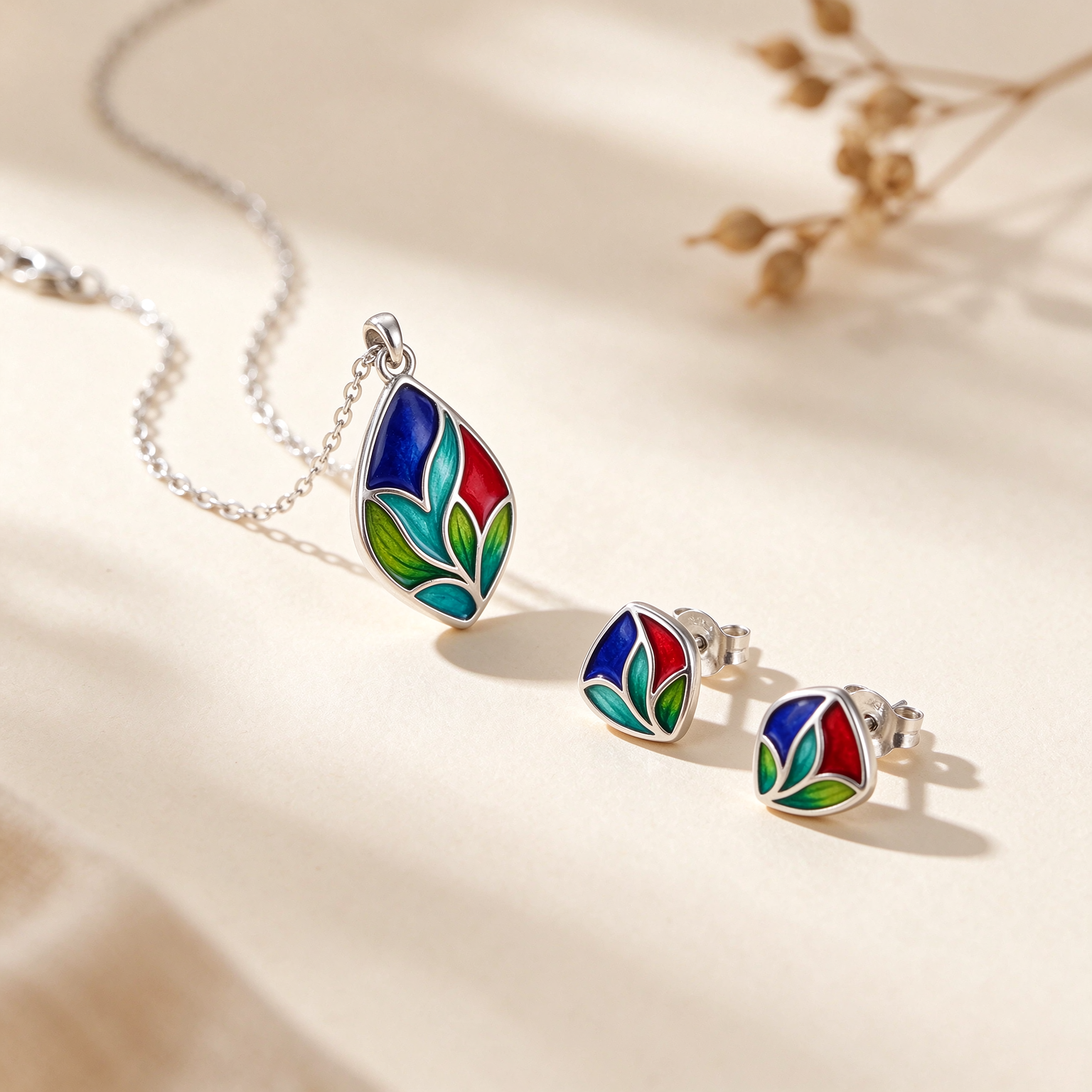
Cloisonné bends wire on the silver body to outline the pattern, fills cells with enamel fired in place, with metal lines defining boundaries and clear colour zones. Resin enamel, or soft enamel, cures resin in silver channels or flat surfaces with a gummy feel and lower cost. Cloisonné has hard lines and a traditional enamel feel; resin suits even, large flat colour blocks.
Fired cloisonné enamel is harder with a dimensional colour look, protected by wire edges; resin enamel is softer, scratches under sharp tools and may yellow with chemicals. Both resist neither impact: knocks crack or lift the glaze. Enamel suits pendants, studs and brooches rather than ring faces and bracelets that rub and strike often.
Complex, zoned patterns suit cloisonné; cartoons, logos and large colour blocks suit resin. Silver channels must be neat and wire or channel edges secure, with no glaze overflow. Multicolour borders must be clean, without bleeding. Bail and ear-post joints must avoid stressing the glaze, so pulling does not lift the enamel.
Keep enamel away from drops, knocks and hard rubbing; do not wear it to workouts, heavy lifting or against hard objects. Keep perfume, hairspray, makeup remover and long sweat contact off, as chemicals speed resin yellowing and glaze dulling. Wipe with a soft cloth; avoid toothbrushes or abrasives. Store in a soft pouch, away from silver chains and diamonds that scratch the glaze.
One, enamel type, cloisonné or resin, and method; two, pattern, colours and zoning borders; three, glaze flatness, bubbles and chips; four, coating state and chemical resistance notes; five, sample comparison and bulk sampling. Check colour evenness, border cleanliness and glaze security on samples, then bulk-check colours and surface defects against the sealed piece.
Fired cloisonné is harder and wire-protected at the edge, relatively durable; resin is softer, scratch- and chemical-sensitive and may yellow. Both knock-sensitive; high-rub areas should avoid enamel.
The glaze does not fade easily, but resin may yellow and dull after chemicals and sweat, and impact chips or lifts it. Avoid perfume and sweat, wipe softly and store separately to slow this.
Ring faces rub and strike often and chip enamel more easily; it suits pendants, studs and brooches. If used on a ring, choose a thickened, protected bezel piece.
State type, pattern colours and borders; check glaze flatness, bubbles, chips and security; compare samples, then bulk-sample colours and defects against the sealed piece.


