

 EN

 CN
 ES

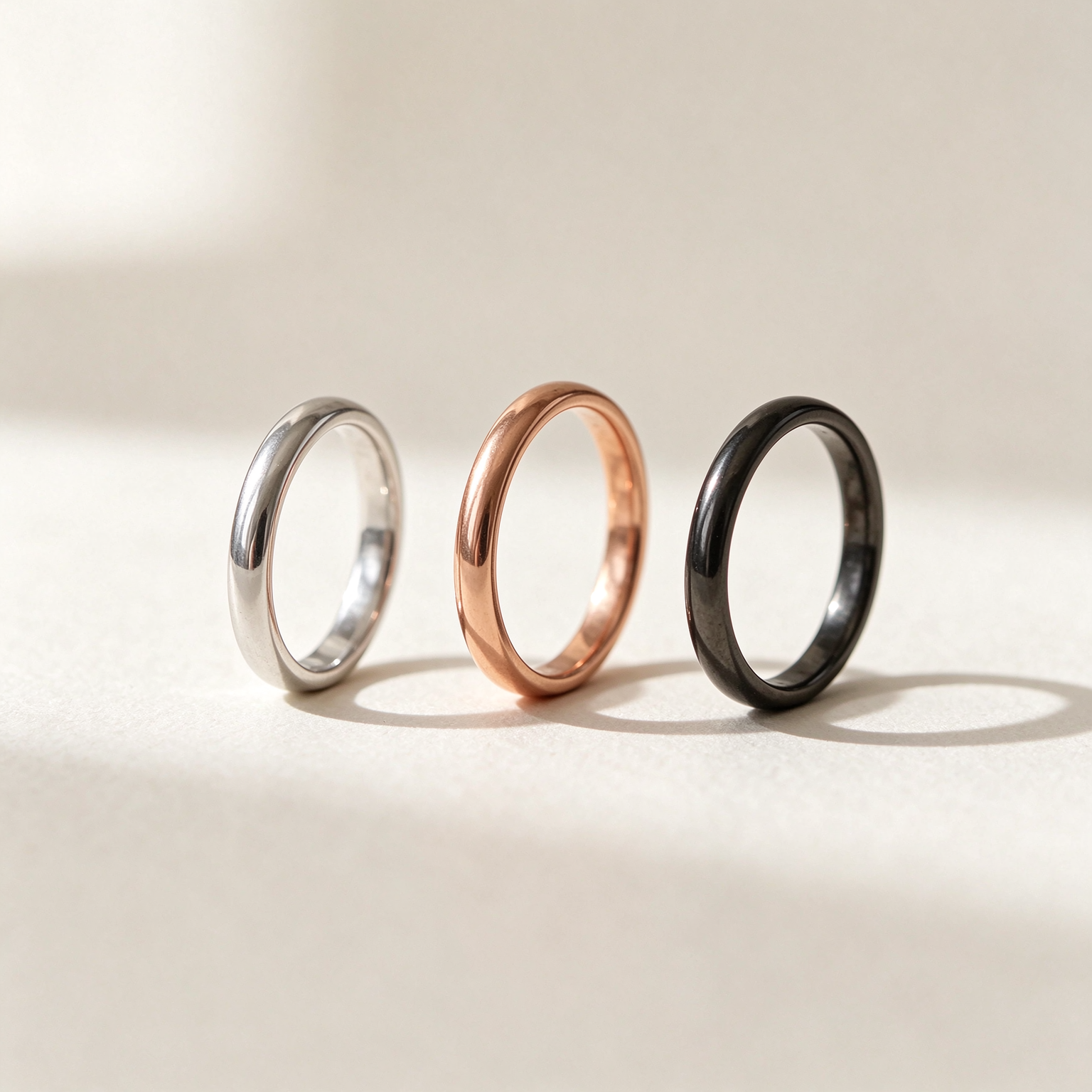
Rhodium plating deposits a platinum-group rhodium layer for a cool bright silver, raising shine and wear and slowing tarnish; it is the most common silver finish. Rose gold plating adds a warm copper-gold layer with a pink rose tone. Black plating uses black rhodium or a black coat for deep black or gunmetal, a bold street look. All sit over the silver base; colour and wear depend on plating thickness and coating.
Rhodium is cool and bright and wears well when dense, exposing silver locally as it wears; rose gold is soft and warm, with a relatively thin copper-toned layer that scratches and shifts on rub-prone spots; black plating covers strongly but edges may reveal a light base on wear. Thicker plating wears longer but costs more, so everyday pieces balance thickness and cost. Chemicals and sweat speed wear on all plating.
Rhodium goes with cool fair skin and neutral styles; rose gold suits warm skin, feminine pieces and gifts; black plating suits edgy, street and unisex looks that echo dark clothing. A set should share one plating colour to avoid a rhodium-versus-rose split. Antiqued pieces can darken parts over rhodium for light-dark contrast.
Fading depends mainly on plating thickness, material and intact coating: thick plating lasts, thin plating shows base; rhodium is chemically stable, while rose and black plating are more delicate. A coating blocks sweat and chemicals and slows tarnish. Friction and perfume or cosmetics are the main plating wear causes, not the silver base itself. Plating thickness is often left out of quotes and must be stated separately.
One, plating type, rhodium, rose gold, black rhodium or gold; two, colour shade and coating method; three, plating thickness or craft standard; four, exposed-base allowance and sampling spots; five, sample comparison and bulk consistency. Compare even colour in natural light, check edges for missed plating, then bulk-check colour and surface against the sealed piece.
Rhodium is a cool bright silver with dense shine; gold or rose gold is a warm gold or pink-copper tone. Both are surface plating; quotes must state type and colour, not just gold-plated.
Rose gold plating is relatively thin and scratches or shifts on rub-prone spots or with chemicals and sweat. Less friction, no perfume or sweat and an intact coating slow this; local base exposure over time is normal wear.
Black plating edges may reveal a light silver base on wear, showing black-silver contrast. Dark pieces need enough thickness and intact coating; samples check edge coverage first.
State type, shade, thickness and base-exposure allowance; compare even colour and missed edges in natural light, then bulk-sample colour and surface against the sealed piece.


