

 EN

 CN
 ES

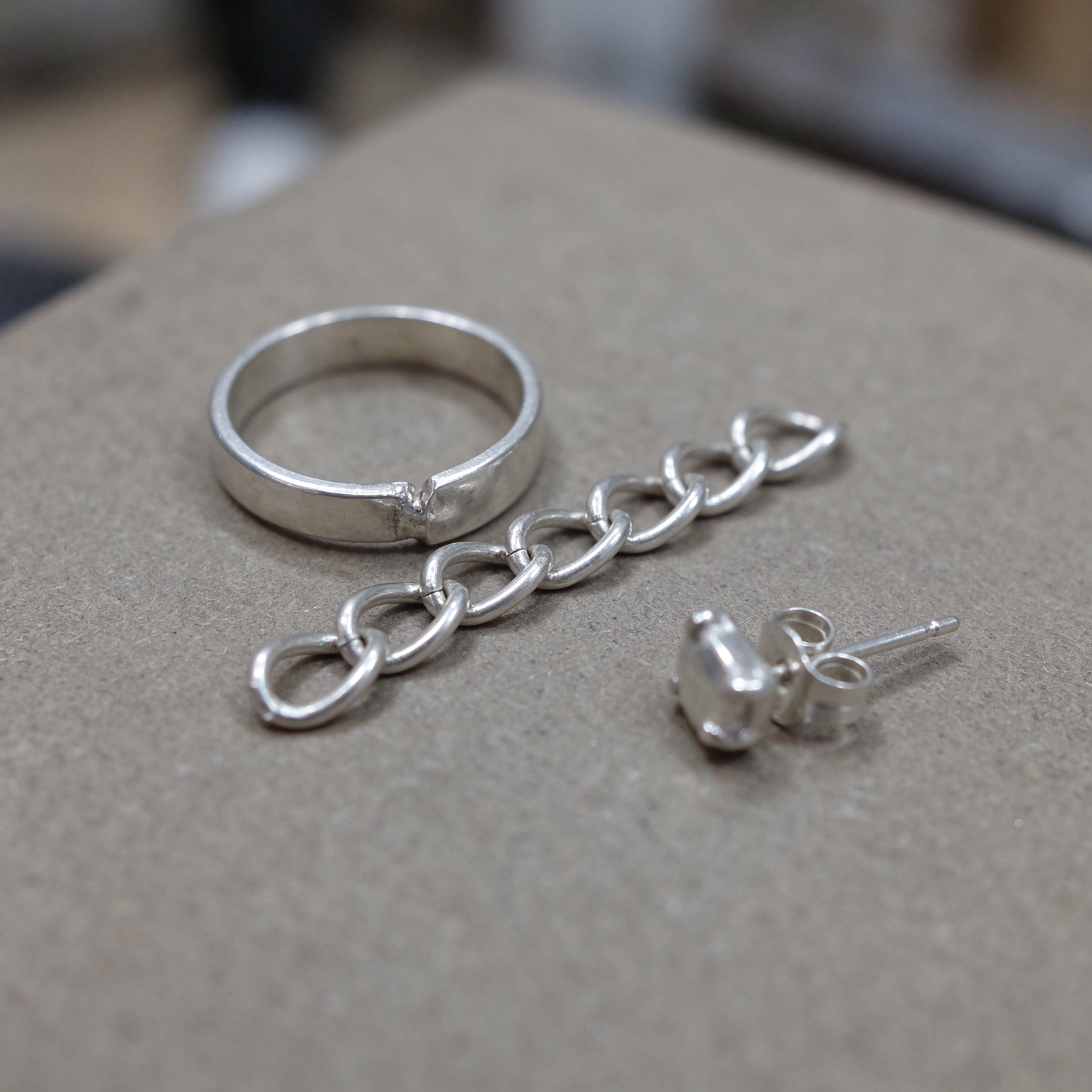
Ring joints sit at the band closure and prong-to-face connections; chain joints between links and at jump rings to the body; earring joints at post-to-body and pendant loops. These spots concentrate stress and open under pulling when poorly soldered. Solder must fill the seam and fuse to the base metal, not merely rest on the surface. Rings take transverse closure load, chains link-to-link pull, earrings post-body connection.
One, whether solder is full and smooth with no gaps, pores or cold joints; two, whether both sides fuse, with solder not balled or cracked; three, a light pull and bend test with no looseness or deformation; four, opening each chain link and checking soldered jump rings. Rings focus on band closure and prongs, chains pulled link by link, earrings on post root and loop. Samples go through repeated opening and a load pull for cracks.
A cold joint adheres only on the surface without fusing and opens under load; a cracked joint has internal or edge fissures that spread on bending; an open joint has fully separated. Check solder colour and fullness first: cold solder looks bright and loosely seated; cracks show under magnification or bending. Pull chain links one by one, bend earring post roots sideways, inspect ring closures against light. Loose or cracked lots go back as a batch, not single-piece replacement.
After soldering, the joint is ground flush with the surrounding surface before polishing and plating. An uneven solder leaves a bump or dent that shows more after plating. Plating must run continuously over the weld, with no missed spots or colour shift from solder composition. Moving joints keep their play after soldering and must not be sealed shut. Re-check joint security after bulk polishing so grinding does not weaken the weld.
One, joint spot and soldering method; two, solder fullness, pores and cracks; three, light pull-bend load standard; four, sampling ratio for chain links and earring roots; five, rework and return terms for loose or open joints. After sample pull and repeated opening, bulk lots are sampled against the sealed piece on solder look and security. High-load pieces state the pull standard in the spec.
Look for a full smooth joint fused to the base, then pull and bend lightly with no looseness or bend. Cold solder looks bright and loosely seated; cracks show on bending. High-load spots take repeated opening and a pull test.
Cold solder sticks on the surface without fusing and opens under load; cracked solder has fissures that spread on bending. Both need rework; an open joint has separated completely.
Between links and at jump-ring-to-body connections, which take the most stress; pull links one by one and ensure jump rings are soldered shut. An unsoldered open jump ring pulls free.
State joint spots, load standard and sampling ratio; pull and open samples, then bulk-check solder look and security against the sealed piece; loose lots go back as a batch with clear return terms.


