 EN

 CN
 ES
Buyers spend weeks refining a design, then discover a near-identical piece in a competitor's catalogue six months later. Sometimes that is coincidence. More often it is a factory reusing a mould, or a set of product photos that travelled further than intended. Both are avoidable with a short set of clauses agreed before the first wax print.
The default in much of the industry is that the factory owns the tooling it made, even when the buyer paid for it. That default is worth changing in writing. The usual fair arrangement: the buyer pays the tooling fee, the tooling is held at the factory for the buyer's use, and ownership transfers to the buyer on payment. If the buyer later moves, the mould is either shipped or destroyed, and the choice is stated in advance.
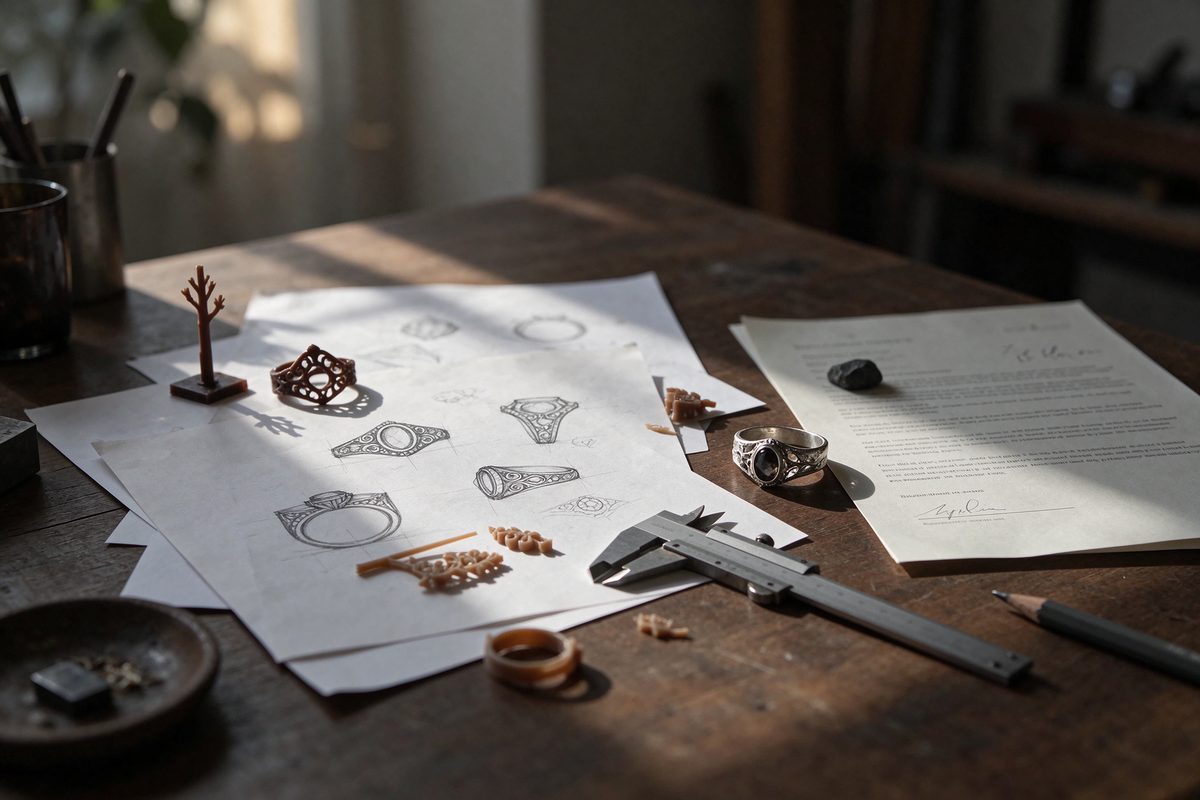
Two details matter more than the headline. First, what counts as tooling: the master mould, the rubber moulds, the CAD files and the wax print files are four different assets. Second, who pays for maintenance and replacement after a certain number of shots, because a worn mould produces inconsistent weight and the argument arrives with the first reorder.
Factories serve many buyers, so an absolute promise of never producing a similar style is unrealistic. A time-limited exclusivity is realistic: for a stated period, typically six to twelve months from first shipment, the factory will not produce the same design for another customer in the agreed markets, in exchange for a committed volume or a tooling contribution.
Define "same design" with something measurable: the CAD file reference, the stone layout, the key dimensions. Otherwise the clause is unenforceable and both sides know it.
Product photos are copied far more often than designs, because they are easy to download. Three habits reduce the damage: keep a consistent studio look so your images are recognisable, embed your own watermark in a corner that survives cropping, and run a reverse image search on your best-selling images each quarter. When you find a copy, a polite takedown notice to the platform usually works faster than a legal letter.
Note what you can and cannot prevent. Watermarks and platform takedowns are practical tools. Registered design rights and trademarks are jurisdictional and need local advice; they are worth pursuing for your few best-selling originals, not for every SKU.
None of this requires a lawyer for a first order, but all of it requires being written before the design leaves your screen.