 EN

 CN
 ES

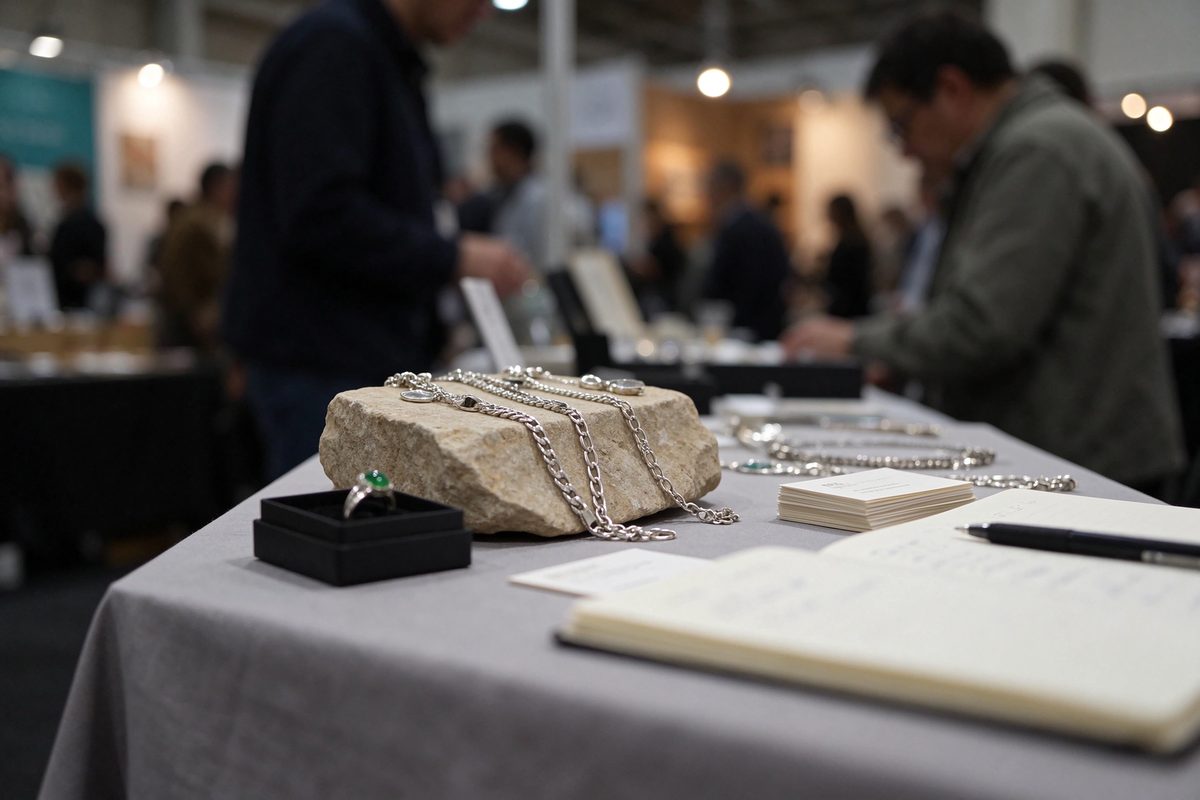
Every exhibitor leaves a show with a stack of cards and a vague sense that several conversations were promising. Three weeks later, most of those conversations are gone. The loss usually happens in the follow-up, not at the booth: the reply arrives too late, it is generic, and it does not remind the buyer of the piece they actually held.
The single most useful habit is a five-line note taken while the buyer is still standing there: what they held, what they asked, which market they sell into, what volume they mentioned, and what they said they would do next. Without that, the follow-up becomes a catalogue email, and catalogue emails get deleted.
Voice notes are fine. The point is capturing the specific question, because that question is the only reliable hook you will have two weeks later.
Within two working days, send one message that does four things: names the piece they held, answers the question they asked, gives one price and one timing indication, and proposes a concrete next step. Attach a photo of that specific piece, ideally the one taken at the booth, so the buyer recognises the context before reading the text.
This is also the moment to state the sample policy plainly: free for qualified buyers, charged with credit against the first order, or charged outright. Ambiguity here is what turns a warm lead into silence.
Treating all three the same is how teams spend two weeks on people who will never order, and one email on the buyer who would have ordered.
A simple cadence works: the 48-hour substantive reply, a second message at day five carrying something new (a weight variant, an alternative plating, a stock colour), and a third at day ten that asks for a decision or a deferral. After that, move the lead to the seasonal list. A fourth and fifth generic reminder does not create urgency, it creates irritation.
Log every lead with its source, the piece held and the outcome. After two fairs you will know which hall, which product category and which follow-up format produce orders. Most teams remember the busy booth, not the converting one, and they book the same stand next year.
The fair is a two-day event with a ten-day tail. The tail is where the orders are.