

 EN

 CN
 ES

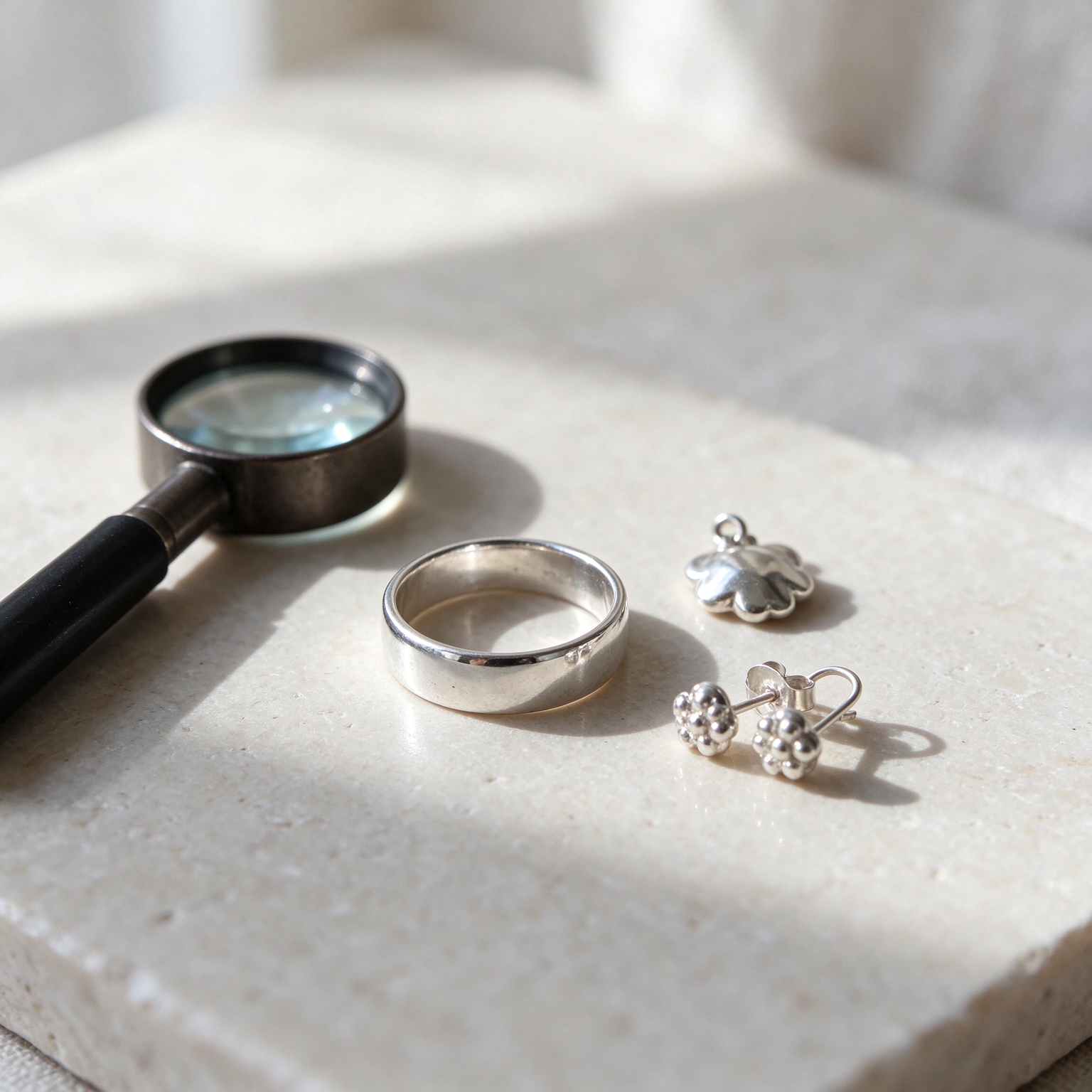
Separate the visible front, sides and clasp inside. Pendant fronts, ring curves and earring faces are the first things a buyer sees and must be free of clustered pits, bare spots and clear colour mismatch; clasps, inner sides and chain backs allow minor marks but no missing plating or blisters. Inspect under even light, natural or standard source, turning the piece so one-sided glare does not hide defects. Compare brightness and tone against the sealed sample before checking bulk pieces one by one.
Pits and pinholes are tiny surface dents; granules are raised dots, often from poor degreasing, bath contamination or uneven current. Scattered tiny marks in hidden areas are acceptable, but clustered pits on the front are a defect. Use a loupe to see whether dents pierce the plating to the base, and whether raised granules catch the skin. Pit positions should be consistent across a batch; if they appear only on pieces from one station, it points to degreasing or racking and the whole lot needs re-checking.
A blister is poor adhesion between plating and base, a raised bubble that may lift if scraped; peeling is a sheet lifting away; a bare spot means plating never covered that area, exposing copper or silver base. Yellowish-red exposure usually indicates a copper base, while silver-white exposure may be unfinished silver. These adhesion or coverage faults are more serious than light surface scratches and fail on the front. Clasps and corners lose current distribution easily, so check them closely.
Colour mismatch means pieces in one batch differ in tone, some white and some yellowish; cloudiness shows misty or streaky unevenness; uneven brightness means some areas bright and others dull. Rhodium should be a uniform cool white, while rose gold and black plating each have a set tone. Mismatch often comes from bath concentration drift, poor rack contact or uneven prep. Lay pieces side by side; no visible tone break is allowed on the front, with the sealed sample as colour reference.
The PO should state plating metal, such as rhodium, gold or rose gold; thickness in microns and test method; salt spray or artificial sweat hours; appearance tolerance for allowed pit size, count and position; and the sealed-sample colour reference. Sample by batch size, covering stations and package layers; clustered front defects widen the sample. Confirm plating tone and adhesion on samples, compare bulk against the sealed piece, and agree defect criteria with the supplier in writing before ordering.
Depends on position and density. Scattered fine marks in hidden areas are acceptable; clustered pits on the front or dents piercing to the base are defects. Judge against the sealed sample and the allowed pit size, count and position in the spec.
Missing plating leaves a neat edge, usually at corners and clasps; wear exposure sits on rubbed edges after use. Exposure on a brand-new piece is basically a missing-plating defect.
Decorative plating is often under 0.5 micron; high-wear pieces reach 1 micron or more with a strike layer. State thickness in the spec and rely on thickness gauge or salt spray, not the eye alone.
Set the ratio by batch size and risk, randomly covering stations, layers and colour groups. If front defects cluster at one station, widen the sample and re-check the lot if needed.


