 EN

 CN
 ES
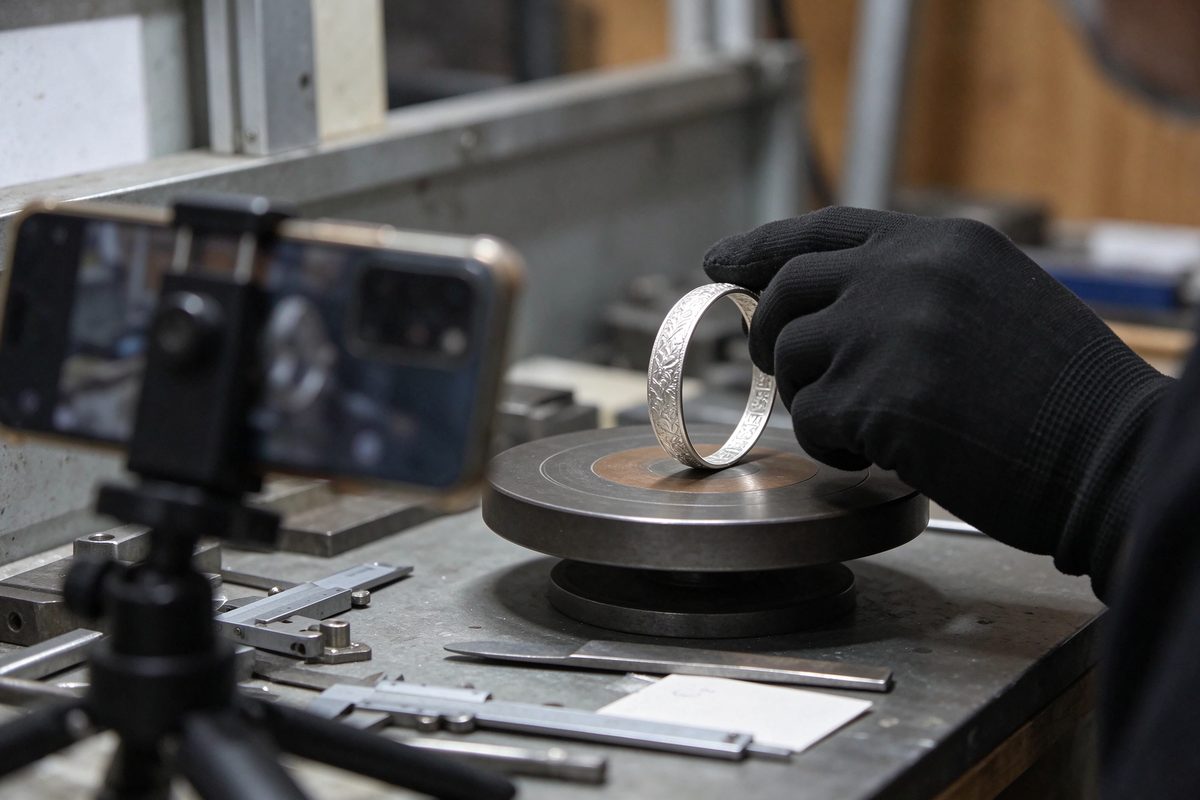
Signing off a sample without flying to the factory used to mean trusting photos. It no longer has to. A repeatable video setup, agreed in advance, produces evidence you can attach to the approval record and point back to when a bulk batch looks different.
Video is excellent for structure: proportions, the seat of a stone, whether a claw is symmetric, how a clasp opens and closes, the finish on a curve. It is weak on colour and weak on fine surface detail under changing light. Anyone who approves a plating colour purely from a video is guessing, because the camera white balance, the room light and the screen all shift the tone.
The practical split is simple. Approve shape, construction and function by video. Approve colour and micro-finish by a physical colour chip or a small physical sample sent by courier, photographed next to the piece under fixed light.
Ask for the same three clips every order: after casting, after setting, after plating. Each clip is thirty to sixty seconds, same setup, same order of shots. Over three orders you end up with a comparable record, and a defect at the plating stage gets caught before packing rather than after arrival.
A video call is a conversation; it disappears when it ends. Before you approve, ask for still frames exported from the same clip at the agreed angles, and attach them to the approval record with the date, the operator name and the batch or lot code. That set becomes the reference for the bulk comparison. When a shipment arrives and something looks off, you are comparing two documented states, not two memories.
Three cases should still trigger a physical sample or an on-site visit: a first order with a new factory, a new plating colour on an existing style, and any piece where stone security is the main risk. In those cases the cost of a courier envelope or a flight is small compared with a rejected batch.
Remote approval is not a shortcut around diligence. It is a way to keep the same diligence at a lower frequency of travel, as long as the camera, the light and the reference piece are fixed before the first clip is filmed.